Marmota flaviventris
Yellow-bellied Marmot
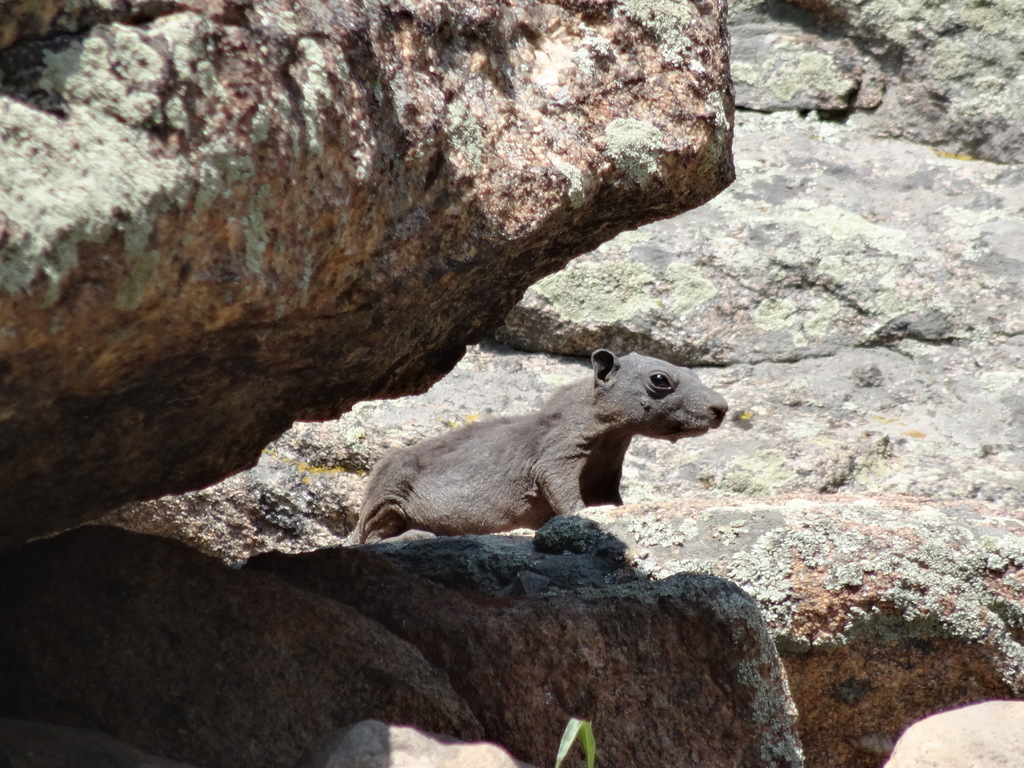
(c) Thomas Koffel, some rights reserved (CC BY) · licence
Family: Sciuridae · Class: Mammalia · Order: Rodentia
Marmota flaviventris (Yellow-bellied Marmot) is a California animal in the Sciuridae family.
The yellow-bellied marmot is a large, robust ground squirrel native to the mountainous regions of western North America. Adults measure 470 to 670 mm (18.5 to 26.4 inches) in total length, including a tail of 130 to 220 mm (5.1 to 8.7 inches), and weigh between 1.5 to 5.0 kg (3.3 to 11.0 pounds). The species exhibits significant seasonal weight variation, with individuals gaining substantial fat reserves before hibernation. The dorsal pelage ranges from grizzled yellowish-brown to reddish-brown, while the ventral surface displays the characteristic yellow coloration that gives the species its common name. The feet are dark brown to black, and a distinctive yellowish patch typically occurs between the eyes. Yellow-bellied marmots occur throughout the mountainous regions of California, including the Sierra Nevada, Cascade Range, and portions of the Coast Ranges. The species ranges from southern British Columbia south to New Mexico, with California populations representing the western extent of their distribution. In California, they are found in counties including Alpine, Amador, Calaveras, El Dorado, Fresno, Inyo, Kern, Los Angeles, Madera, Mariposa, Mono, Nevada, Placer, Riverside, San Bernardino, Tulare, and Tuolumne. The species inhabits open montane meadows, rocky slopes, and talus fields at elevations typically ranging from 1,200 to 3,400 meters (3,937 to 11,155 feet). Yellow-bellied marmots prefer areas with suitable boulder fields or rocky outcrops for den sites, combined with nearby meadows providing foraging opportunities. They construct extensive burrow systems beneath rocks or in well-drained soils, with multiple entrances and chambers for nesting and food storage. Yellow-bellied marmots are highly social, living in family groups called colonies that typically consist of one dominant male, several adult females, and their offspring. They are herbivorous, feeding primarily on grasses, forbs, and occasionally shrubs and tree seedlings. The species exhibits extreme seasonality, remaining active only during the brief mountain growing season from April through September. Mating occurs shortly after emergence from hibernation, with females producing litters of 2 to 8 young after a gestation period of approximately 30 days. Young marmots remain with the family group for one to two years. Hibernation represents a critical adaptation, with marmots entering torpor for seven to eight months annually. They accumulate fat reserves comprising up to 20% of their body weight before entering hibernation in late August or September. The species demonstrates complex social behaviors including sentinel duties, where individuals post watch for predators while others forage. Yellow-bellied marmots are not federally or state listed in California and maintain stable populations throughout most of their range. The species benefits from protected status within national parks and wilderness areas. Primary threats include habitat fragmentation from development, climate change affecting high-elevation habitats, and localized impacts from recreational activities. Their relatively stable conservation status reflects their adaptability to harsh mountain environments and protection within established conservation areas.
Classification
Class: Mammalia · Order: Rodentia · Family: Sciuridae
Frequently asked questions
How is Marmota flaviventris classified?
Marmota flaviventris belongs to class Mammalia, order Rodentia, family Sciuridae.
What family does Marmota flaviventris belong to?
Marmota flaviventris is in the Sciuridae family.
What is Marmota flaviventris?
The yellow-bellied marmot is a large, robust ground squirrel native to the mountainous regions of western North America.
Is Marmota flaviventris found in California?
Yes. Marmota flaviventris is recorded in California in The California Species Project's catalogue.
Related species
Other California species in the same genus, family, or bioregion.
Data from The California Species Project — 14,000+ California species with verified data from CNPS, CDFW, USFWS, and more.