Masticophis fuliginosus
Baja California Coachwhip
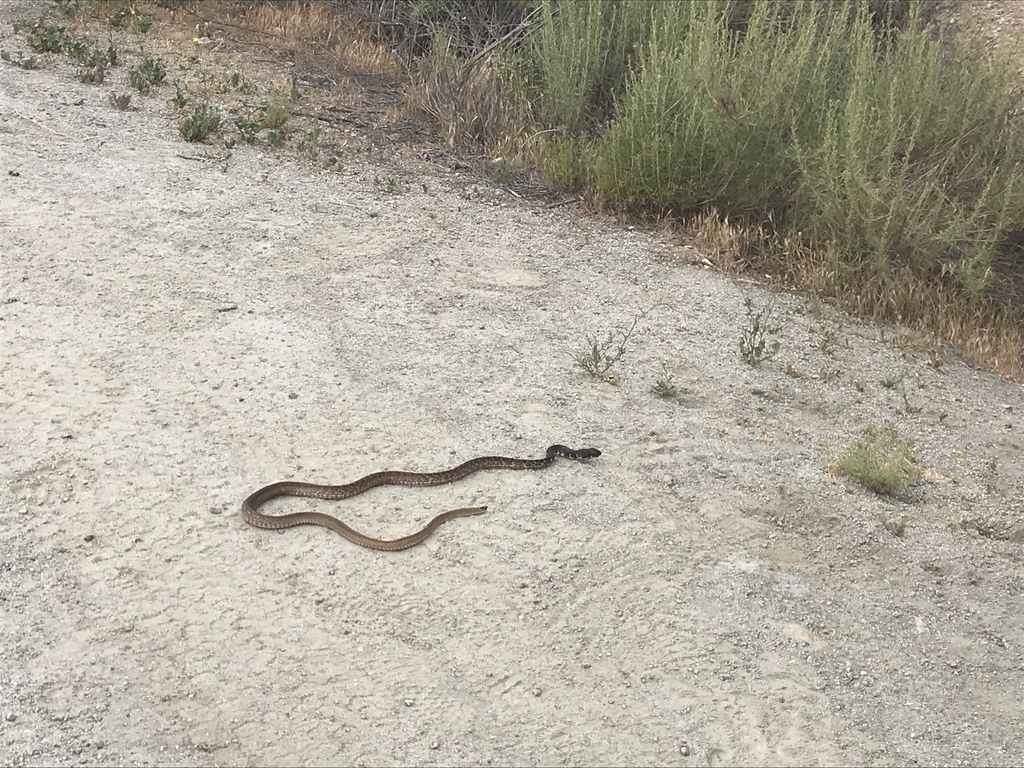
(c) Amy Huie, some rights reserved (CC BY) · licence
Family: Colubridae · Class: Reptilia · Order: Squamata
Conservation status: G5 S1S2
Masticophis fuliginosus (Baja California Coachwhip) is a California animal in the Colubridae family.
The Baja California Coachwhip (Masticophis fuliginosus) is a large, slender snake belonging to the family Colubridae. Adults typically reach lengths of 1.2 to 1.8 meters (4 to 6 feet), with some individuals exceeding 2 meters (6.5 feet). The body is characterized by a uniform dark coloration, ranging from dark brown to nearly black, which distinguishes it from other coachwhip species that display lighter coloration or banded patterns. The scales are smooth and overlapping, giving the snake a glossy appearance. The head is relatively small and distinct from the neck, with large eyes and round pupils adapted for diurnal activity. Historically classified under the genus Coluber as Coluber fuliginosus, this species has undergone taxonomic revision and is now placed in the genus Masticophis. The Baja California Coachwhip has a limited range in California, occurring primarily in the extreme southern counties along the Mexican border. In California, the species is found in San Diego County and possibly Imperial County, representing the northernmost extent of its range, which extends southward throughout the Baja California peninsula. This species inhabits arid and semi-arid environments, including desert scrub, chaparral, and rocky hillsides. The Baja California Coachwhip typically occurs at elevations from sea level to approximately 1,500 meters (4,900 feet). It shows a preference for areas with scattered vegetation and rocky outcrops that provide both basking sites and shelter. The species is often associated with desert washes, canyon bottoms, and hillsides with granite or volcanic substrates. The Baja California Coachwhip is a fast-moving, diurnal predator that actively hunts during daylight hours. Its diet consists primarily of lizards, small mammals, birds, and occasionally other snakes. The species employs active foraging strategies, using its speed and agility to pursue prey across open terrain. Reproduction occurs through egg-laying, with females typically depositing clutches of 8 to 16 eggs in late spring or early summer. Eggs are usually laid in sandy soil or under rocks, where they incubate for approximately 60 to 70 days. The conservation status of the Baja California Coachwhip in California reflects its limited distribution within the state. With a Global rank of G5, the species is considered secure across its entire range, but the California State rank of S1S2 indicates it is critically imperiled to imperiled within the state. This ranking reflects the species' restricted California range and small population size north of the Mexican border. Primary threats include habitat loss from urban development, particularly in San Diego County, and potential impacts from climate change affecting desert ecosystems. The species' limited California distribution makes local populations particularly vulnerable to habitat fragmentation and development pressures along the international border region.
Classification
Class: Reptilia · Order: Squamata · Family: Colubridae
Conservation status
G5 S1S2
Frequently asked questions
How is Masticophis fuliginosus classified?
Masticophis fuliginosus belongs to class Reptilia, order Squamata, family Colubridae.
What family does Masticophis fuliginosus belong to?
Masticophis fuliginosus is in the Colubridae family.
Is Masticophis fuliginosus protected or of conservation concern?
Masticophis fuliginosus carries the following status: G5 S1S2.
What is Masticophis fuliginosus?
The Baja California Coachwhip (Masticophis fuliginosus) is a large, slender snake belonging to the family Colubridae.
Is Masticophis fuliginosus found in California?
Yes. Masticophis fuliginosus is recorded in California in The California Species Project's catalogue.
Related species
Other California species in the same genus, family, or bioregion.
Data from The California Species Project — 14,000+ California species with verified data from CNPS, CDFW, USFWS, and more.