Mecyna mustelinalis
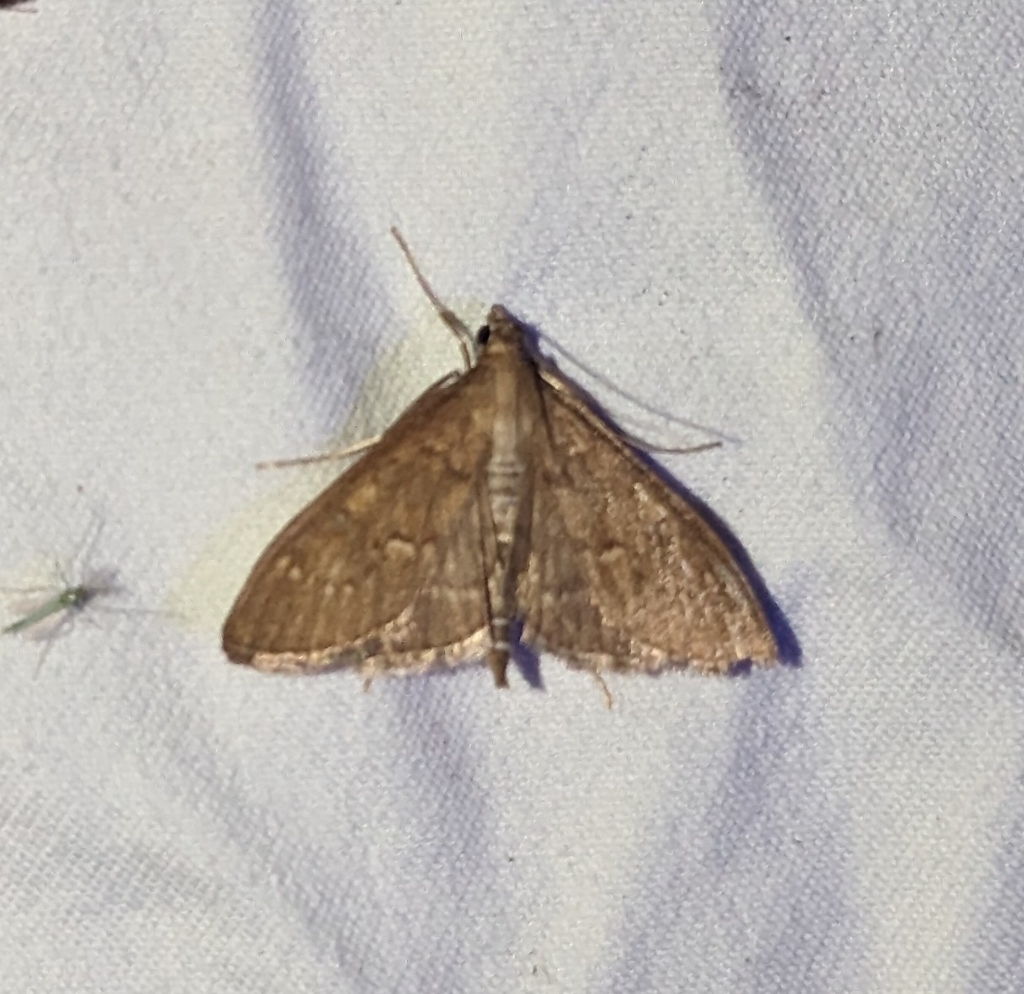
no rights reserved · CC0
Family: Crambidae · Class: Insecta · Order: Lepidoptera
Mecyna mustelinalis is a California animal in the Crambidae family.
Mecyna mustelinalis is a moth in the family Crambidae, described by Packard in 1873. This small pyralid moth belongs to the subfamily Spilomelinae and represents one of the widespread North American members of its genus. The physical characteristics of M. mustelinalis are typical of the Crambidae family, though specific morphological details have not been extensively documented in the scientific literature. Like other members of the genus Mecyna, adults likely possess the characteristic features of grass moths, including relatively narrow forewings and broad hindwings with distinctive wing patterns that aid in species identification. Mecyna mustelinalis exhibits a broad distribution across western North America, ranging from California north to the Yukon Territory. The species has been documented from multiple states and provinces including Alberta, Arizona, British Columbia, California, Manitoba, Montana, Nevada, Saskatchewan, Utah, Washington, and Yukon (iNaturalist). This extensive range spans diverse climatic zones from temperate coastal regions to subarctic environments, indicating considerable ecological adaptability. Specific habitat requirements for M. mustelinalis have not been well documented in the available literature. As a member of the Crambidae family, the species likely inhabits areas where suitable larval host plants occur. Many crambid moths are associated with grasses and herbaceous plants, though the specific host plant relationships for this species require further research. The broad elevational and latitudinal range suggests the species can utilize diverse habitat types across western North America. Ecological and behavioral information for M. mustelinalis remains limited in published sources. Like other members of the Crambidae family, adults are likely nocturnal and attracted to artificial lights. The species presumably follows a typical lepidopteran life cycle with egg, larval, pupal, and adult stages, though specific details regarding flight periods, voltinism, and reproductive behavior have not been comprehensively studied. Larval feeding habits and host plant preferences remain largely undocumented. No specific conservation status has been assigned to M. mustelinalis at federal or state levels. The species appears to maintain stable populations across its wide geographic range, with no apparent immediate threats identified. However, like many insect species, M. mustelinalis may face localized pressures from habitat modification, climate change, and other anthropogenic factors, though the extent of these impacts has not been systematically assessed. Scientific documentation for this species remains limited despite its broad distribution. The information presented here is based on taxonomic databases and citizen science observations. If you have additional verified information about this species' biology, distribution, or ecology, please contact us to help improve this species account.
Classification
Class: Insecta · Order: Lepidoptera · Family: Crambidae
Frequently asked questions
How is Mecyna mustelinalis classified?
Mecyna mustelinalis belongs to class Insecta, order Lepidoptera, family Crambidae.
What family does Mecyna mustelinalis belong to?
Mecyna mustelinalis is in the Crambidae family.
What is Mecyna mustelinalis?
Mecyna mustelinalis is a moth in the family Crambidae, described by Packard in 1873.
Is Mecyna mustelinalis found in California?
Yes. Mecyna mustelinalis is recorded in California in The California Species Project's catalogue.
Related species
Other California species in the same genus, family, or bioregion.
Data from The California Species Project — 14,000+ California species with verified data from CNPS, CDFW, USFWS, and more.