Megachile apicalis
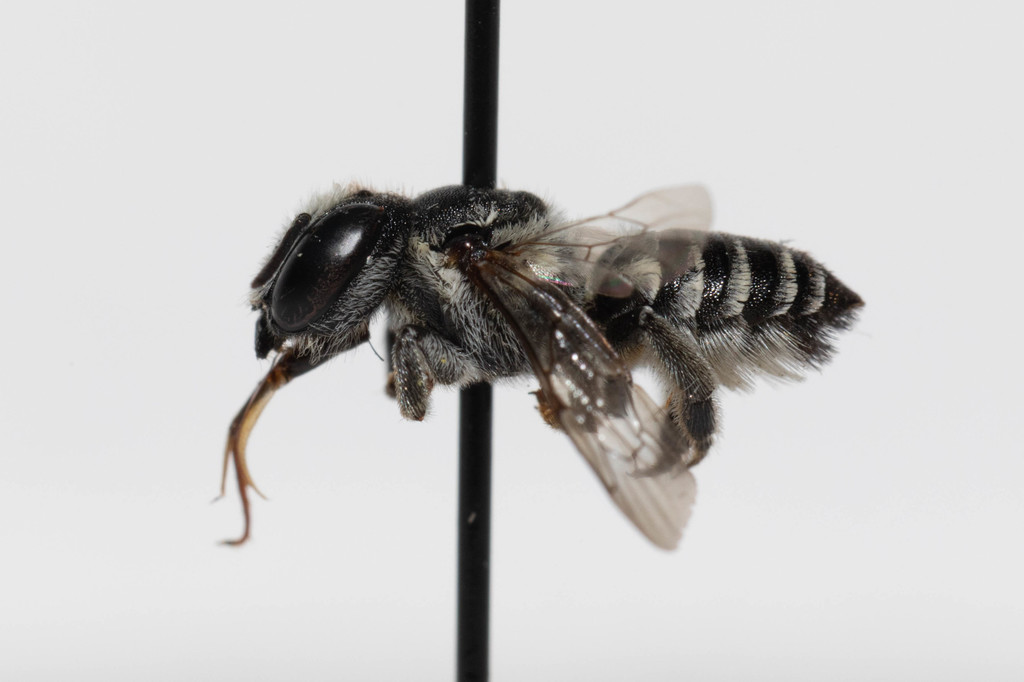
(c) Kalvin Chan, some rights reserved (CC BY) · licence
Family: Megachilidae · Class: Insecta · Order: Hymenoptera
Megachile apicalis is a California animal in the Megachilidae family.
Megachile apicalis is a non-native leafcutter bee in the family Megachilidae that has become established in western North America. This species is part of the diverse genus Megachile, which includes over 1,500 species worldwide of solitary bees known for their leaf-cutting behavior. Megachile apicalis is a robust, medium-sized bee typical of the leafcutter group. Like other Megachile species, females possess specialized abdominal scopa (pollen-collecting hairs) on the underside of their abdomen rather than on their legs, distinguishing them from other bee families. The species exhibits the characteristic strong mandibles used for cutting semicircular pieces from plant leaves. Originally native to Europe, Megachile apicalis has been introduced to North America where it has established populations across a broad range (NatureServe 2012). According to NatureServe, the species now occurs in Canada and throughout much of the United States, with NatureServe assigning it a global conservation rank of G4G5, indicating the species is apparently secure to secure globally. In California specifically, this non-native species has spread extensively throughout much of the state and into Oregon, with populations extending into parts of Washington (Xerces Society 2008). The species occupies diverse habitats typical of cavity-nesting bees, utilizing existing holes in wood, hollow plant stems, and other pre-existing cavities for nesting. Like other leafcutter bees, Megachile apicalis constructs brood cells within these cavities using precisely cut leaf fragments, typically from roses, legumes, and other broad-leafed plants. The female lines each cell with overlapping leaf pieces, provisions it with a ball of pollen and nectar, lays a single egg, then seals the cell with additional leaf material. Megachile apicalis exhibits typical leafcutter bee behavior, with females being solitary nest builders and provisioners. The species is univoltine to multivoltine depending on climate, with adults active during warmer months. Females collect pollen from a variety of flowering plants and demonstrate the characteristic leaf-cutting behavior that gives the group its common name. Males typically emerge before females and engage in patrolling behavior around potential nesting sites. As an introduced species, Megachile apicalis has raised conservation concerns regarding its impact on native bee communities. Research has documented that this non-native bee has reduced populations of native cavity-nesting bees and has even affected populations of another previously introduced species, Megachile rotundata (the alfalfa leafcutting bee) through competitive displacement (Xerces Society 2008). Studies have shown measurable invader effects in communities of cavity-nesting megachilid bees, with native species experiencing population declines in areas where M. apicalis has become established (Barthell et al. 1998). The species demonstrates high temperature tolerance, which may contribute to its successful establishment and spread in western North American climates (Barthell et al. 2002).
Classification
Class: Insecta · Order: Hymenoptera · Family: Megachilidae
Frequently asked questions
How is Megachile apicalis classified?
Megachile apicalis belongs to class Insecta, order Hymenoptera, family Megachilidae.
What family does Megachile apicalis belong to?
Megachile apicalis is in the Megachilidae family.
What is Megachile apicalis?
Megachile apicalis is a non-native leafcutter bee in the family Megachilidae that has become established in western North America.
Is Megachile apicalis found in California?
Yes. Megachile apicalis is recorded in California in The California Species Project's catalogue.
Related species
Other California species in the same genus, family, or bioregion.
Data from The California Species Project — 14,000+ California species with verified data from CNPS, CDFW, USFWS, and more.