Megachile perihirta
Western Leafcutter Bee
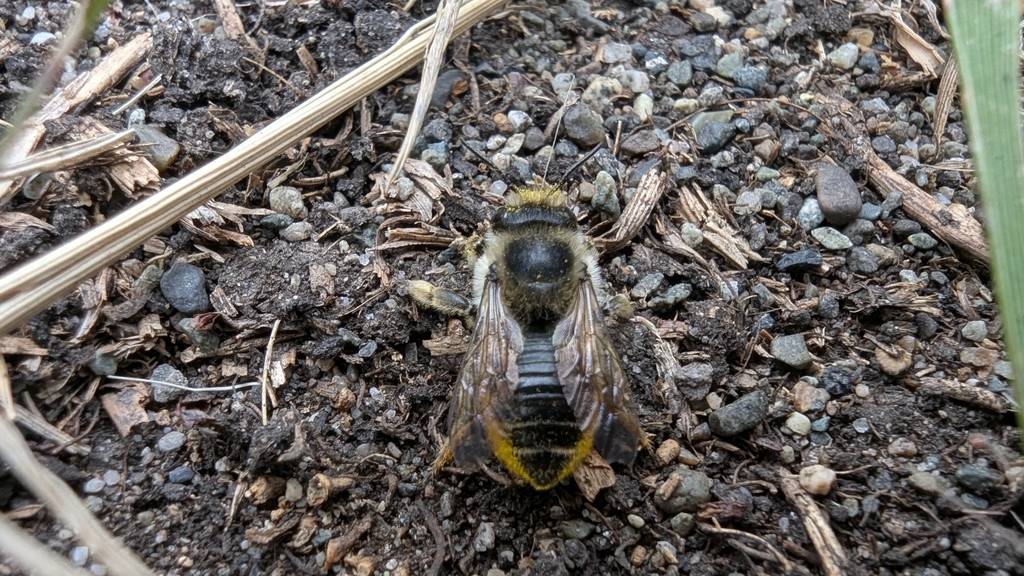
(c) Pete Lypkie, some rights reserved (CC BY) · licence
Family: Megachilidae · Class: Insecta · Order: Hymenoptera
Megachile perihirta (Western Leafcutter Bee) is a California animal in the Megachilidae family.
The western leafcutter bee (Megachile perihirta) is a solitary bee species in the family Megachilidae, belonging to the subgenus Xanthosarus. This medium-sized bee exhibits sexual dimorphism typical of leafcutter bees, with females possessing specialized abdominal scopa (pollen-collecting hairs) for carrying pollen and leaf fragments back to their nests. Males are generally smaller and lack the prominent abdominal hair brushes characteristic of females (BugGuide). Both sexes display the robust, compact body form typical of megachilid bees, with strong mandibles adapted for cutting leaf material. Megachile perihirta occurs across western North America, with documented populations extending from the Pacific Coast inland to montane regions. The species has been recorded in California, where it inhabits diverse ecosystems from coastal areas to interior valleys and foothills. Based on distribution patterns of related Megachile species, the range likely extends into adjacent western states including Oregon, Washington, and Nevada, though specific occurrence data varies by region. This species demonstrates the habitat flexibility characteristic of many leafcutter bees, occupying a variety of terrestrial environments. Western leafcutter bees utilize habitats ranging from coastal dunes to interior shrublands, gardens, and forest openings. Dense forests with reduced understories appear unsuitable for most leafcutter bee species, as these environments lack adequate nesting sites and diverse floral resources (NatureServe 2018). Suitable nesting sites include dead wood, hollow plant stems, and existing cavities where females can construct their characteristic leaf-lined brood cells. Female western leafcutter bees exhibit the characteristic leaf-cutting behavior that gives this group its common name. Using their sharp mandibles, females cut circular or oval pieces from leaves of various plant species to line and partition their nest chambers. Each brood cell is provisioned with a ball of pollen and nectar before the female deposits a single egg and seals the chamber with additional leaf material. The species likely has one generation per year, with adults active during warmer months when flowers provide adequate nectar and pollen resources. Males emerge slightly earlier than females and establish territories near suitable nesting sites. As with many native bee species, western leafcutter bees serve as important pollinators of native plant communities. Leafcutter bees are documented as key pollinators of plants in coastal dune ecosystems in California, though their pollination services in other habitats remain largely undocumented (Pimentel 2010). Most solitary bees, including leafcutter species, have limited foraging ranges typically under 600 meters from their nests, making local habitat quality particularly important for population persistence (Gathmann and Tscharntke 2002). Current conservation status information for this species is not readily available, though habitat loss and fragmentation pose potential threats to many specialized bee species. Climate change may particularly affect southwestern leafcutter bees through increased drought frequency, though the extent to which species can remain in extended diapause during unfavorable years remains poorly understood.
Classification
Class: Insecta · Order: Hymenoptera · Family: Megachilidae
Frequently asked questions
How is Megachile perihirta classified?
Megachile perihirta belongs to class Insecta, order Hymenoptera, family Megachilidae.
What family does Megachile perihirta belong to?
Megachile perihirta is in the Megachilidae family.
What is Megachile perihirta?
The western leafcutter bee (Megachile perihirta) is a solitary bee species in the family Megachilidae, belonging to the subgenus Xanthosarus.
Is Megachile perihirta found in California?
Yes. Megachile perihirta is recorded in California in The California Species Project's catalogue.
Related species
Other California species in the same genus, family, or bioregion.
Data from The California Species Project — 14,000+ California species with verified data from CNPS, CDFW, USFWS, and more.