Megahexura fulva
Tawny Dwarf Tarantula
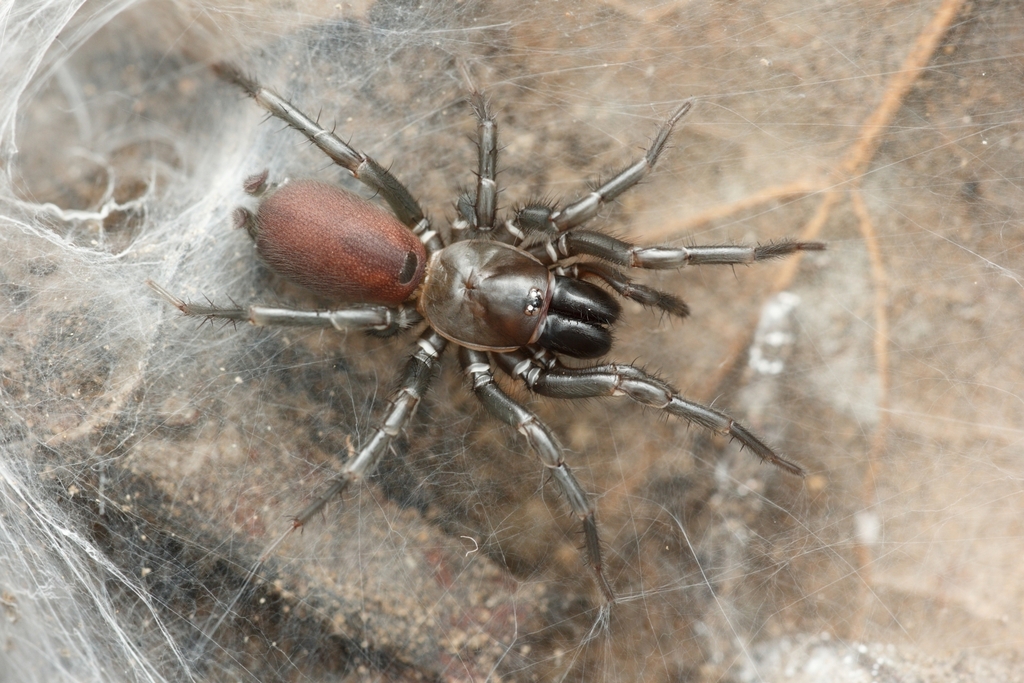
(c) Evrytte Carlson, some rights reserved (CC BY) · licence
Family: Megahexuridae · Class: Arachnida · Order: Araneae
Megahexura fulva (Tawny Dwarf Tarantula) is a California animal in the Megahexuridae family.
The Tawny Dwarf Tarantula (Megahexura fulva) is a small, primitive spider endemic to California and the sole representative of the family Megahexuridae in the region. Originally described by Chamberlin in 1919, this species represents an ancient lineage of mygalomorph spiders with distinctive morphological features that separate it from true tarantulas (Theraphosidae). Physically, M. fulva is characterized by its compact size and tawny coloration, as suggested by its common name. The species possesses two abdominal sclerites, with one positioned just above the pedicel that is often difficult to observe (Field Guide to Spiders of California). Like other members of Megahexuridae, it exhibits primitive characteristics typical of basal mygalomorph spiders, including a more robust cephalothorax relative to its abdomen compared to modern tarantula families. The species' range is restricted to upland habitats of southern and central California (Gertsch & Platnick, via PeerJ 2019). This limited distribution reflects the relictual nature of the Megahexuridae family, which represents an ancient spider lineage with few surviving species. The California populations appear to be the primary stronghold for this taxonomically significant species. Megahexura fulva inhabits upland environments throughout its California range, typically favoring elevated terrain over lowland areas. The species' preference for upland habitats suggests adaptation to specific microclimate conditions and substrate types characteristic of California's interior mountains and foothills. Like other mygalomorphs, it likely constructs burrows or utilizes natural crevices in rocky or soil substrates, though specific habitat requirements remain poorly documented in the scientific literature. Ecological information for this species remains limited in published sources. As a mygalomorph spider, M. fulva likely exhibits typical behaviors for this group, including construction of silk-lined retreats and ambush predation of ground-dwelling arthropods. Mygalomorphs generally have longer lifespans than araneomorph spiders, with females potentially living several years. Reproduction likely follows the mygalomorph pattern of males seeking females in their burrows during specific seasonal periods, though detailed breeding ecology for this species has not been well documented. The conservation status of Megahexura fulva has not been formally assessed by state or federal agencies, and it currently lacks listing under the Endangered Species Act or California Endangered Species Act. However, the species' restricted range within California and its taxonomic uniqueness as the state's only megahexurid spider warrant conservation attention. The family Megahexuridae represents an important evolutionary lineage for understanding spider phylogeny, with recent phylogenomic analyses confirming its distinct position among atypoid mygalomorphs (PeerJ 2019). Habitat loss and fragmentation in California's upland regions could pose threats to this endemic species, though specific population trends and conservation needs require further research. Scientific documentation for this species remains limited beyond taxonomic and distributional records. Additional research on its ecology, population status, and habitat requirements would benefit both scientific understanding and potential conservation planning for this unique California endemic.
Classification
Class: Arachnida · Order: Araneae · Family: Megahexuridae
Frequently asked questions
How is Megahexura fulva classified?
Megahexura fulva belongs to class Arachnida, order Araneae, family Megahexuridae.
What family does Megahexura fulva belong to?
Megahexura fulva is in the Megahexuridae family.
What is Megahexura fulva?
The Tawny Dwarf Tarantula (Megahexura fulva) is a small, primitive spider endemic to California and the sole representative of the family Megahexuridae in the region.
Is Megahexura fulva found in California?
Yes. Megahexura fulva is recorded in California in The California Species Project's catalogue.
More California species
This species has no close relatives in our California data — here are other species to explore.
Data from The California Species Project — 14,000+ California species with verified data from CNPS, CDFW, USFWS, and more.