Megalographa biloba
Bilobed Looper Moth
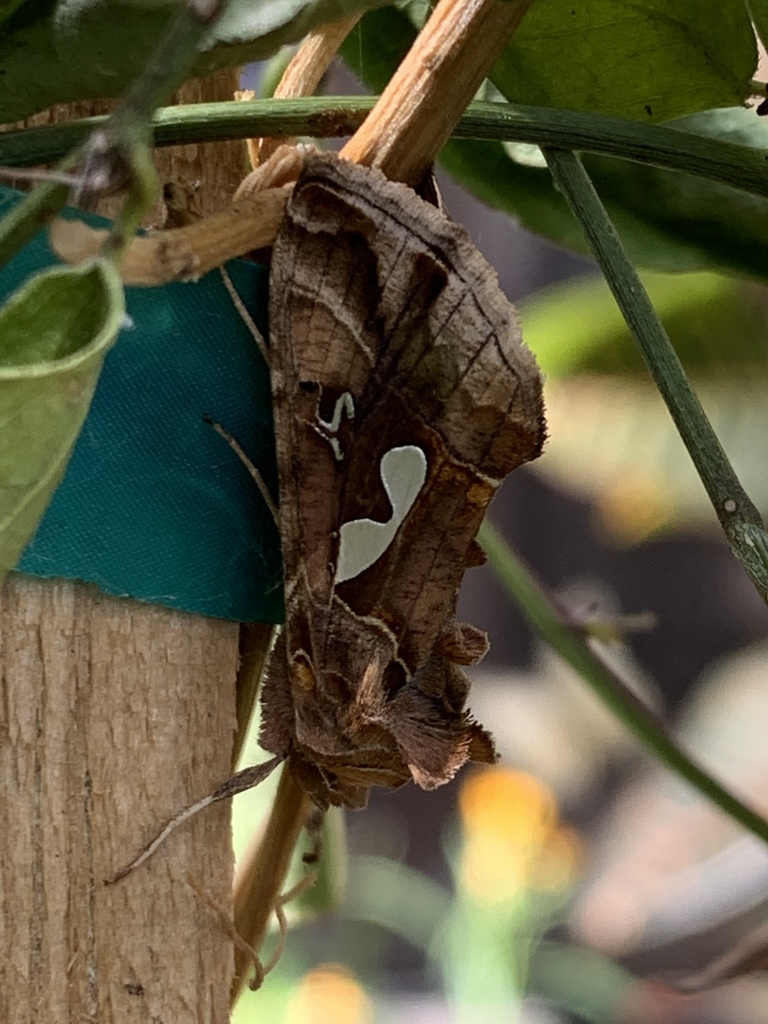
(c) Sandra H Statner, some rights reserved (CC BY) · licence
Family: Noctuidae · Class: Insecta · Order: Lepidoptera
Megalographa biloba (Bilobed Looper Moth) is a California animal in the Noctuidae family.
The Bilobed Looper Moth (Megalographa biloba) is a medium-sized noctuoid moth in the family Noctuidae. Adults typically measure 35-45 mm (1.4-1.8 inches) in wingspan. The forewings display a mottled brown and gray coloration with distinctive metallic silver or white markings that give the species its characteristic appearance. The hindwings are typically lighter, ranging from pale brown to grayish-white with darker marginal bands. The thorax and abdomen are covered in brownish scales that match the forewing coloration. This species has a limited distribution in western North America, with documented populations in California, Oregon, and potentially Washington. In California, the moth occurs primarily in mountainous regions of the northern and central portions of the state. Historical records indicate presence in the Sierra Nevada and Coast Ranges, though current distribution patterns may be more restricted than historically documented. Bilobed Looper Moths inhabit forested environments, particularly areas with mixed coniferous and deciduous vegetation. The species shows a preference for mid-elevation forests between 300-2,000 meters (1,000-6,500 feet) elevation. Adults are typically associated with areas containing their larval host plants, which include various tree and shrub species in the families Rosaceae and Salicaceae. The moths favor habitats with moderate moisture levels and partial canopy cover. As nocturnal insects, adults are active primarily at night and are attracted to artificial lights. The flight period typically extends from late spring through early fall, with peak activity during summer months. Females deposit eggs on or near host plant foliage, where larvae develop through multiple instars. The caterpillars are geometrid-like loopers that feed on leaves of their host plants, creating characteristic feeding damage patterns. The species likely overwinters in the pupal stage, though complete life cycle details remain incompletely documented. Like many specialized moth species, the Bilobed Looper Moth faces potential conservation challenges related to habitat modification and forest management practices. While not currently listed under federal or state endangered species legislation, populations may be vulnerable to habitat fragmentation, wildfire management practices, and climate change impacts on forest ecosystems. The species' apparent rarity and limited distribution suggest it may warrant monitoring to assess population trends and habitat requirements. Forest management activities that maintain diverse understory vegetation and minimize pesticide applications would likely benefit this species and other forest-dwelling lepidopterans. Limited research has been conducted on this moth's specific ecological requirements and population status. Additional surveys and ecological studies would help clarify current distribution patterns, population densities, and specific habitat needs to inform potential conservation strategies.
Classification
Class: Insecta · Order: Lepidoptera · Family: Noctuidae
Frequently asked questions
How is Megalographa biloba classified?
Megalographa biloba belongs to class Insecta, order Lepidoptera, family Noctuidae.
What family does Megalographa biloba belong to?
Megalographa biloba is in the Noctuidae family.
What is Megalographa biloba?
The Bilobed Looper Moth (Megalographa biloba) is a medium-sized noctuoid moth in the family Noctuidae.
Is Megalographa biloba found in California?
Yes. Megalographa biloba is recorded in California in The California Species Project's catalogue.
Related species
Other California species in the same genus, family, or bioregion.
Data from The California Species Project — 14,000+ California species with verified data from CNPS, CDFW, USFWS, and more.