Meganola minuscula
Confused Meganola
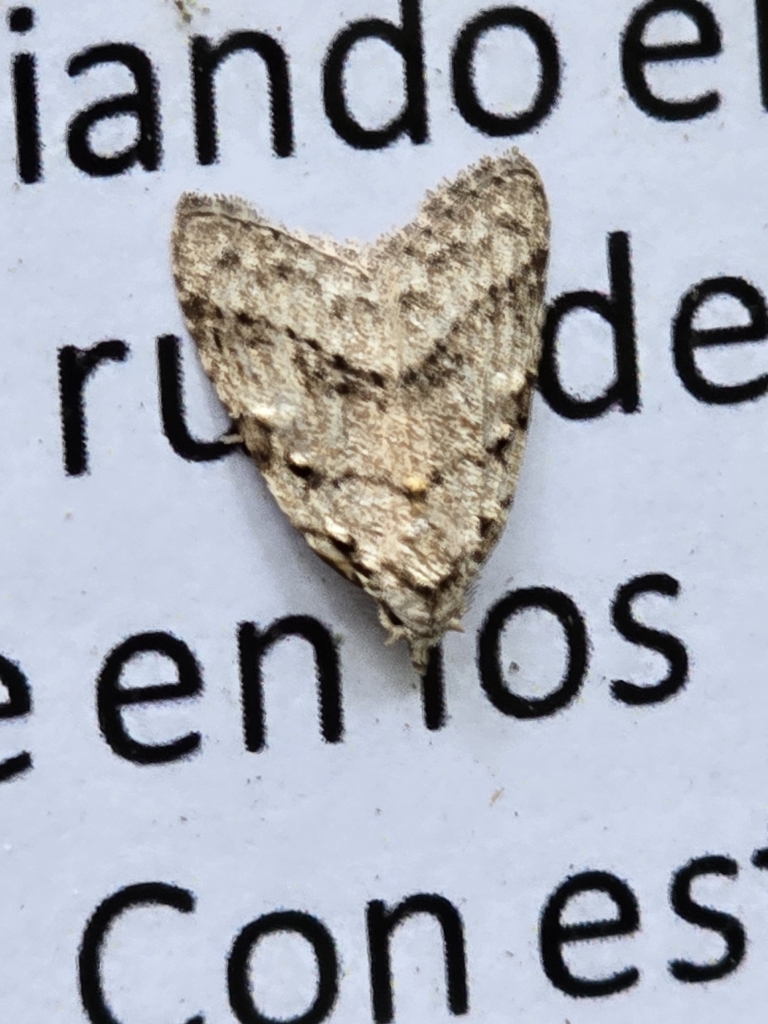
(c) Alan Rockefeller, some rights reserved (CC BY) · licence
Family: Nolidae · Class: Insecta · Order: Lepidoptera
Meganola minuscula (Confused Meganola) is a California animal in the Nolidae family.
The Confused Meganola (Meganola minuscula) is a small moth in the family Nolidae, representing one of the lesser-documented lepidopteran species in North America. Adults exhibit the typical small stature characteristic of the genus Meganola, with forewings measuring approximately 8-12 mm in length. The wings display muted coloration patterns typical of nolid moths, with forewings generally appearing gray to brown with subtle darker markings and cross-lines. The hindwings are typically paler, often whitish to light gray. The species can be distinguished from related Meganola species through detailed examination of wing venation patterns and genitalic structures, though field identification requires considerable expertise due to the subtle morphological differences within this genus. The range and distribution of Meganola minuscula in California remains poorly documented in available literature. Limited records suggest the species may occur in various regions of the state, though comprehensive survey data is lacking. The species' distribution appears to be patchy and localized, consistent with many members of the Nolidae family that often have specific habitat requirements and limited dispersal capabilities. Habitat preferences for the Confused Meganola are not well-established in current literature. Like many nolid moths, the species likely inhabits areas with appropriate host plant communities, though specific vegetation associations remain undocumented. Many Meganola species are associated with deciduous woodland edges, riparian areas, or mixed forest environments where their larval host plants occur. The species may be found from sea level to moderate elevations, though specific elevation ranges have not been established through systematic surveys. The life history and ecological behavior of Meganola minuscula are poorly understood. Adult flight periods are presumed to occur during warmer months, likely from late spring through early fall, based on patterns observed in related species. Larvae are presumed to be detritivores or feed on decaying organic matter, as is typical for many nolid moth species, though specific feeding behaviors and host plant relationships have not been documented. The species likely completes one or possibly two generations per year in California's climate, overwintering in the larval or pupal stage. The conservation status of the Confused Meganola is difficult to assess due to limited survey data and taxonomic uncertainty. The species does not appear on federal or state endangered species lists, and no formal conservation assessments have been conducted. The lack of recent records may reflect either genuine rarity, identification challenges due to the species' small size and subtle distinguishing features, or insufficient survey effort targeting this group of moths. Climate change and habitat loss could potentially impact populations if the species has specific habitat requirements, though current population trends are unknown. Further research is needed to establish baseline population data, habitat requirements, and distribution patterns to properly assess the species' conservation needs in California.
Classification
Class: Insecta · Order: Lepidoptera · Family: Nolidae
Frequently asked questions
How is Meganola minuscula classified?
Meganola minuscula belongs to class Insecta, order Lepidoptera, family Nolidae.
What family does Meganola minuscula belong to?
Meganola minuscula is in the Nolidae family.
What is Meganola minuscula?
The Confused Meganola (Meganola minuscula) is a small moth in the family Nolidae, representing one of the lesser-documented lepidopteran species in North America.
Is Meganola minuscula found in California?
Yes. Meganola minuscula is recorded in California in The California Species Project's catalogue.
Related species
Other California species in the same genus, family, or bioregion.
Data from The California Species Project — 14,000+ California species with verified data from CNPS, CDFW, USFWS, and more.