Megarhyssa nortoni
Norton's Giant Ichneumonid Wasp
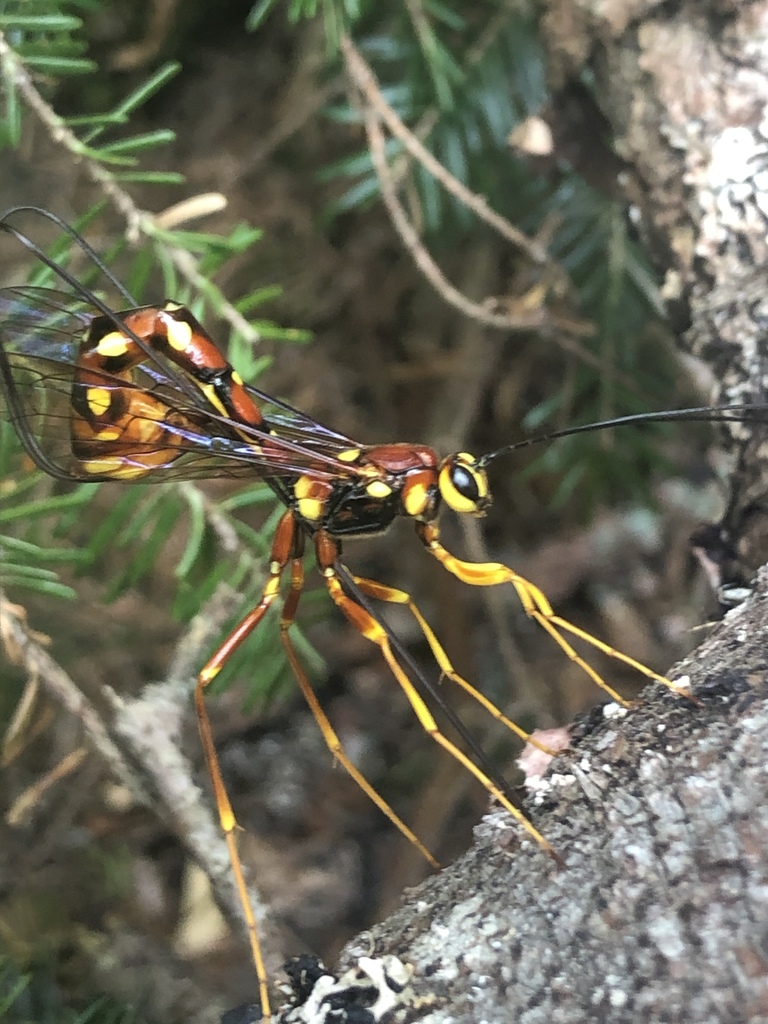
no rights reserved · CC0
Family: Ichneumonidae · Class: Insecta · Order: Hymenoptera
Megarhyssa nortoni (Norton's Giant Ichneumonid Wasp) is a California animal in the Ichneumonidae family.
Norton's Giant Ichneumonid Wasp (Megarhyssa nortoni) is a large parasitoid wasp in the family Ichneumonidae. As a member of the genus Megarhyssa, this species exhibits the characteristic features of giant ichneumonids, including an elongated body and exceptionally long ovipositor in females. The wasps are typically robust insects with dark coloration and prominent antennae. Females possess an extremely long, thread-like ovipositor that can extend several times the length of their body, used for drilling deep into wood to parasitize wood-boring larvae. Megarhyssa nortoni occurs across a broad range in North America. According to NatureServe, the species has a range extent greater than 2,500,000 square kilometers (greater than 1,000,000 square miles), indicating a wide continental distribution. The species is documented from various regions including California, where it appears in field guides covering the state's insect fauna (BugGuide). The wasp's distribution likely extends across much of western North America, following the distribution of suitable host species. This species inhabits forested environments where its host insects are present. Giant ichneumonids typically frequent areas with dead or dying trees, particularly conifers, where wood-boring beetle larvae develop. The wasps require mature forest habitats with standing snags and fallen logs that provide breeding sites for their hosts. They may be found in both natural forests and managed timber areas where wood-boring insects are active. Megarhyssa nortoni is a specialized parasitoid that targets wood-boring beetle larvae, particularly those in the families Cerambycidae (longhorn beetles) and Siricidae (horntails). Females use their remarkably long ovipositors to drill through wood and deposit eggs directly into or near host larvae tunneling within dead wood. The female wasp can detect host larvae through several inches of solid wood using chemical and vibrational cues. After locating a suitable host, she inserts her ovipositor through the bark and wood to reach the larva, where she deposits a single egg. The developing ichneumonid larva then parasitizes the wood-borer, eventually killing it. Adults are active during warmer months and may be observed on or near dead trees where they search for hosts. Males lack the elongated ovipositor and focus primarily on mating activities. Currently, Megarhyssa nortoni has no special conservation status and is not listed under federal or state endangered species acts. The species appears to maintain stable populations across its range, likely benefiting from forest management practices that retain dead wood and snags. As a natural biological control agent of wood-boring pests, this wasp provides ecological services in forest ecosystems. However, intensive forest management that removes all dead wood could potentially impact local populations by reducing habitat for both the wasp and its hosts. Climate change and forest health issues affecting tree mortality patterns may influence future distribution and abundance of this species.
Classification
Class: Insecta · Order: Hymenoptera · Family: Ichneumonidae
Frequently asked questions
How is Megarhyssa nortoni classified?
Megarhyssa nortoni belongs to class Insecta, order Hymenoptera, family Ichneumonidae.
What family does Megarhyssa nortoni belong to?
Megarhyssa nortoni is in the Ichneumonidae family.
What is Megarhyssa nortoni?
Norton's Giant Ichneumonid Wasp (Megarhyssa nortoni) is a large parasitoid wasp in the family Ichneumonidae.
Is Megarhyssa nortoni found in California?
Yes. Megarhyssa nortoni is recorded in California in The California Species Project's catalogue.
Related species
Other California species in the same genus, family, or bioregion.
Data from The California Species Project — 14,000+ California species with verified data from CNPS, CDFW, USFWS, and more.