Megascops kennicottii
Western Screech Owl
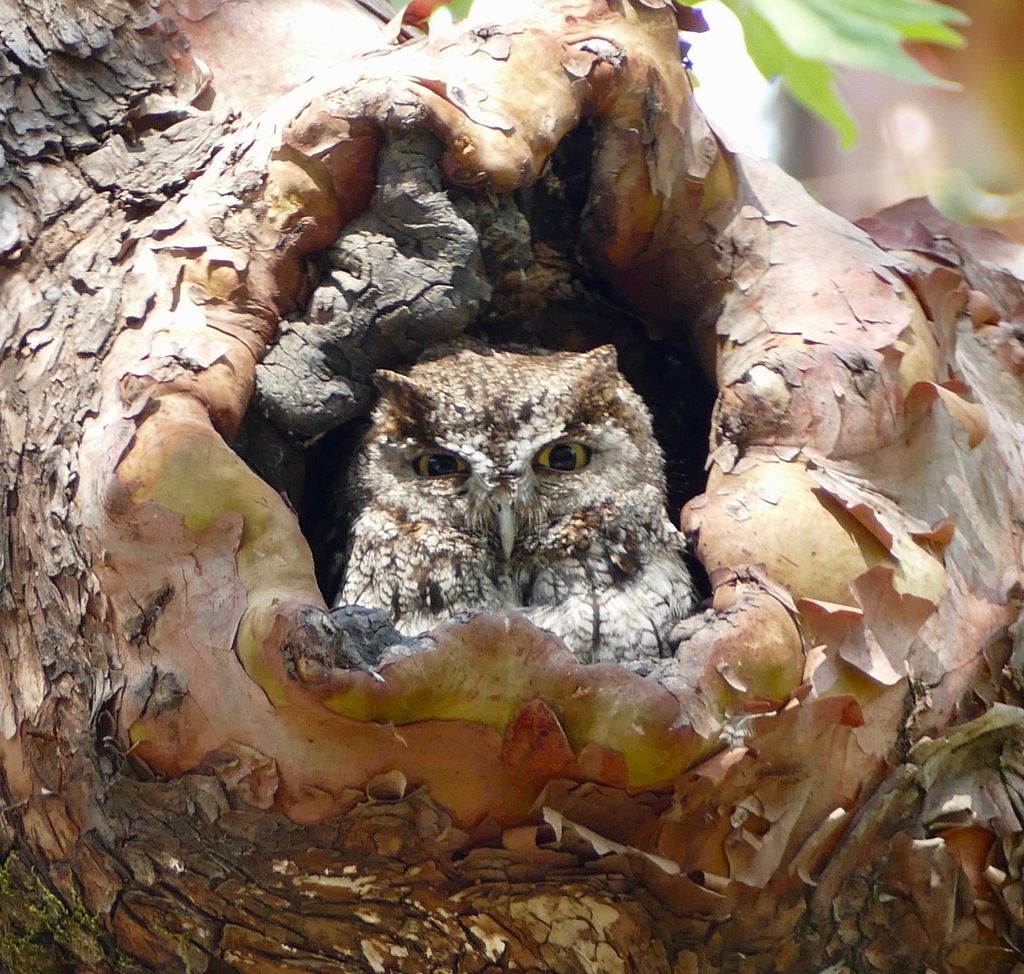
(c) Jonathan Curley, some rights reserved (CC BY) · licence
Family: Strigidae · Class: Aves · Order: Strigiformes
Megascops kennicottii (Western Screech Owl) is a California animal in the Strigidae family.
The Western Screech Owl is a small, compact owl species measuring 19 to 25 centimeters (7.5 to 10 inches) in length with a wingspan of 48 to 61 centimeters (19 to 24 inches). Adults weigh between 88 to 220 grams (3.1 to 7.8 ounces), with females typically larger than males. The species exhibits pronounced sexual dimorphism in size but similar plumage patterns. Two primary color morphs occur: gray and rufous. Gray morph individuals display mottled gray and brown upperparts with fine barring and streaking, while rufous morph birds show predominantly reddish-brown coloration with similar patterns. Both morphs have prominent ear tufts, bright yellow eyes, and a dark-edged facial disk. The underparts are pale with dark streaking and crossbarring. Western Screech Owls range from sea level to approximately 1,800 meters (5,900 feet) elevation throughout much of California, excluding the northern coastal regions and high Sierra Nevada. The species occurs from British Columbia south through Central America, with California populations representing the northern extent of the Pacific coastal subspecies. In California, they inhabit suitable habitat in the Central Valley, foothills of the Sierra Nevada, coastal ranges, and southern deserts including the Mojave and portions of the Sonoran Desert. This species occupies diverse habitats including riparian woodlands, oak savannas, parks, orchards, suburban areas with mature trees, and desert regions with sufficient tree cover. Western Screech Owls require cavities for nesting, typically utilizing abandoned woodpecker holes, natural tree cavities, or nest boxes. They show preference for areas with mixed vegetation structure providing both roosting sites and hunting perches. In desert environments, they concentrate along washes and oases where trees are present. Western Screech Owls are strictly nocturnal, becoming active at dusk. Their diet consists primarily of small mammals including mice, voles, and pocket mice, supplemented by insects, small birds, reptiles, and amphibians. Hunting occurs from perches, with owls swooping down to capture prey. The species is territorial and monogamous, with pairs often remaining together across multiple breeding seasons. Breeding occurs from March through August, varying by elevation and latitude. Females lay 2 to 5 white, nearly spherical eggs in tree cavities. Incubation lasts 26 to 30 days, performed primarily by the female while the male provides food. Young fledge after 28 to 35 days but remain dependent on parents for several weeks. The Western Screech Owl is not federally listed and maintains stable populations across most of its range. However, local populations face threats from habitat loss due to urban development, removal of riparian vegetation, and intensive agriculture. Urbanization can benefit some populations by providing nest boxes and reducing natural predators, while simultaneously eliminating natural nesting sites. Climate change may affect prey availability and suitable habitat distribution. Conservation efforts focus on maintaining riparian corridors and providing artificial nest sites in areas where natural cavities are scarce.
Classification
Class: Aves · Order: Strigiformes · Family: Strigidae
Frequently asked questions
How is Megascops kennicottii classified?
Megascops kennicottii belongs to class Aves, order Strigiformes, family Strigidae.
What family does Megascops kennicottii belong to?
Megascops kennicottii is in the Strigidae family.
What is Megascops kennicottii?
The Western Screech Owl is a small, compact owl species measuring 19 to 25 centimeters (7.5 to 10 inches) in length with a wingspan of 48 to 61 centimeters (19 to 24 inches).
Is Megascops kennicottii found in California?
Yes. Megascops kennicottii is recorded in California in The California Species Project's catalogue.
Related species
Other California species in the same genus, family, or bioregion.
Data from The California Species Project — 14,000+ California species with verified data from CNPS, CDFW, USFWS, and more.