Megascops kennicottii kennicottii
Western Screech-Owl (Northern)
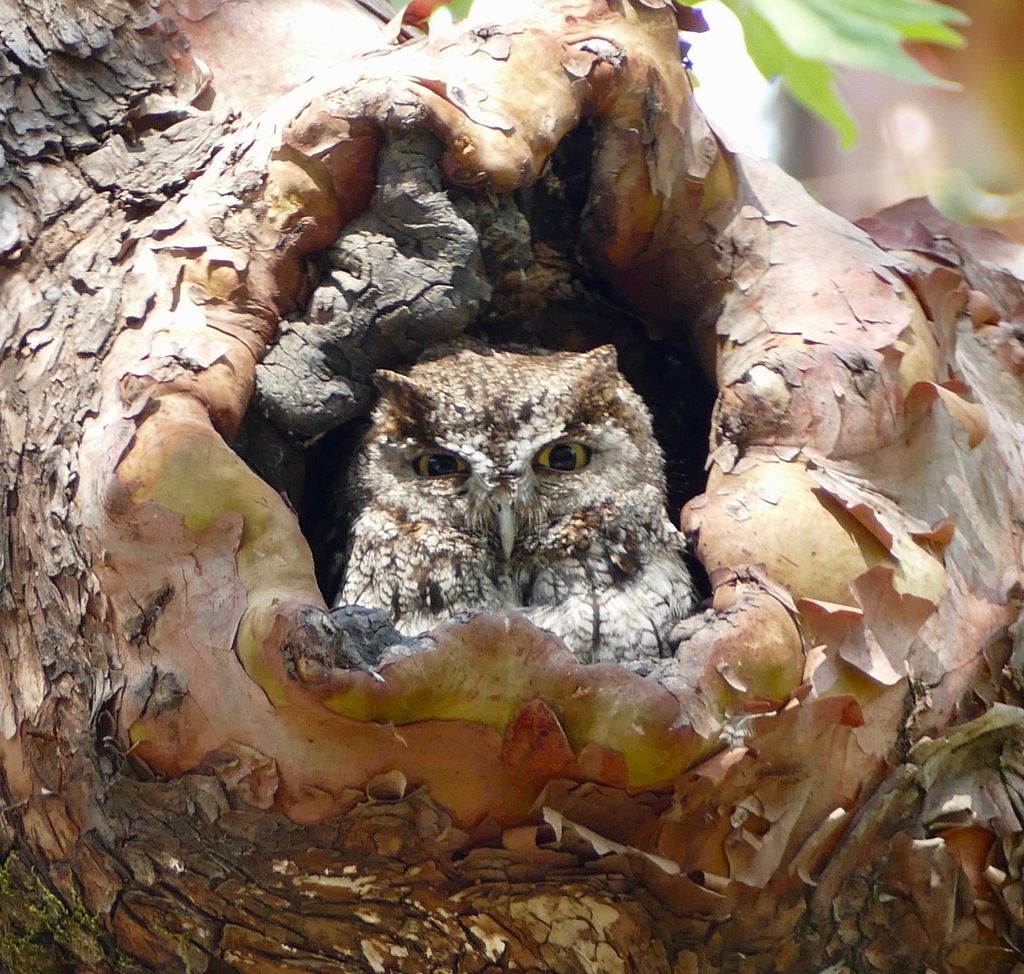
(c) Jonathan Curley, some rights reserved (CC BY) · licence
Family: Strigidae · Class: Aves · Order: Strigiformes
Megascops kennicottii kennicottii (Western Screech-Owl (Northern)) is a California animal in the Strigidae family.
The Western Screech-Owl (Northern) is a small, nocturnal raptor measuring 19-25 cm (7.5-10 inches) in length with a wingspan of 55-60 cm (22-24 inches). Adults weigh 120-270 grams (4.2-9.5 ounces). The species exhibits cryptic plumage with gray-brown upperparts heavily streaked and barred with darker markings. The facial disc is grayish with darker concentric circles, and prominent ear tufts are held erect when alert. The eyes are bright yellow, and the bill is dark with a yellowish base. Sexual dimorphism is minimal, though females are typically larger than males. The kennicottii subspecies ranges from southeastern Alaska south through coastal British Columbia to coastal southern Oregon (Cannings et al. 2020). In California, this northern subspecies occurs primarily in the northwestern coastal counties, including Del Norte, Humboldt, and northern Mendocino County. The species is generally absent from higher elevations, especially at the northern end of its range. Historical distribution has contracted in some areas due to habitat loss and competition from expanding Barred Owl populations. This owl inhabits a variety of wooded environments, with highest densities found in riparian deciduous woodlands at low elevations. The species occurs in conifer-dominated forests of the Pacific Northwest, mixed oak-conifer woodlands, and mature residential areas with large trees. It requires suitable cavities for nesting and roosting, typically in natural tree hollows, old woodpecker holes, or nest boxes. The species is tolerant of human presence and frequently occupies suburban parks and residential neighborhoods if adequate nesting sites are available (Cannings et al. 2020). Western Screech-Owls are strictly nocturnal, becoming active at dusk. They feed on a diverse array of small prey, primarily small rodents including mice and shrews, but also birds, insects, amphibians, reptiles, and occasionally fish. Diet varies seasonally and geographically based on local prey abundance (NatureServe 2016). Breeding occurs from March through July, with pairs typically monogamous during the breeding season. Females lay 2-5 white eggs in tree cavities, incubating them for 26-30 days. Young fledge after 28-35 days but remain dependent on parents for several weeks. The species' distinctive call consists of a series of hollow whistled notes accelerating in tempo. While the Western Screech-Owl as a species maintains stable populations across much of its range, the kennicottii subspecies faces significant conservation challenges. In British Columbia, this subspecies is listed as Threatened under the federal Species at Risk Act due to substantial population declines. Primary threats include habitat loss from urban development and forest clear-cutting, and increasing predation pressure from expanding Barred Owl populations (USFWS 2023). Competition with Barred Owls for nesting sites and prey resources has contributed to documented population reductions throughout the Pacific Northwest. Conservation efforts focus on habitat protection, nest box programs, and research into Barred Owl management strategies to reduce competitive pressure on native owl species.
Classification
Class: Aves · Order: Strigiformes · Family: Strigidae
Frequently asked questions
How is Megascops kennicottii kennicottii classified?
Megascops kennicottii kennicottii belongs to class Aves, order Strigiformes, family Strigidae.
What family does Megascops kennicottii kennicottii belong to?
Megascops kennicottii kennicottii is in the Strigidae family.
What is Megascops kennicottii kennicottii?
The Western Screech-Owl (Northern) is a small, nocturnal raptor measuring 19-25 cm (7.5-10 inches) in length with a wingspan of 55-60 cm (22-24 inches).
Is Megascops kennicottii kennicottii found in California?
Yes. Megascops kennicottii kennicottii is recorded in California in The California Species Project's catalogue.
Related species
Other California species in the same genus, family, or bioregion.
Data from The California Species Project — 14,000+ California species with verified data from CNPS, CDFW, USFWS, and more.