Megathymus yuccae
Yucca Giant-Skipper
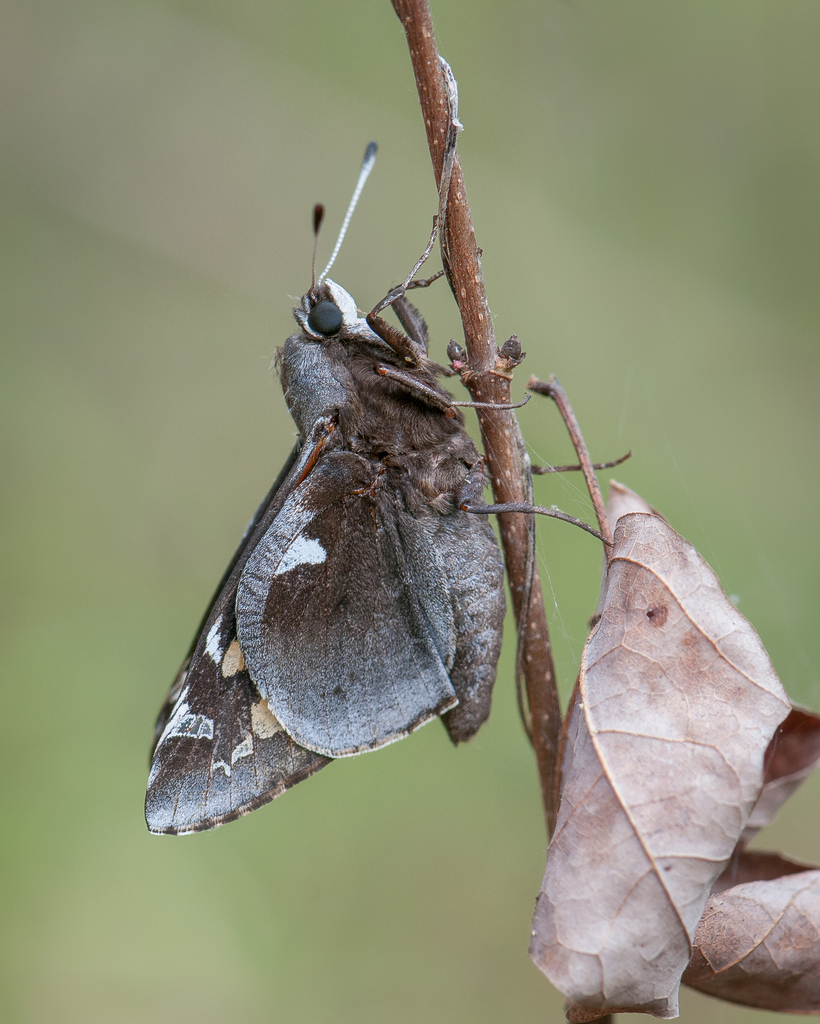
(c) Arlo Sitimans, some rights reserved (CC BY) · licence
Family: Hesperiidae · Class: Insecta · Order: Lepidoptera
Megathymus yuccae (Yucca Giant-Skipper) is a California animal in the Hesperiidae family.
The Yucca Giant-Skipper is a large butterfly in the family Hesperiidae, distinguished by its robust build and considerable wingspan of 70 to 90 mm (2.8 to 3.5 inches). Males display dark brown wings with yellowish-orange patches and spots, while females are typically larger with more subdued coloration featuring grayish-brown wings marked by pale yellow spots. The forewings are triangular with a distinctive hooked apex, and the hindwings are rounded. The antennae are short and clubbed, characteristic of skipper butterflies. The thorax is thick and densely covered with brown and yellow scales. The species exhibits a disjunct distribution pattern with two distinct populations. The western population ranges from California east to Nebraska and eastern Texas, extending south into northern Mexico. The southeastern population occurs from southeastern Virginia south through peninsular Florida, west to Arkansas and Louisiana. This unusual distribution pattern suggests a relict range, possibly resulting from past climatic changes that fragmented once-continuous populations. Yucca Giant-Skippers inhabit arid and semi-arid regions where their host plants occur, including desert scrublands, coastal plains, and dry pine woodlands. The species is closely associated with yucca plants and is typically found in areas with well-drained sandy or rocky soils. Elevations range from sea level to approximately 1,500 meters (4,900 feet) in mountainous regions. Adults are most commonly observed in open areas near yucca colonies during their flight period. This species demonstrates a specialized life cycle intimately tied to yucca plants. Host plants include bear grass (Yucca filamentosa), Small's yucca (Y. smalliana), Spanish dagger (Y. gloriosa), soaptree yucca (Y. elata), Arizona yucca (Y. arizonica), and Spanish bayonet (Y. aloifolia). Females lay eggs singly on yucca leaves, and larvae bore into the plant's stem or root crown, creating galleries where they feed and develop. The larval stage can extend for one to two years, with pupation occurring within the host plant. Adults typically emerge in spring or early summer, with flight periods varying by geographic region. Males are territorial and engage in aerial encounters to establish mating territories around yucca colonies. The Yucca Giant-Skipper does not appear on federal or state endangered species lists and maintains stable populations throughout most of its range. However, localized populations face pressure from habitat conversion, urban development, and removal of yucca plants for landscaping purposes. Fire suppression in some areas has altered natural vegetation cycles that historically maintained suitable habitat conditions. Climate change may pose long-term challenges by shifting suitable habitat ranges, particularly for the more southern populations. Conservation efforts focus on protecting yucca plant communities and maintaining natural disturbance regimes in occupied habitats.
Classification
Class: Insecta · Order: Lepidoptera · Family: Hesperiidae
Frequently asked questions
How is Megathymus yuccae classified?
Megathymus yuccae belongs to class Insecta, order Lepidoptera, family Hesperiidae.
What family does Megathymus yuccae belong to?
Megathymus yuccae is in the Hesperiidae family.
What is Megathymus yuccae?
The Yucca Giant-Skipper is a large butterfly in the family Hesperiidae, distinguished by its robust build and considerable wingspan of 70 to 90 mm (2.8 to 3.5 inches).
Is Megathymus yuccae found in California?
Yes. Megathymus yuccae is recorded in California in The California Species Project's catalogue.
Related species
Other California species in the same genus, family, or bioregion.
Data from The California Species Project — 14,000+ California species with verified data from CNPS, CDFW, USFWS, and more.