Melanchra adjuncta
Hitched Arches
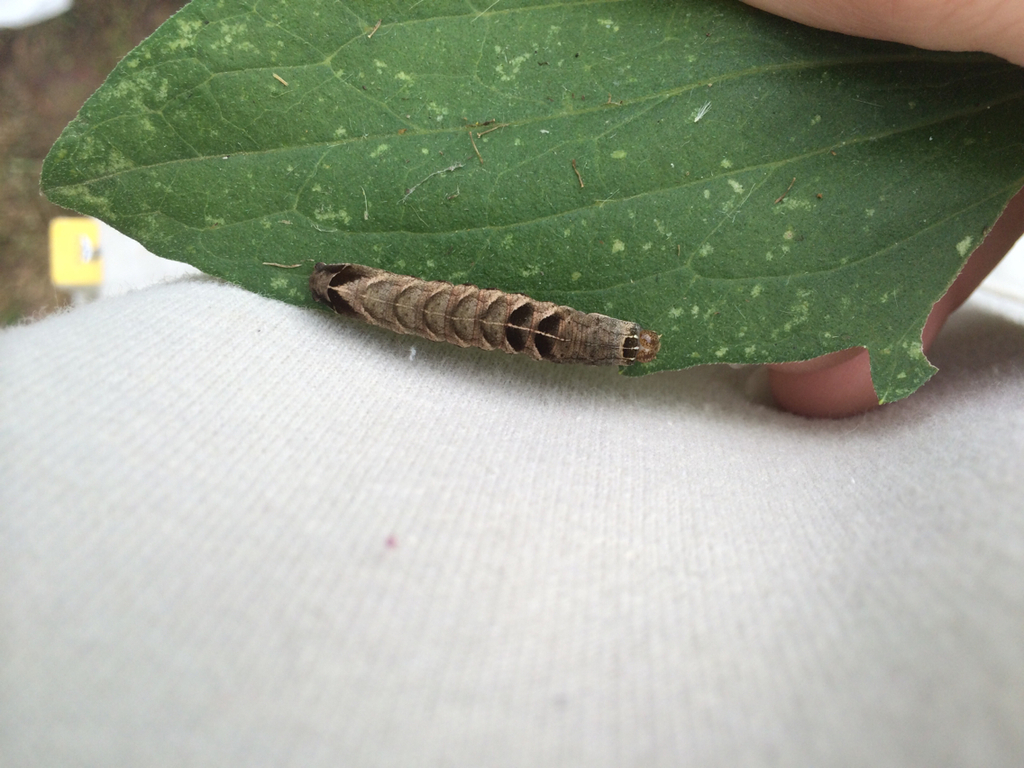
(c) Marlo Perdicas, some rights reserved (CC BY) · licence
Family: Noctuidae · Class: Insecta · Order: Lepidoptera
Melanchra adjuncta (Hitched Arches) is a California animal in the Noctuidae family.
The Hitched Arches (Melanchra adjuncta) is a medium-sized noctuid moth in the family Noctuidae, subfamily Noctuinae. Adults have a wingspan typically ranging from 35 to 42 millimeters (1.4 to 1.7 inches). The forewings display a complex pattern of gray-brown and darker brown markings, with the characteristic reniform and orbicular spots that are diagnostic features of the genus. The hindwings are lighter, usually pale gray to whitish with darker marginal bands. The thorax matches the forewing coloration, and the abdomen is gray-brown with darker segmental bands. Historically, Melanchra adjuncta occurred across much of temperate North America, from southern Canada south through the United States. In California, the species has been documented from scattered localities, though comprehensive range data remains limited. The species appears to favor cooler, higher elevation sites and may be more common in northern California counties, though specific distributional records require further documentation. The Hitched Arches inhabits a variety of open and semi-open habitats, including meadows, grasslands, prairie edges, and disturbed areas. Adults are typically found in areas with abundant herbaceous vegetation that supports larval development. The species shows preference for sites with native grasses and forbs, particularly those in the Asteraceae family. Elevation ranges are not well-documented for California populations, but the species generally occurs from near sea level to moderate elevations in mountainous regions. Adult moths are nocturnal and are attracted to artificial lights during their flight period. In most of their range, adults fly from late spring through early fall, with peak activity typically occurring from June through August. The species is univoltine in northern portions of its range but may produce two generations annually in warmer southern areas. Larvae feed on various herbaceous plants, with documented host plants including species in the Asteraceae, particularly asters and goldenrods. Caterpillars are typically green to brown with longitudinal stripes and feed primarily at night, hiding in soil or leaf litter during daylight hours. The conservation status of Melanchra adjuncta in California remains poorly understood due to limited survey data and taxonomic uncertainties within the genus. The species does not currently hold federal or state listing status, and its global conservation rank has not been formally assessed. Population trends are unknown, though like many native moths, the species may face threats from habitat loss, pesticide use, and light pollution. Urban development and agricultural intensification in suitable habitat areas represent potential concerns. The species' apparent preference for native plant communities suggests that habitat fragmentation and the spread of non-native vegetation could negatively impact local populations. Further research is needed to clarify the species' current distribution, population status, and ecological requirements in California to inform appropriate conservation strategies.
Classification
Class: Insecta · Order: Lepidoptera · Family: Noctuidae
Frequently asked questions
How is Melanchra adjuncta classified?
Melanchra adjuncta belongs to class Insecta, order Lepidoptera, family Noctuidae.
What family does Melanchra adjuncta belong to?
Melanchra adjuncta is in the Noctuidae family.
What is Melanchra adjuncta?
The Hitched Arches (Melanchra adjuncta) is a medium-sized noctuid moth in the family Noctuidae, subfamily Noctuinae.
Is Melanchra adjuncta found in California?
Yes. Melanchra adjuncta is recorded in California in The California Species Project's catalogue.
Related species
Other California species in the same genus, family, or bioregion.
Data from The California Species Project — 14,000+ California species with verified data from CNPS, CDFW, USFWS, and more.