Melanerpes formicivorus
Acorn Woodpecker
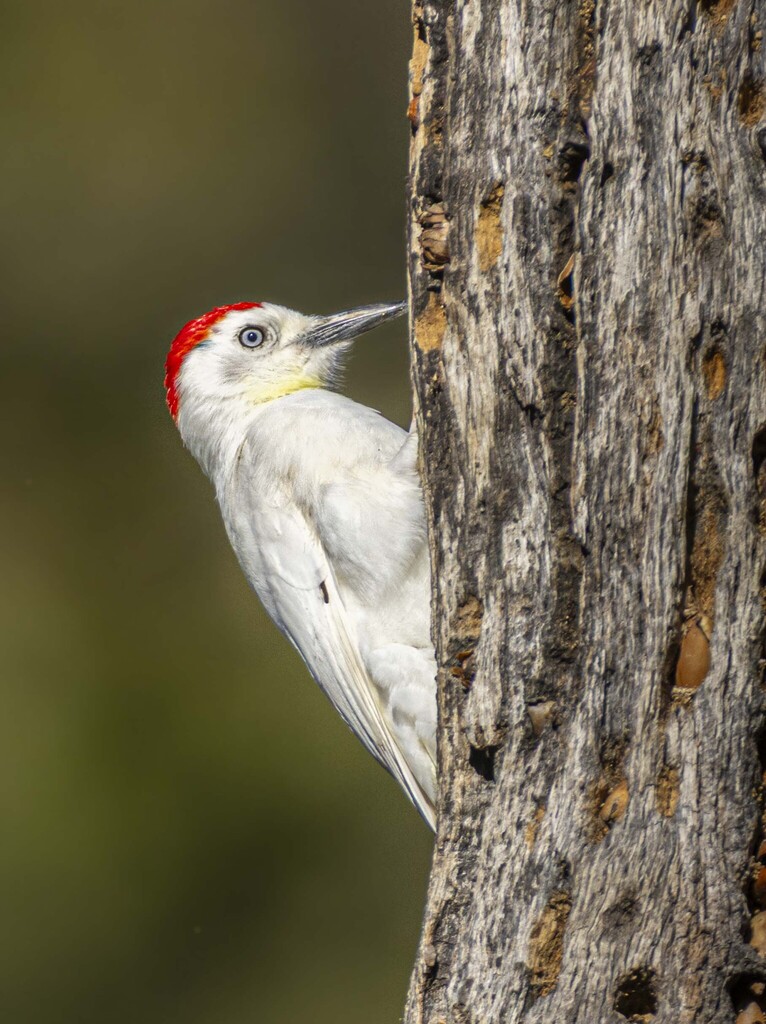
(c) Brooke J., some rights reserved (CC BY) · licence
Family: Picidae · Class: Aves · Order: Piciformes
Melanerpes formicivorus (Acorn Woodpecker) is a California animal in the Picidae family.
The Acorn Woodpecker is a medium-sized woodpecker measuring 19 to 23 cm (7.5 to 9 inches) in length with a wingspan of 35 to 43 cm (14 to 17 inches). Adults weigh 65 to 90 grams. The species displays striking black and white plumage with a bright red crown. Males have red extending from the forehead to the nape, while females show a black band separating the red forehead from the red nape. Both sexes have white foreheads, black faces with white eye patches, white rumps, and black wings with prominent white patches visible in flight. The underparts are whitish with black streaking on the breast and flanks. Acorn Woodpeckers range from southwestern Oregon through California and into Baja California, with populations extending through parts of Arizona, New Mexico, Texas, and south through Mexico to Colombia. In California, they occur primarily in oak woodlands throughout the Coast Ranges, Sierra Nevada foothills, and Peninsular Ranges, from sea level to approximately 2,100 meters (7,000 feet) elevation. The species is resident year-round in suitable habitat. The species inhabits oak woodlands, pine-oak forests, and riparian woodlands where oak trees are present. They show strong association with areas containing multiple oak species, particularly coast live oak, valley oak, canyon live oak, and blue oak. Acorn Woodpeckers also utilize ponderosa pine, Douglas fir, and other coniferous trees for nesting and roosting. The species requires both oak trees for acorn production and suitable storage trees or structures for their granary systems. Acorn Woodpeckers are highly social, living in family groups of 3 to 15 individuals that cooperatively defend territories and maintain communal granaries. These granaries consist of thousands of holes drilled into dead trees, utility poles, or wooden structures, where the birds store individual acorns for winter consumption. Groups harvest acorns during fall, with each bird capable of storing up to 50,000 acorns annually. The species also feeds on insects, tree sap, and occasionally fruit and bird eggs. Breeding occurs from April through June, with 2 to 6 individuals sharing nesting duties. Females lay 3 to 7 white eggs in tree cavities, which are incubated for 11 to 14 days. Multiple adults participate in feeding and caring for young, which fledge after 30 to 32 days. Acorn Woodpeckers are not federally or state listed and maintain stable populations throughout most of their California range. The species benefits from oak woodland conservation efforts and has adapted to some human-modified landscapes. However, habitat loss from urban development, oak woodland conversion, and fire suppression affecting oak regeneration pose ongoing challenges. Climate change may impact oak acorn production cycles, potentially affecting the species' primary food source and storage behavior.
Classification
Class: Aves · Order: Piciformes · Family: Picidae
Frequently asked questions
How is Melanerpes formicivorus classified?
Melanerpes formicivorus belongs to class Aves, order Piciformes, family Picidae.
What family does Melanerpes formicivorus belong to?
Melanerpes formicivorus is in the Picidae family.
What is Melanerpes formicivorus?
The Acorn Woodpecker is a medium-sized woodpecker measuring 19 to 23 cm (7.5 to 9 inches) in length with a wingspan of 35 to 43 cm (14 to 17 inches).
Is Melanerpes formicivorus found in California?
Yes. Melanerpes formicivorus is recorded in California in The California Species Project's catalogue.
Related species
Other California species in the same genus, family, or bioregion.
Data from The California Species Project — 14,000+ California species with verified data from CNPS, CDFW, USFWS, and more.