Melanerpes uropygialis
Gila woodpecker
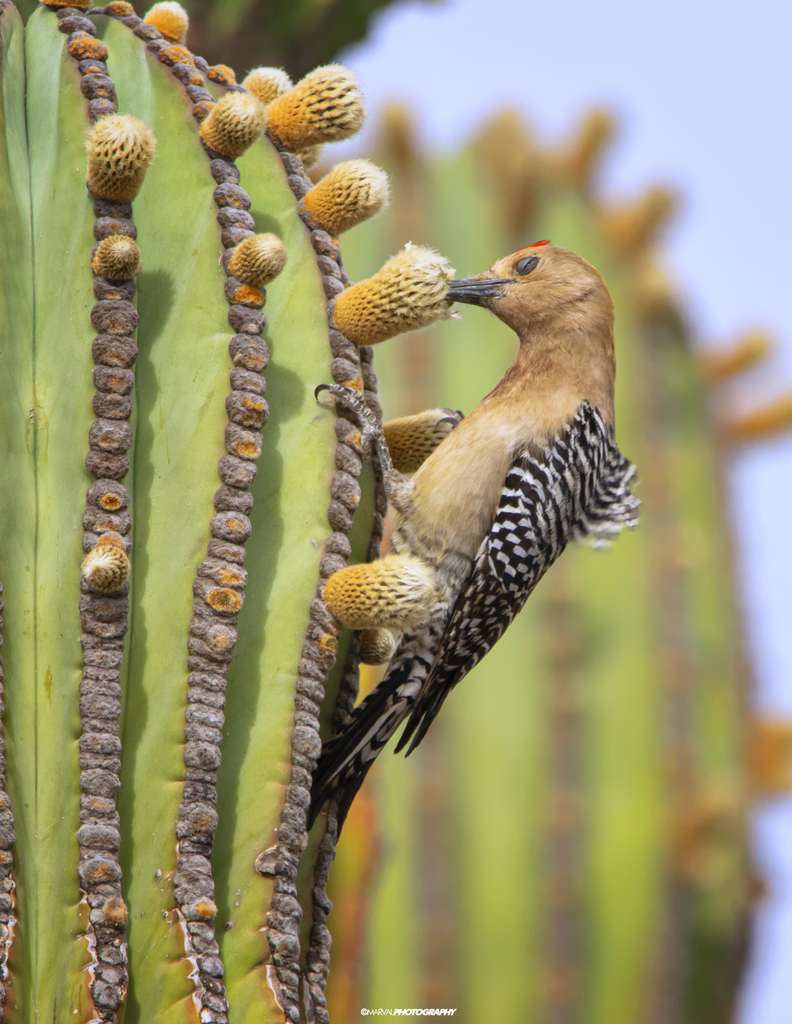
(c) MarvalPhotography19, some rights reserved (CC BY) · licence
Family: Picidae · Class: Aves · Order: Piciformes
Conservation status: SE · G5 S2
Melanerpes uropygialis (Gila woodpecker) is a California animal in the Picidae family.
The Gila woodpecker is a medium-sized woodpecker measuring 20 to 25 cm (8 to 10 inches) in length with a wingspan of approximately 41 cm (16 inches). Males display a distinctive red crown patch that extends from the forehead to the nape, while females lack this red coloration. Both sexes exhibit black and white barred patterns across the back, wings, and tail. The underparts are grayish-buff with a brownish wash on the flanks. The species possesses a straight, chisel-like bill typical of woodpeckers and zygodactyl feet with two toes facing forward and two backward for climbing vertical surfaces. Historically, Gila woodpeckers occurred in the Colorado River valley of southeastern California, extending into Arizona, Nevada, and northwestern Mexico. In California, the species was documented in Imperial and Riverside counties, particularly in riparian areas along the Colorado River from Needles south to the Mexican border. Current breeding populations in California are extremely limited, with the species now considered extirpated from most historical locations. Small populations may persist in restored habitat areas, but occurrence is irregular and breeding is rarely documented. Gila woodpeckers inhabit desert riparian woodlands dominated by large cottonwoods, willows, and mesquite trees. The species shows strong association with mature Fremont cottonwood and Goodding's willow galleries along river channels and desert washes. Elevation ranges from sea level to approximately 610 meters (2,000 feet) in California. Critical habitat features include large trees with suitable nesting cavities and sufficient trunk diameter for excavation. The species also utilizes desert wash vegetation including ironwood, palo verde, and mature mesquite bosques. Gila woodpeckers are non-migratory residents that maintain territories year-round. The species exhibits typical woodpecker foraging behavior, probing bark crevices and excavating insects from dead wood. Diet consists primarily of insects including beetle larvae, ants, and wood-boring insects, supplemented by cactus fruits, berries, and occasionally bird eggs. Breeding occurs from April through August, with peak activity in May and June. Pairs excavate nest cavities in dead or dying tree trunks, typically 3 to 6 meters (10 to 20 feet) above ground. Clutch size ranges from 3 to 5 white eggs, with both parents sharing incubation duties for 11 to 14 days. The California Department of Fish and Wildlife lists the Gila woodpecker as state endangered, with populations severely reduced from historical levels. The species faces ongoing threats from habitat loss due to water diversions, dam construction, and urban development along the Colorado River. Invasive plant species, particularly saltcedar, have altered riparian forest composition and structure. Climate change and prolonged drought conditions further stress remaining habitat. Recovery efforts focus on riparian habitat restoration and water management practices that maintain natural flow regimes necessary for cottonwood-willow forest regeneration.
Classification
Class: Aves · Order: Piciformes · Family: Picidae
Conservation status
SE · G5 S2
Frequently asked questions
How is Melanerpes uropygialis classified?
Melanerpes uropygialis belongs to class Aves, order Piciformes, family Picidae.
What family does Melanerpes uropygialis belong to?
Melanerpes uropygialis is in the Picidae family.
Is Melanerpes uropygialis protected or of conservation concern?
Melanerpes uropygialis carries the following status: SE · G5 S2.
What is Melanerpes uropygialis?
The Gila woodpecker is a medium-sized woodpecker measuring 20 to 25 cm (8 to 10 inches) in length with a wingspan of approximately 41 cm (16 inches).
Is Melanerpes uropygialis found in California?
Yes. Melanerpes uropygialis is recorded in California in The California Species Project's catalogue.
Related species
Other California species in the same genus, family, or bioregion.
Data from The California Species Project — 14,000+ California species with verified data from CNPS, CDFW, USFWS, and more.