Melanitta perspicillata
Surf Scoter
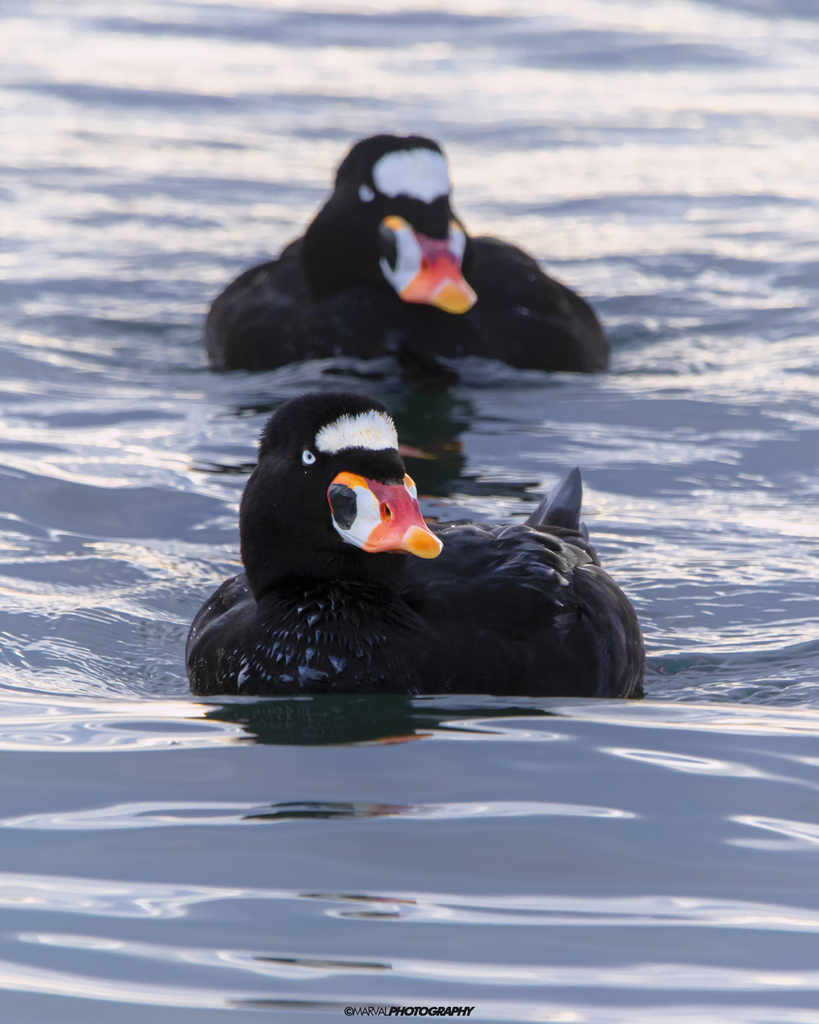
(c) MarvalPhotography19, some rights reserved (CC BY) · licence
Family: Anatidae · Class: Aves · Order: Anseriformes
Melanitta perspicillata (Surf Scoter) is a California animal in the Anatidae family.
The Surf Scoter is a medium-sized sea duck with distinctive sexual dimorphism in plumage and size. Adult males measure 48 to 56 cm (19 to 22 inches) in length and weigh 0.9 to 1.4 kg (2.0 to 3.1 pounds). Males display striking black plumage with white patches on the forehead and nape, and a distinctive multicolored bill featuring orange, yellow, red, and black markings. The bill is notably swollen at the base, earning the species the colloquial name "skunk-head coot." Adult females are smaller, measuring 43 to 48 cm (17 to 19 inches) in length, with brown plumage and two pale cheek patches. Juveniles resemble adult females but with less defined facial markings. Surf Scoters breed across the boreal forests of Alaska and western Canada, from Alaska's interior through the Northwest Territories, northern Alberta, Saskatchewan, and Manitoba. In California, the species is present as a non-breeding resident along the entire Pacific coast from October through April. Major wintering concentrations occur in San Francisco Bay, Monterey Bay, Morro Bay, and coastal waters from Point Reyes south to the Mexican border. The species also utilizes inland waters including the Salton Sea and larger reservoirs during migration. During the non-breeding season in California, Surf Scoters inhabit nearshore marine waters, bays, estuaries, and protected coastal areas. They prefer waters 2 to 20 meters (6 to 65 feet) deep with sandy or rocky bottoms that support abundant mollusk populations. The species also uses freshwater lakes and large rivers during migration, particularly in the Central Valley and Sierra Nevada foothills. Surf Scoters are diving ducks that forage by submerging completely underwater for 20 to 60 seconds. Their diet consists primarily of mollusks, particularly blue mussels, clams, and oysters, which they crush with their powerful bills. They also consume crustaceans, marine worms, and small fish. During breeding season on northern lakes, they feed on aquatic insects, larvae, and freshwater mollusks. Breeding occurs from May through August, with females constructing ground nests near water and laying 5 to 9 buff-colored eggs. Incubation lasts 28 to 30 days, and ducklings fledge after 55 to 60 days. The Surf Scoter is not federally or state-listed in California, and populations appear stable across much of their range according to the North American Bird Conservation Initiative. However, the species faces threats from coastal development, oil spills, marine pollution, and climate change impacts on prey availability. Eelgrass bed degradation in key wintering areas like San Francisco Bay may affect foraging habitat quality. The Christmas Bird Count data indicates relatively stable numbers in California coastal areas, though long-term population trends require continued monitoring to assess potential impacts from changing ocean conditions.
Classification
Class: Aves · Order: Anseriformes · Family: Anatidae
Frequently asked questions
How is Melanitta perspicillata classified?
Melanitta perspicillata belongs to class Aves, order Anseriformes, family Anatidae.
What family does Melanitta perspicillata belong to?
Melanitta perspicillata is in the Anatidae family.
What is Melanitta perspicillata?
The Surf Scoter is a medium-sized sea duck with distinctive sexual dimorphism in plumage and size.
Is Melanitta perspicillata found in California?
Yes. Melanitta perspicillata is recorded in California in The California Species Project's catalogue.
Related species
Other California species in the same genus, family, or bioregion.
Data from The California Species Project — 14,000+ California species with verified data from CNPS, CDFW, USFWS, and more.