Melanophila consputa
Charcoal Beetle
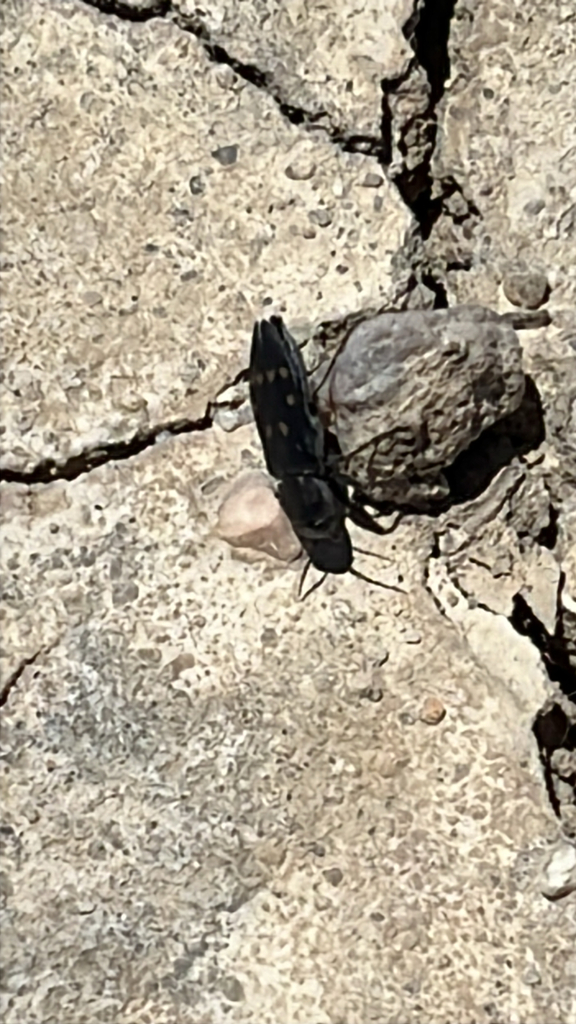
(c) htasoff, some rights reserved (CC BY) · licence
Family: Buprestidae · Class: Insecta · Order: Coleoptera
Melanophila consputa (Charcoal Beetle) is a California animal in the Buprestidae family.
The Charcoal Beetle (Melanophila consputa) is a metallic wood-boring beetle in the family Buprestidae. This species belongs to the tribe Melanophilini within the subfamily Buprestinae. Adults are typically dark-colored beetles with a metallic sheen characteristic of buprestid beetles, though specific morphometric data for this species remains limited in the scientific literature. Melanophila consputa occurs in western North America, with documented populations in California, Nevada, and other western states. In California, the species has been recorded in the Central Valley region, including portions of the Sacramento and San Joaquin valleys. Nevada populations have been documented in Clark County, specifically in the Desert National Wildlife Refuge area, including the Sheep Range near Mormon Pass and Hayford Peak (BugGuide 2014). The species appears to have a patchy distribution pattern typical of many specialized wood-boring beetles. This species inhabits pinyon-juniper forest ecosystems and other coniferous woodland habitats. In Nevada, it has been observed at elevations around 7,247 feet in pinyon-juniper forest communities. The beetles are strongly associated with fire-disturbed areas and recently burned forests. Adults have been observed in large numbers along fire perimeters and near active fire zones, suggesting they are attracted to heat signatures from burning or recently burned wood (BugGuide 2014). Charcoal beetles exhibit pyrophilous behavior, meaning they are attracted to fires and freshly burned areas. This behavioral adaptation allows them to locate optimal breeding sites in fire-damaged trees. Adults use specialized infrared sensors to detect heat from fires, sometimes arriving at burn sites while fires are still active. Females typically deposit eggs in the bark crevices of fire-killed or fire-damaged coniferous trees. Larvae develop as wood borers, feeding on the cambium and inner bark tissues of dead or dying trees. The species appears to have a univoltine life cycle, completing one generation per year, though detailed life history studies are lacking. The conservation status of Melanophila consputa has not been formally assessed by state or federal agencies. The species lacks federal or state listing status and has no designated conservation rank as of December 2025. Limited scientific documentation exists regarding population trends, specific threats, or conservation needs. The species' dependence on fire-disturbed habitats may make it vulnerable to changes in fire management practices and forest management policies. Suppression of natural fire cycles could potentially impact habitat availability for this pyrophilous species. However, increased wildfire frequency due to climate change may provide additional breeding opportunities, though the long-term effects of altered fire regimes on beetle populations remain unstudied. Detailed ecological studies of this species are lacking. The above information synthesizes available observations from BugGuide and limited federal agency records. We welcome contributions of verified scientific data, photographs, or field observations to enhance this species account.
Classification
Class: Insecta · Order: Coleoptera · Family: Buprestidae
Frequently asked questions
How is Melanophila consputa classified?
Melanophila consputa belongs to class Insecta, order Coleoptera, family Buprestidae.
What family does Melanophila consputa belong to?
Melanophila consputa is in the Buprestidae family.
What is Melanophila consputa?
The Charcoal Beetle (Melanophila consputa) is a metallic wood-boring beetle in the family Buprestidae.
Is Melanophila consputa found in California?
Yes. Melanophila consputa is recorded in California in The California Species Project's catalogue.
Related species
Other California species in the same genus, family, or bioregion.
Data from The California Species Project — 14,000+ California species with verified data from CNPS, CDFW, USFWS, and more.