Melanopleurus pyrrhopterus
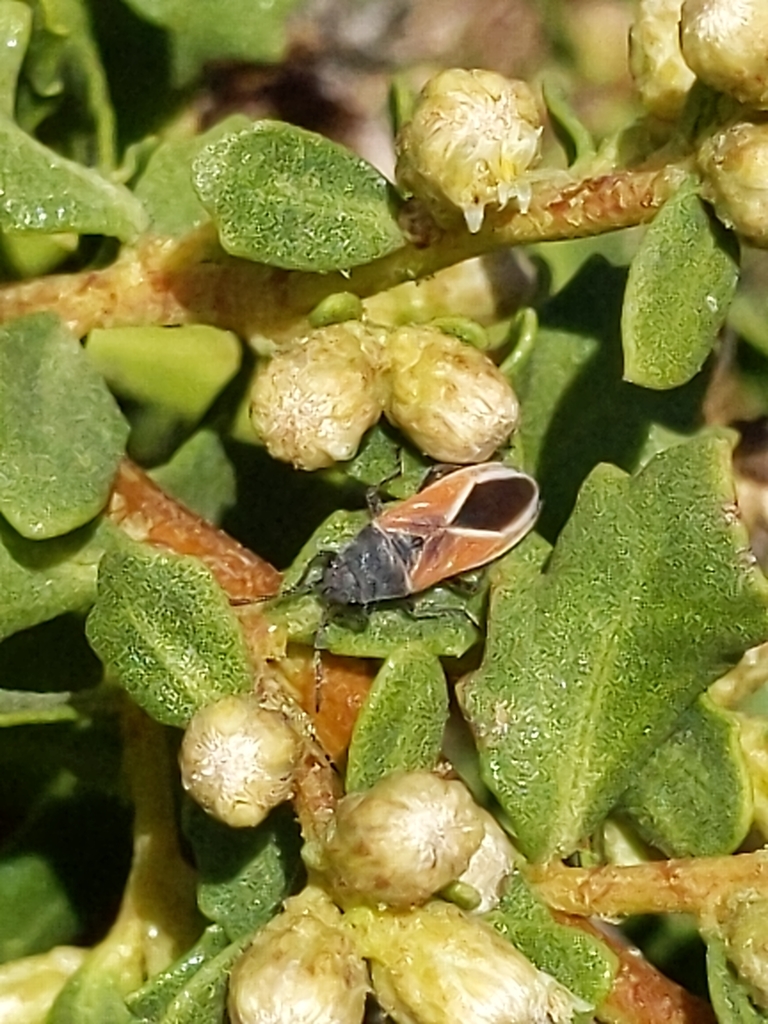
(c) Ken-ichi Ueda, some rights reserved (CC BY) · licence
Family: Lygaeidae · Class: Insecta · Order: Hemiptera
Melanopleurus pyrrhopterus is a California animal in the Lygaeidae family.
Melanopleurus pyrrhopterus is a species of seed bug in the family Lygaeidae, subfamily Lygaeinae. This hemipteran species is classified within the superfamily Lygaeoidea and is recognized in the U.S. Fish and Wildlife Service taxonomic database with TSN number 107830 (USFWS Taxonomic Tree). The physical characteristics of this species have not been well documented in available scientific literature. Like other members of the Lygaeidae family, it likely possesses the typical seed bug morphology with piercing-sucking mouthparts adapted for feeding on plant juices, though specific measurements and distinguishing features remain undocumented. The geographic range and distribution of M. pyrrhopterus are not clearly established in current scientific records. The species' presence in California, if confirmed, would require verification through systematic surveys and taxonomic studies. Many lygaeid species have restricted ranges, particularly in western North America, but specific locality data for this species are lacking. Habitat requirements and ecological preferences for M. pyrrhopterus remain undescribed. Members of the Lygaeidae family typically inhabit diverse terrestrial environments including grasslands, shrublands, and forest edges, where they associate with their host plants. The substrate preferences, elevation range, and microhabitat requirements for this particular species have not been documented. Behavioral and ecological information is extremely limited. Lygaeid bugs generally feed on seeds and plant fluids using their specialized mouthparts, but the specific host plant relationships, feeding preferences, seasonal activity patterns, and reproductive biology of M. pyrrhopterus have not been studied or reported in accessible scientific literature. Life cycle details including developmental stages, overwintering strategies, and population dynamics remain unknown. The conservation status of this species is unclear due to the lack of population data and distribution information. The species does not appear to have federal or state conservation listings, though this may reflect insufficient survey effort rather than actual abundance. The absence of recent scientific studies or field observations makes it impossible to assess population trends, threats, or conservation needs. Many invertebrate species, particularly those in specialized taxonomic groups, remain poorly studied despite their potential ecological importance. Scientific documentation for this species remains extremely limited. The information presented here is based on available taxonomic databases and general knowledge of the Lygaeidae family. Comprehensive field studies are needed to document this species' distribution, ecology, and conservation status. We welcome contributions of verified scientific data, photographs, or field observations to enhance this species account.
Classification
Class: Insecta · Order: Hemiptera · Family: Lygaeidae
Frequently asked questions
How is Melanopleurus pyrrhopterus classified?
Melanopleurus pyrrhopterus belongs to class Insecta, order Hemiptera, family Lygaeidae.
What family does Melanopleurus pyrrhopterus belong to?
Melanopleurus pyrrhopterus is in the Lygaeidae family.
What is Melanopleurus pyrrhopterus?
Melanopleurus pyrrhopterus is a species of seed bug in the family Lygaeidae, subfamily Lygaeinae.
Is Melanopleurus pyrrhopterus found in California?
Yes. Melanopleurus pyrrhopterus is recorded in California in The California Species Project's catalogue.
Related species
Other California species in the same genus, family, or bioregion.
Data from The California Species Project — 14,000+ California species with verified data from CNPS, CDFW, USFWS, and more.