Melanoplus bivittatus
Two-striped Grasshopper
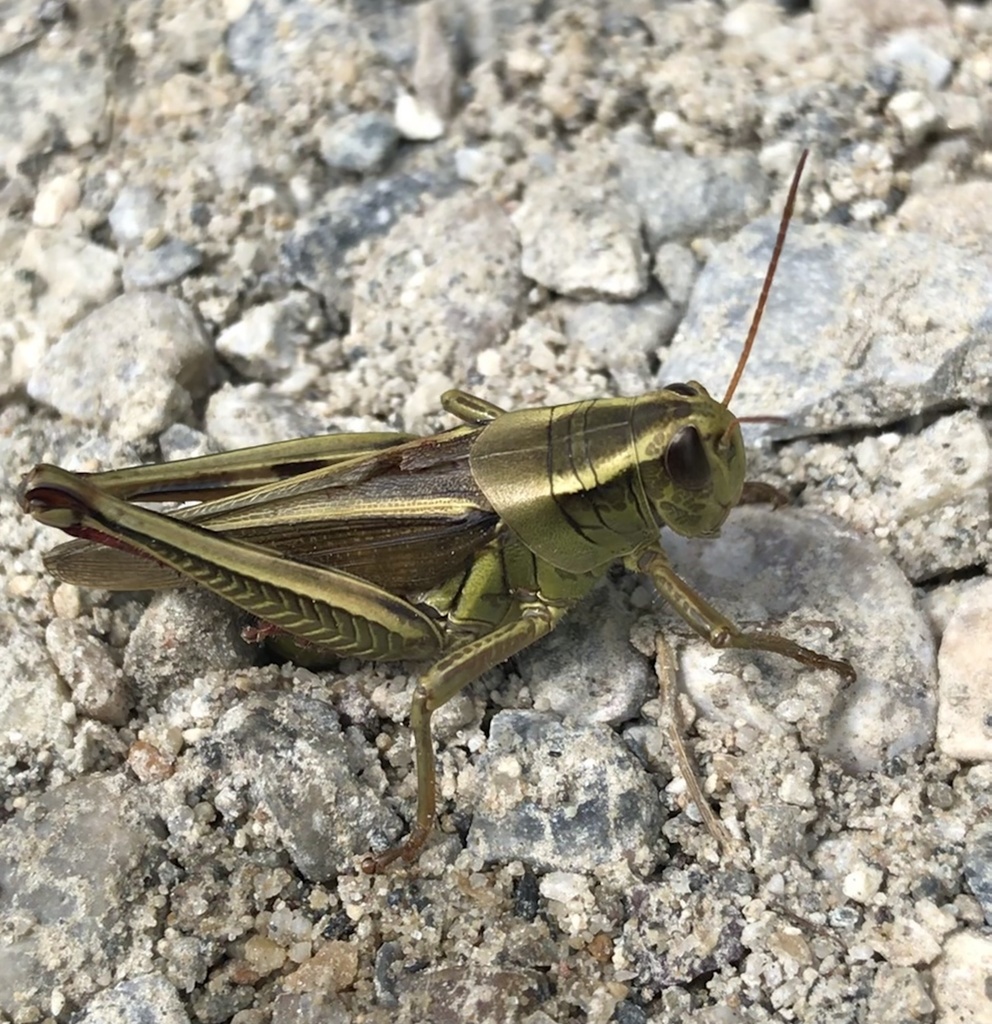
(c) Allison Zon, some rights reserved (CC BY) · licence
Family: Acrididae · Class: Insecta · Order: Orthoptera
Melanoplus bivittatus (Two-striped Grasshopper) is a California animal in the Acrididae family.
The Two-striped Grasshopper (Melanoplus bivittatus) is a medium-sized grasshopper belonging to the subfamily Melanoplinae within the family Acrididae. Adults typically measure 25-35 mm (1.0-1.4 inches) in length, with females generally larger than males. The species is characterized by two pale longitudinal stripes running along the dorsal surface, from which it derives its common name. The body coloration ranges from brown to gray-green, providing effective camouflage in grassy habitats. Males can be distinguished by their distinctive abdominal structures and are generally more slender than females. Melanoplus bivittatus has a broad distribution across North America, extending from Canada south through the United States into Mexico. In California, the species occurs throughout much of the state, from coastal areas to inland valleys and mountain regions. According to BugGuide, the species is found in diverse elevational zones and climate types across its range, demonstrating considerable ecological adaptability. The Two-striped Grasshopper inhabits a variety of open habitats with herbaceous plant cover. According to BugGuide, it typically occurs in relatively sunny, moist, lush, weedy or meadowy areas, including natural meadows, prairies, crop fields, and roadsides. The species shows a preference for areas with diverse plant communities and adequate moisture, though it can tolerate a range of environmental conditions from sea level to moderate elevations in mountainous regions. This species exhibits typical grasshopper life cycle patterns, overwintering as eggs deposited in soil. Eggs hatch in spring, and nymphs undergo five molts before reaching adult stage. Adults are active from late spring through fall, with peak abundance typically occurring in mid to late summer. The Two-striped Grasshopper is primarily diurnal, most active during warm, sunny periods. It is a generalist herbivore, feeding on a wide variety of herbaceous plants including grasses, forbs, and agricultural crops. While typically not causing significant agricultural damage in California, it can occasionally reach pest levels in certain crops and gardens when populations are high. The Two-striped Grasshopper is not listed under the Endangered Species Act and has no special conservation status in California. The species maintains stable populations throughout most of its range and is considered common in suitable habitats. Its broad habitat tolerance and generalist feeding habits contribute to its ecological success. Climate change may affect its distribution patterns, particularly at elevational and latitudinal range boundaries, but the species' adaptability suggests it will likely persist across most of its current range. No specific conservation measures are currently needed for this species, though maintaining diverse grassland and meadow habitats benefits this and other native orthopteran species.
Classification
Class: Insecta · Order: Orthoptera · Family: Acrididae
Frequently asked questions
How is Melanoplus bivittatus classified?
Melanoplus bivittatus belongs to class Insecta, order Orthoptera, family Acrididae.
What family does Melanoplus bivittatus belong to?
Melanoplus bivittatus is in the Acrididae family.
What is Melanoplus bivittatus?
The Two-striped Grasshopper (Melanoplus bivittatus) is a medium-sized grasshopper belonging to the subfamily Melanoplinae within the family Acrididae.
Is Melanoplus bivittatus found in California?
Yes. Melanoplus bivittatus is recorded in California in The California Species Project's catalogue.
Related species
Other California species in the same genus, family, or bioregion.
Data from The California Species Project — 14,000+ California species with verified data from CNPS, CDFW, USFWS, and more.