Melanoplus hesperus
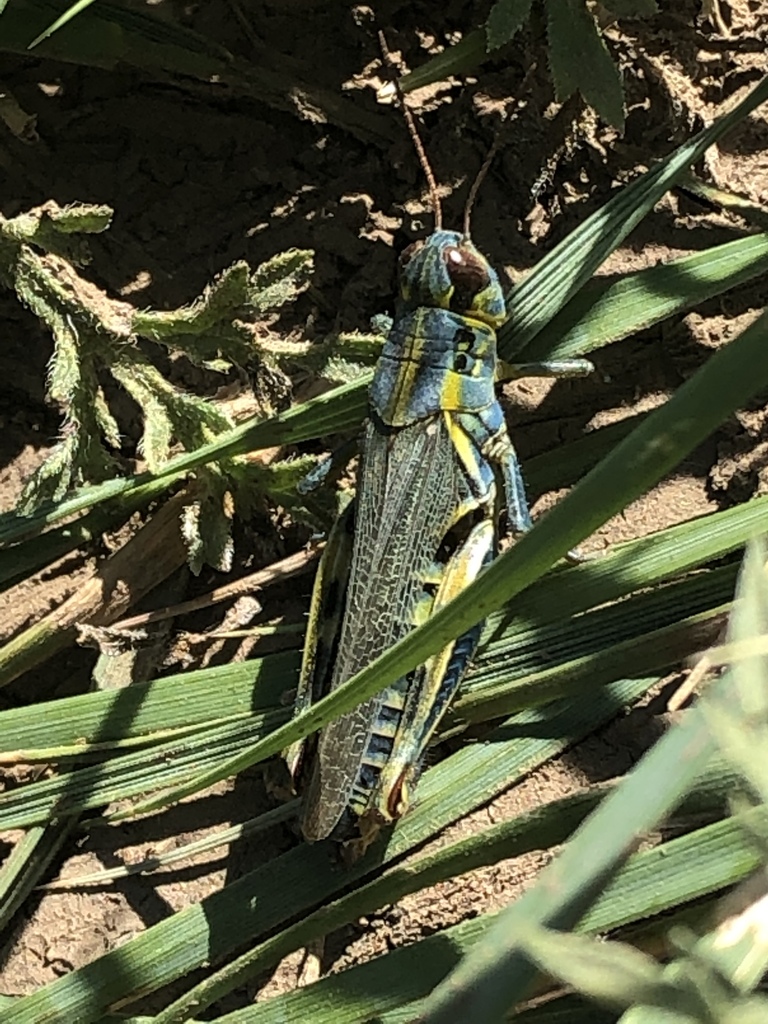
(c) Jared Shorma, some rights reserved (CC BY) · licence
Family: Acrididae · Class: Insecta · Order: Orthoptera
Melanoplus hesperus is a California animal in the Acrididae family.
Melanoplus hesperus is a grasshopper species in the family Acrididae, belonging to the large genus Melanoplus which comprises numerous North American spur-throat grasshoppers. This species is distinguished from closely related taxa such as M. fricki by subtle morphological characteristics, particularly the structure of the furculae (paired projections on the male subgenital plate), which tend to be broader and more divergent in M. hesperus compared to the slimmer, less divergent furculae of M. fricki (BugGuide 2025). The species occurs in California, where it has been documented in various locations including the greater Ballona Wetlands area of Los Angeles County (Mattoni 1991). Like other members of the genus Melanoplus, M. hesperus likely exhibits the typical grasshopper body plan with well-developed hind legs adapted for jumping, though specific morphometric data for this species remains limited in the scientific literature. Melanoplus hesperus inhabits diverse California ecosystems, with documented occurrences in coastal wetland complexes and associated upland areas. The species' presence in the Ballona Wetlands suggests tolerance for habitats influenced by marine proximity, though its full habitat preferences across California have not been comprehensively documented. Many Melanoplus species occupy grasslands, shrublands, and edge habitats where they feed on various herbaceous plants. As a member of the Acrididae, M. hesperus is presumed to be primarily herbivorous, feeding on grasses and forbs typical of its habitat. The species likely follows the general reproductive pattern of temperate grasshoppers, with eggs deposited in soil during late summer or fall, overwintering as eggs, and hatching in spring when temperatures and moisture conditions become favorable. Adults would typically be present during summer months, though specific phenology data for this species is not well documented. The conservation status of Melanoplus hesperus has not been formally assessed by state or federal agencies. The species does not appear on current threatened or endangered species lists, nor does it hold any special conservation designations as of December 2025. However, like many native grasshopper species in California, M. hesperus may face habitat pressures from urbanization, agricultural conversion, and invasive plant species that alter native plant communities. The documentation of this species in the Ballona Wetlands, an area subject to significant urban development pressure, highlights the potential vulnerability of populations in rapidly developing coastal regions. Taxonomic relationships within the genus Melanoplus remain complex, with some species pairs like M. hesperus and M. fricki requiring careful morphological examination for reliable identification. This taxonomic complexity may contribute to gaps in our understanding of individual species' distributions and ecological requirements. Continued systematic study and field surveys would help clarify the current status and habitat needs of M. hesperus across its California range.
Classification
Class: Insecta · Order: Orthoptera · Family: Acrididae
Frequently asked questions
How is Melanoplus hesperus classified?
Melanoplus hesperus belongs to class Insecta, order Orthoptera, family Acrididae.
What family does Melanoplus hesperus belong to?
Melanoplus hesperus is in the Acrididae family.
What is Melanoplus hesperus?
Melanoplus hesperus is a grasshopper species in the family Acrididae, belonging to the large genus Melanoplus which comprises numerous North American spur-throat grasshoppers.
Is Melanoplus hesperus found in California?
Yes. Melanoplus hesperus is recorded in California in The California Species Project's catalogue.
Related species
Other California species in the same genus, family, or bioregion.
Data from The California Species Project — 14,000+ California species with verified data from CNPS, CDFW, USFWS, and more.