Melanostoma mellinum
Variable Duskyface Fly
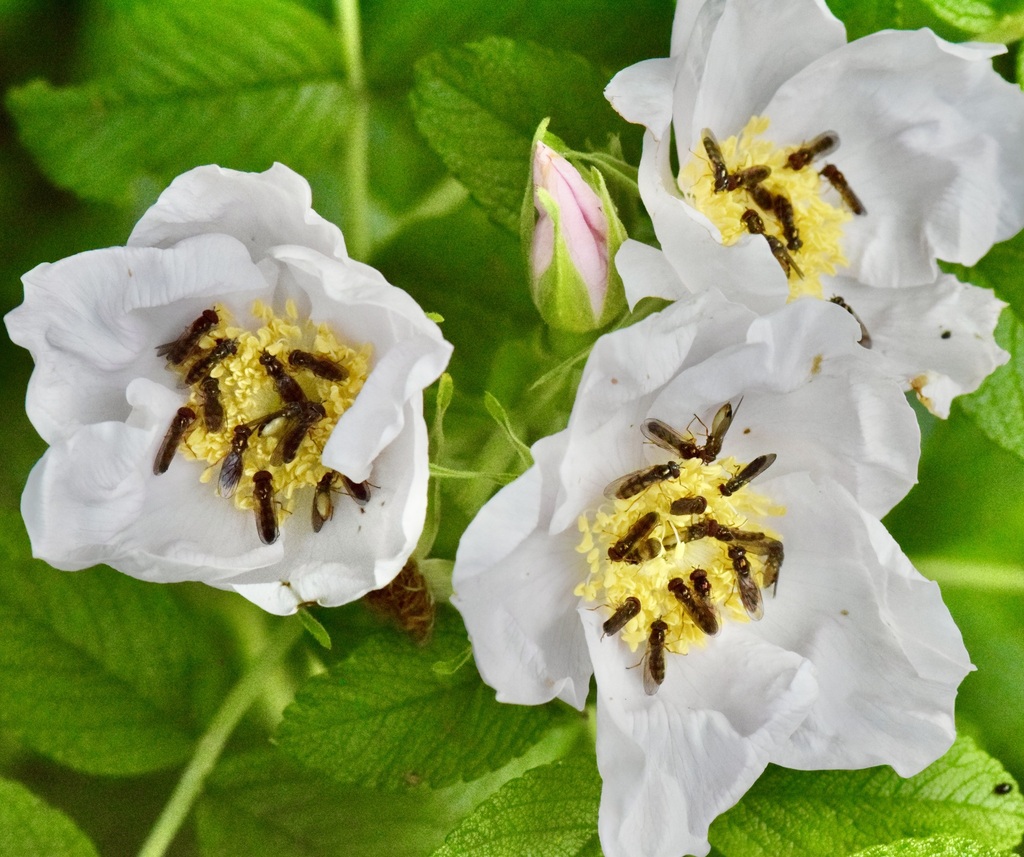
(c) Bernie Paquette, some rights reserved (CC BY) · licence
Family: Syrphidae · Class: Insecta · Order: Diptera
Melanostoma mellinum (Variable Duskyface Fly) is a California animal in the Syrphidae family.
Scientific documentation for Melanostoma mellinum, commonly known as the Variable Duskyface Fly, is extremely limited in available authoritative sources. This species belongs to the family Syrphidae, commonly known as hover flies or flower flies, within the order Diptera. Syrphid flies are generally characterized by their ability to hover in place and their important ecological role as both pollinators and predators of aphids during their larval stage. The genus Melanostoma contains several species of small to medium-sized hover flies, though specific morphological details for M. mellinum have not been well documented in accessible scientific literature. Like other members of Syrphidae, adults likely possess large compound eyes, short antennae, and wing venation patterns typical of the family. The common name 'Variable Duskyface Fly' suggests some degree of facial coloration variation, though specific descriptive details require verification from taxonomic sources. Distribution information for this species is not well established in current literature. The genus Melanostoma has representatives across various geographic regions, but the specific range of M. mellinum requires documentation from authoritative taxonomic databases or regional fauna surveys. Habitat preferences for this species have not been adequately described in available sources. Syrphid flies typically occupy diverse habitats where flowering plants provide nectar sources for adults, though species-specific requirements vary considerably within the family. Ecological information regarding behavior, life cycle, and host relationships for M. mellinum is lacking in current documentation. Most syrphid flies exhibit complete metamorphosis, with eggs laid near aphid colonies or in organic matter, depending on larval feeding habits. Adults typically feed on nectar and pollen, contributing to pollination services, though species-specific behavioral patterns require further research. Conservation status information is not available for this species. No federal or state listing status has been documented, and population trends remain unknown. The lack of comprehensive ecological data makes assessment of conservation needs difficult. Detailed ecological studies of this species are lacking. The above information synthesizes general knowledge of the Syrphidae family, as specific data for M. mellinum was not found in available scientific literature. We welcome contributions of verified scientific data, photographs, or field observations to enhance this species account.
Classification
Class: Insecta · Order: Diptera · Family: Syrphidae
Frequently asked questions
How is Melanostoma mellinum classified?
Melanostoma mellinum belongs to class Insecta, order Diptera, family Syrphidae.
What family does Melanostoma mellinum belong to?
Melanostoma mellinum is in the Syrphidae family.
What is Melanostoma mellinum?
Scientific documentation for Melanostoma mellinum, commonly known as the Variable Duskyface Fly, is extremely limited in available authoritative sources.
Is Melanostoma mellinum found in California?
Yes. Melanostoma mellinum is recorded in California in The California Species Project's catalogue.
Related species
Other California species in the same genus, family, or bioregion.
Data from The California Species Project — 14,000+ California species with verified data from CNPS, CDFW, USFWS, and more.