Melanotus longulus
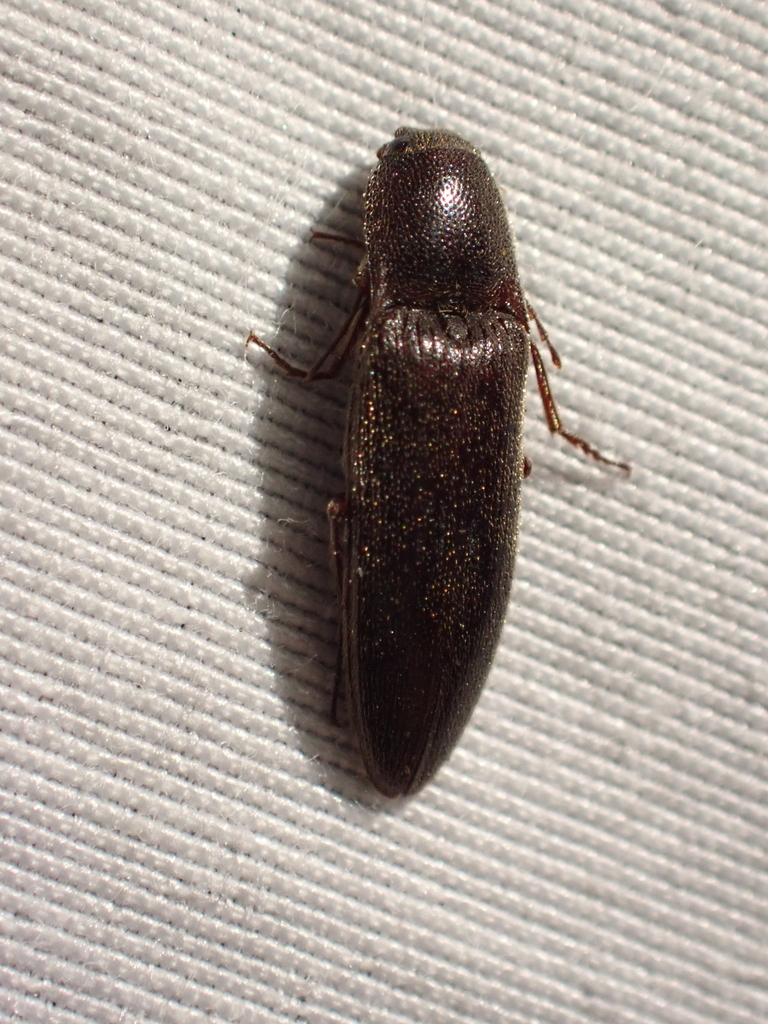
no rights reserved · CC0
Family: Elateridae · Class: Insecta · Order: Coleoptera
Melanotus longulus is a California animal in the Elateridae family.
Melanotus longulus is a click beetle (family Elateridae) classified as a subspecies Melanotus longulus longulus according to USFWS taxonomic records. As with most click beetles, adults likely possess the characteristic ability to right themselves when placed on their backs by flexing their bodies and producing an audible clicking sound, though specific morphological descriptions for this species are not well documented in available literature. The species occurs in the northeastern United States, with USFWS records indicating presence at Moosehorn National Wildlife Refuge. The current range appears to be highly restricted based on federal listing status, though historical distribution data are not readily available in scientific literature. Specific habitat requirements for Melanotus longulus have not been well documented in accessible sources. Like other Melanotus species, it likely inhabits terrestrial environments where larvae develop in soil or decaying organic matter, though the particular substrate preferences and microhabitat needs of this species remain unclear from available documentation. Ecological information including diet, reproductive behavior, seasonal activity patterns, and life cycle duration has not been comprehensively studied or published for this species. Adult click beetles typically feed on nectar, pollen, or plant materials, while larvae are often predatory or feed on decaying organic matter in soil, but specific behavioral ecology of M. longulus requires further research to document. Melanotus longulus longulus is listed as endangered under the Endangered Species Act according to USFWS ECOS database records (as of December 2025). The species appears on federal species lists with the designation 'wherever found,' indicating protection across its entire range. Primary threats, population trends, and recovery efforts have not been detailed in readily accessible conservation documents, suggesting this species may represent one of the lesser-studied endangered invertebrates. The lack of comprehensive biological information highlights the need for targeted research to inform effective conservation strategies. Scientific documentation for this species remains extremely limited despite its federal endangered status. The information presented here synthesizes available data from USFWS taxonomic and species databases. Additional research is needed to document basic life history characteristics, population status, specific threats, and habitat requirements essential for species recovery planning. Enhanced field studies and taxonomic research would significantly improve our understanding of this rare click beetle's biology and conservation needs.
Classification
Class: Insecta · Order: Coleoptera · Family: Elateridae
Frequently asked questions
How is Melanotus longulus classified?
Melanotus longulus belongs to class Insecta, order Coleoptera, family Elateridae.
What family does Melanotus longulus belong to?
Melanotus longulus is in the Elateridae family.
What is Melanotus longulus?
Melanotus longulus is a click beetle (family Elateridae) classified as a subspecies Melanotus longulus longulus according to USFWS taxonomic records.
Is Melanotus longulus found in California?
Yes. Melanotus longulus is recorded in California in The California Species Project's catalogue.
Related species
Other California species in the same genus, family, or bioregion.
Data from The California Species Project — 14,000+ California species with verified data from CNPS, CDFW, USFWS, and more.