Meleagris gallopavo
Wild Turkey
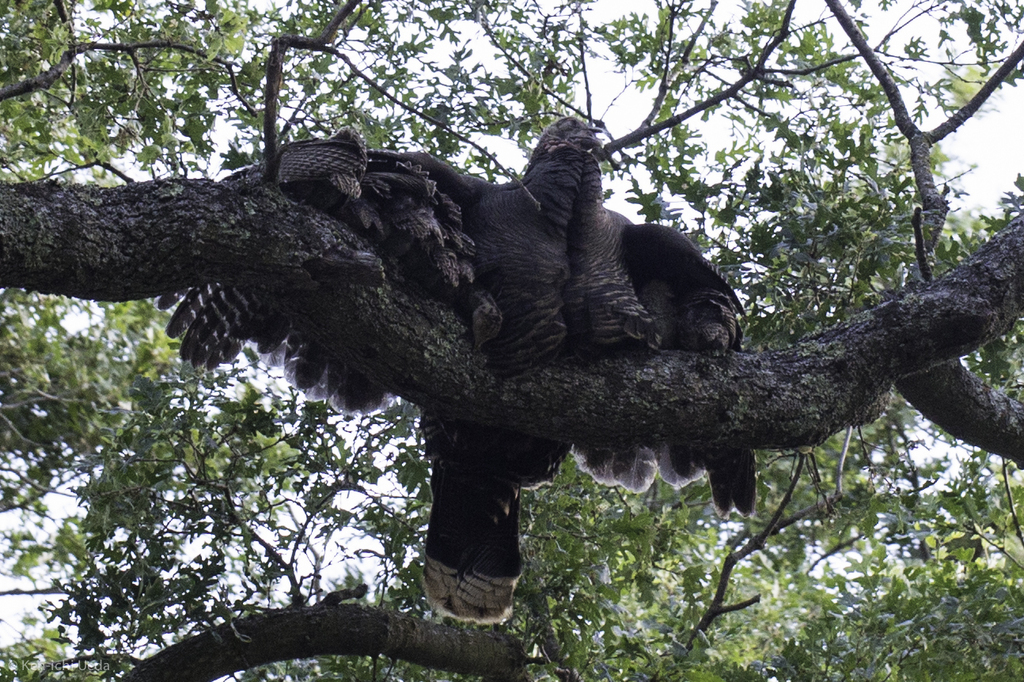
(c) Ken-ichi Ueda, some rights reserved (CC BY) · licence
Family: Phasianidae · Class: Aves · Order: Galliformes
Meleagris gallopavo (Wild Turkey) is a California animal in the Phasianidae family.
The Wild Turkey is a large, heavy-bodied ground-dwelling bird native to North America. Adult males (gobblers) measure 100-125 cm (39-49 inches) in length and weigh 5-11 kg (11-24 pounds), while females (hens) are smaller at 76-95 cm (30-37 inches) and 3-5.4 kg (6.6-12 pounds). Males display iridescent bronze and copper plumage with a distinctive fan-shaped tail, bare blue and red head with fleshy wattles, and a prominent beard of modified feathers extending from the chest. Females exhibit more subdued brown and gray coloration with less pronounced head ornamentation. Both sexes have strong, scaled legs with sharp spurs, particularly developed in males. Historically, Wild Turkeys ranged throughout much of North America from southern Canada to central Mexico. The species was extirpated from California by the early 1900s due to overhunting and habitat loss. Beginning in the 1950s, the California Department of Fish and Wildlife initiated restoration efforts, releasing Wild Turkeys from other states. These reintroduced populations have established breeding colonies in the Coast Ranges, Sierra Nevada foothills, Cascade Range, and scattered locations in Southern California mountains. Current populations are descendants of Rio Grande, Merriam's, and Eastern subspecies releases. Wild Turkeys inhabit oak woodlands, mixed conifer forests, riparian areas, and grassland-woodland interfaces. They prefer areas with scattered trees for roosting, open understory for foraging, and nearby water sources. Elevation ranges from sea level to approximately 2,000 meters (6,500 feet) in California. The species adapts to various habitat types but requires adequate tree coverage for nighttime roosting and escape cover. Wild Turkeys are omnivorous, consuming acorns, seeds, fruits, insects, small reptiles, and amphibians. Acorns constitute a primary food source, particularly during fall and winter months. Flocks follow seasonal movement patterns, often traveling several kilometers between foraging and roosting areas. Breeding occurs from March through May, with dominant males establishing territories and performing elaborate courtship displays. Females nest on the ground in concealed locations, laying 8-15 buff-colored eggs with brown spots. Incubation lasts 28 days, and poults remain with the hen through their first winter. Wild Turkeys are not federally or state listed and are classified as a game species in California. Populations have recovered substantially from historical lows, though they remain absent from much of their original California range. Current population estimates suggest several thousand individuals statewide, with numbers continuing to increase through natural reproduction and additional releases. Primary management challenges include habitat fragmentation, vehicle strikes, and conflicts with agricultural interests. The species' adaptability to human-modified landscapes has contributed to successful population recovery, though genetic diversity remains limited due to the small founding populations used in restoration efforts.
Classification
Class: Aves · Order: Galliformes · Family: Phasianidae
Frequently asked questions
How is Meleagris gallopavo classified?
Meleagris gallopavo belongs to class Aves, order Galliformes, family Phasianidae.
What family does Meleagris gallopavo belong to?
Meleagris gallopavo is in the Phasianidae family.
What is Meleagris gallopavo?
The Wild Turkey is a large, heavy-bodied ground-dwelling bird native to North America.
Is Meleagris gallopavo found in California?
Yes. Meleagris gallopavo is recorded in California in The California Species Project's catalogue.
Related species
Other California species in the same genus, family, or bioregion.
Data from The California Species Project — 14,000+ California species with verified data from CNPS, CDFW, USFWS, and more.