Melibe leonina
Hooded Nudibranch
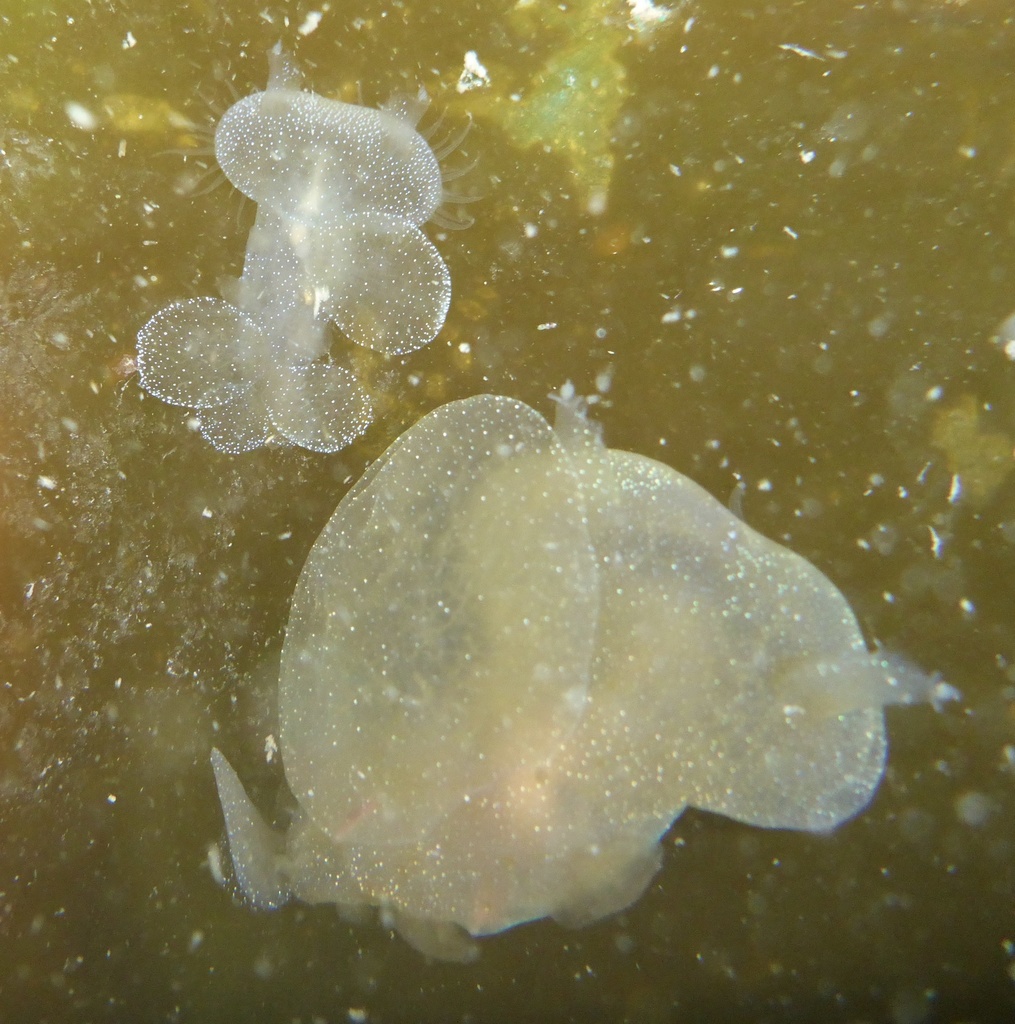
(c) Cricket Raspet, some rights reserved (CC BY) · licence
Family: Tethydidae · Class: Gastropoda · Order: Nudibranchia
Melibe leonina (Hooded Nudibranch) is a California animal in the Tethydidae family.
The hooded nudibranch is a large marine gastropod mollusk distinguished by its translucent, gelatinous body and distinctive feeding apparatus. Adults can reach lengths of 10 centimeters (4 inches), making this one of the largest nudibranchs in North American waters. The body is nearly transparent with a yellowish or whitish coloration, and the species lacks the colorful cerata typical of many nudibranch species. The most distinctive feature is an expandable oral hood that can engulf prey items, giving the species its common name. Melibe leonina occurs along the Pacific coast from Alaska to Baja California, Mexico. In California, the species is documented from intertidal and subtidal waters along the entire coastline, from the Oregon border south to the Mexican border. It inhabits both protected bays and open coastal waters, with populations recorded in Monterey Bay, San Francisco Bay, Bodega Bay, and Humboldt Bay among other locations. The hooded nudibranch occupies eelgrass beds, kelp forests, and other marine vegetation communities from the low intertidal zone to depths of approximately 37 meters (120 feet). The species shows a strong association with Zostera marina (eelgrass) and various macroalgae including Phyllospadix species (surfgrass). Substrates range from sandy bottoms with vegetation to rocky reefs with algal growth. Water temperatures in occupied habitats typically range from 8 to 18 degrees Celsius (46 to 64 degrees Fahrenheit). Melibe leonina employs a unique feeding strategy among nudibranchs, using its large oral hood to capture small crustaceans, particularly amphipods and mysid shrimp, rather than feeding on cnidarians like many related species. The hood expands rapidly to engulf prey in a net-like fashion. Reproduction occurs through cross-fertilization, with individuals laying ribbon-like egg masses on vegetation during spring and summer months. The species exhibits seasonal movement patterns, with higher abundances in shallow waters during warmer months. The hooded nudibranch currently has no federal or state conservation listing status in California. However, like many marine invertebrates dependent on coastal vegetation communities, the species faces potential threats from habitat degradation, water quality impacts, and climate change effects on eelgrass and kelp forest ecosystems. Coastal development, pollution, and ocean acidification may affect prey availability and habitat quality. The species serves as an indicator organism for healthy marine vegetation communities, and its presence suggests intact nearshore marine ecosystems. Population trends have not been systematically monitored, though the species appears to maintain stable distributions throughout its California range as of December 2025.
Classification
Class: Gastropoda · Order: Nudibranchia · Family: Tethydidae
Frequently asked questions
How is Melibe leonina classified?
Melibe leonina belongs to class Gastropoda, order Nudibranchia, family Tethydidae.
What family does Melibe leonina belong to?
Melibe leonina is in the Tethydidae family.
What is Melibe leonina?
The hooded nudibranch is a large marine gastropod mollusk distinguished by its translucent, gelatinous body and distinctive feeding apparatus.
Is Melibe leonina found in California?
Yes. Melibe leonina is recorded in California in The California Species Project's catalogue.
More California species
This species has no close relatives in our California data — here are other species to explore.
Data from The California Species Project — 14,000+ California species with verified data from CNPS, CDFW, USFWS, and more.