Melipotis perpendicularis
Perpendicular Melipotis
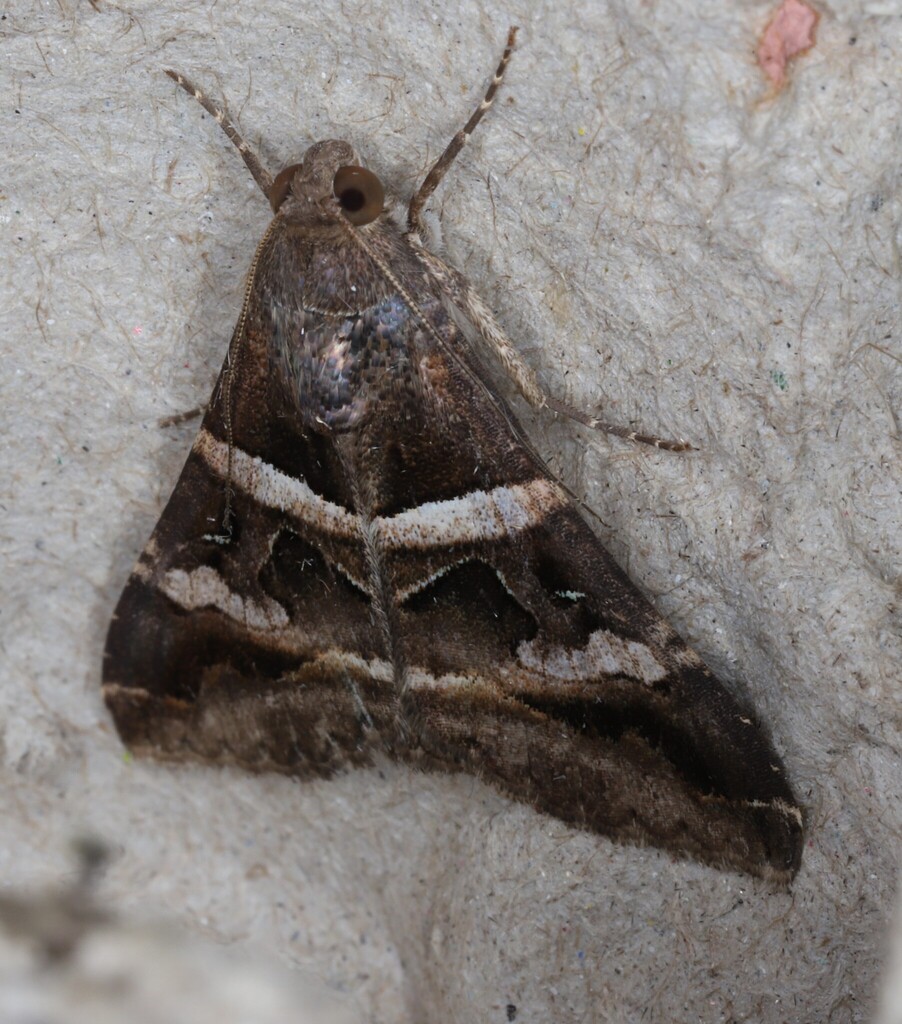
no rights reserved · CC0
Family: Erebidae · Class: Insecta · Order: Lepidoptera
Melipotis perpendicularis (Perpendicular Melipotis) is a California animal in the Erebidae family.
The Perpendicular Melipotis is a medium-sized moth in the family Erebidae, subfamily Erebinae. Adults have a forewing length of approximately 20-23 mm, with males potentially being confused with the closely related Melipotis indomita (BugGuide). The species can be distinguished from M. indomita by its reniform spot, which lacks a sharp outward point but has a subtle bump in the same area, and by the dark line on its outer wing edge being continuous rather than broken into dashes (BugGuide). Melipotis perpendicularis occurs across the southwestern United States, with documented records from Texas, where it has been collected in Edwards County (Lepidopterists' Society 2021). The species appears to have a broader southwestern range, though specific distribution details remain poorly documented in the scientific literature. Historical records from the 1970s indicate the species was present in various southwestern localities (Lepidopterists' Society 1975). The habitat preferences of this species have not been well documented in available literature. Given its placement in the genus Melipotis and comparison with related species like M. indomita, which feeds on mesquite (Prosopis species), M. perpendicularis likely inhabits arid and semi-arid regions where suitable host plants occur. The species appears to be associated with desert and scrubland ecosystems typical of the southwestern United States. Specific host plants for M. perpendicularis have not been definitively documented in current literature. The closely related M. indomita feeds on mesquite (Prosopis species) in the family Fabaceae, suggesting that M. perpendicularis may utilize similar leguminous host plants (BugGuide). Adult flight periods appear to span multiple months, with Texas records indicating activity from September through October, and historical records suggesting May activity in other regions (Lepidopterists' Society 2021, 1975). Like other members of the genus, this species is likely nocturnal and attracted to artificial lights. The conservation status of Melipotis perpendicularis has not been formally assessed by state or federal agencies. The species does not appear on any endangered species lists as of December 2025. Population trends and specific threats to this species remain undocumented in available scientific literature. The apparent rarity of collection records and limited ecological data suggest either genuine rarity or under-sampling of appropriate habitats and flight periods. Desert and semi-arid habitats face ongoing pressures from urbanization, agriculture, and climate change throughout the southwestern United States, which could potentially impact populations of specialized desert moths like M. perpendicularis. Detailed ecological studies of this species are lacking. The information presented here synthesizes available observations from taxonomic databases and lepidopterological literature. Additional research is needed to document host plant relationships, habitat requirements, population status, and distribution limits for this poorly known southwestern moth species.
Classification
Class: Insecta · Order: Lepidoptera · Family: Erebidae
Frequently asked questions
How is Melipotis perpendicularis classified?
Melipotis perpendicularis belongs to class Insecta, order Lepidoptera, family Erebidae.
What family does Melipotis perpendicularis belong to?
Melipotis perpendicularis is in the Erebidae family.
What is Melipotis perpendicularis?
The Perpendicular Melipotis is a medium-sized moth in the family Erebidae, subfamily Erebinae.
Is Melipotis perpendicularis found in California?
Yes. Melipotis perpendicularis is recorded in California in The California Species Project's catalogue.
Related species
Other California species in the same genus, family, or bioregion.
Data from The California Species Project — 14,000+ California species with verified data from CNPS, CDFW, USFWS, and more.