Melissodes communis
Common Longhorn Bee
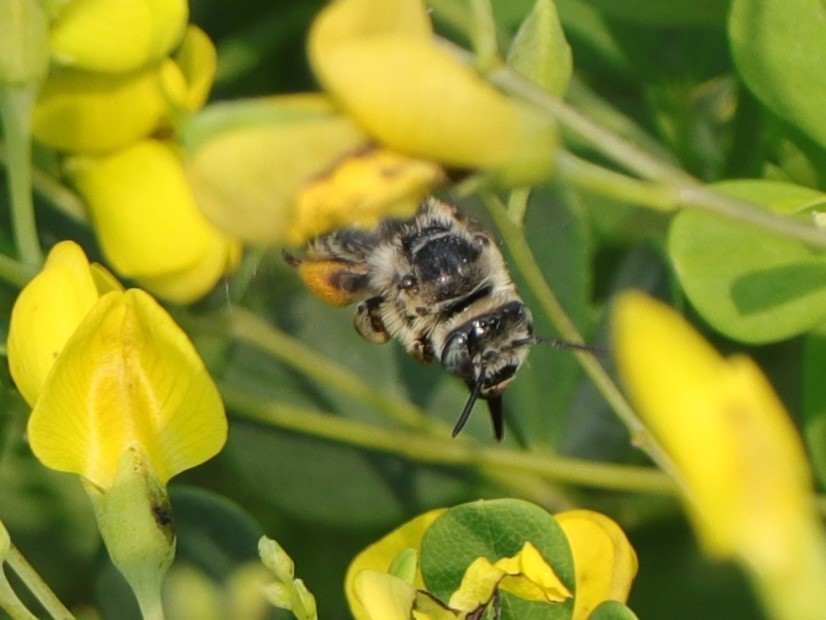
(c) Jake McCumber, some rights reserved (CC BY) · licence
Family: Apidae · Class: Insecta · Order: Hymenoptera
Melissodes communis (Common Longhorn Bee) is a California animal in the Apidae family.
The common longhorn bee (Melissodes communis) is a species of long-horned bee in the family Apidae native to Central and North America. Males are distinguished by their characteristically elongated antennae, which give the species its common name. Like other members of the genus Melissodes, these bees are medium-sized with robust, hairy bodies adapted for pollen collection. The species has a broad distribution across North America, extending from Central America northward through much of the United States. Within this range, the common longhorn bee occupies diverse habitats where suitable floral resources are available. The species includes at least two recognized subspecies: M. c. communis and M. c. alopex, indicating some degree of regional variation across its range. Common longhorn bees inhabit areas with abundant flowering plants, including managed emergent wetlands, prairies, and disturbed habitats. Research has documented their presence in wetland environments in the lower Mississippi region, where they contribute to pollination services for wetland vegetation. These bees are particularly associated with composite flowers and other late-season blooms that provide the nectar and pollen resources necessary for their survival and reproduction. As solitary bees, common longhorn bees do not form colonies like honeybees or bumblebees. Females construct individual nests, typically excavating burrows in soil or utilizing existing cavities. The species exhibits seasonal activity patterns typical of temperate solitary bees, with adults emerging during the warmer months when floral resources are most abundant. Males emerge first and establish territories near suitable nesting sites, using their prominent antennae to detect female pheromones. After mating, females provision their nests with pollen and nectar collected from various flowering plants, laying eggs on these food stores to support developing larvae. Like many native bee species, common longhorn bees serve important ecological functions as pollinators of both wild plants and agricultural crops. Research on solitary bee foraging behavior indicates maximum foraging distances of 150-600 meters from nest sites (NatureServe Explorer), suggesting these bees operate within relatively localized areas where habitat quality directly impacts population success. The common longhorn bee currently lacks specific conservation status designations at federal, state, or global levels. However, as with many native pollinators, the species may face challenges from habitat loss, pesticide exposure, and changing land use patterns. The documentation of this species in managed wetland environments suggests that conservation-oriented habitat management can benefit native bee communities. Maintaining diverse flowering plant communities and reducing pesticide applications in areas where these bees occur supports both individual populations and the broader ecosystem services they provide through their pollination activities. Scientific documentation for this species remains limited beyond basic taxonomic and distributional information. Additional research on population trends, specific habitat requirements, and conservation needs would enhance understanding of this native pollinator's ecological role and status.
Classification
Class: Insecta · Order: Hymenoptera · Family: Apidae
Frequently asked questions
How is Melissodes communis classified?
Melissodes communis belongs to class Insecta, order Hymenoptera, family Apidae.
What family does Melissodes communis belong to?
Melissodes communis is in the Apidae family.
What is Melissodes communis?
The common longhorn bee (Melissodes communis) is a species of long-horned bee in the family Apidae native to Central and North America.
Is Melissodes communis found in California?
Yes. Melissodes communis is recorded in California in The California Species Project's catalogue.
Related species
Other California species in the same genus, family, or bioregion.
Data from The California Species Project — 14,000+ California species with verified data from CNPS, CDFW, USFWS, and more.