Melitara subumbrella
Cactus Moth
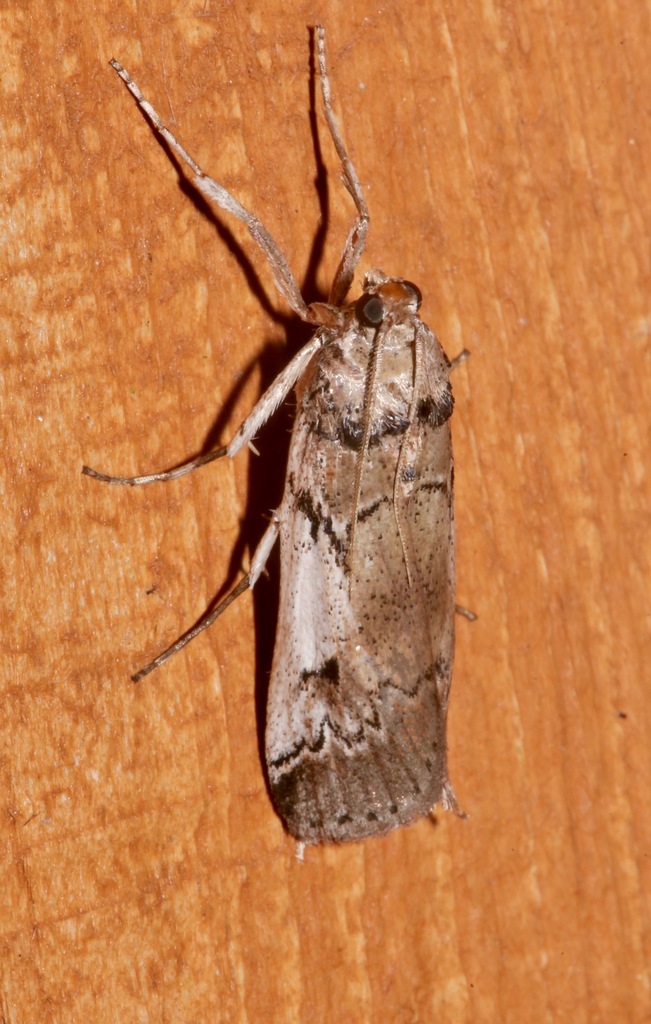
(c) Laura Gaudette, some rights reserved (CC BY) · licence
Family: Pyralidae · Class: Insecta · Order: Lepidoptera
Melitara subumbrella (Cactus Moth) is a California animal in the Pyralidae family.
Melitara subumbrella is a medium-sized moth in the family Pyralidae, commonly known as the pricklypear borer. Adults have a wingspan of 35-52 mm (1.4-2.0 inches) and display the characteristic features of the genus Melitara: slender forewings that are light to medium gray with or without distinct antemedial and postmedial lines, often showing longitudinal streaking patterns (BugGuide). The hindwings are notably broader than the forewings, appearing white or mostly white with some gray markings. Melitara subumbrella ranges from southern Alberta and Saskatchewan southward to southern Arizona and central Texas. This broad distribution spans much of western North America, where suitable cactus hosts are present. The species occurs throughout appropriate habitat within this range, including portions of California where prickly pear cacti are established. The species inhabits arid and semi-arid environments where its primary host plants, various Opuntia species (prickly pear cacti), occur naturally. These habitats typically include desert scrublands, grasslands with scattered cacti, and disturbed areas where prickly pear has colonized. The moth's distribution closely follows that of its cactus hosts, as the larvae are specialized feeders that bore into cactus pads and stems. As indicated by its common name, pricklypear borer, the larvae of M. subumbrella are cactus specialists that feed by boring into Opuntia pads and stems. This feeding behavior distinguishes the genus Melitara from many other pyralid moths. The larvae create tunnels within the cactus tissue, which can sometimes be detected by frass or entry holes on the plant surface. Adult moths are presumably nocturnal, as is typical for most pyralid species. Specific details about seasonal flight periods, mating behaviors, and generation cycles require further documentation. Melitara subumbrella has no special conservation status and is not listed under federal or state endangered species acts. However, the species' close association with native Opuntia cacti means its populations could be affected by factors that impact cactus communities. These potential threats include habitat conversion for development or agriculture, invasive plant species that compete with native cacti, and introduced biological control agents. The invasive cactus moth (Cactoblastis cactorum), which has been spreading westward from Florida and threatens native Opuntia species, represents a particular concern for specialist cactus-feeding moths like M. subumbrella (CDFW). This invasive species has already reached Texas and poses a potential threat to native cactus ecosystems throughout the southwestern United States. Conservation of M. subumbrella is tied to maintaining healthy native prickly pear populations and monitoring for impacts from invasive species that target the same host plants. Detailed ecological studies of this species remain limited, and additional research is needed to fully understand its life history, population dynamics, and specific habitat requirements within its broad geographic range.
Classification
Class: Insecta · Order: Lepidoptera · Family: Pyralidae
Frequently asked questions
How is Melitara subumbrella classified?
Melitara subumbrella belongs to class Insecta, order Lepidoptera, family Pyralidae.
What family does Melitara subumbrella belong to?
Melitara subumbrella is in the Pyralidae family.
What is Melitara subumbrella?
Melitara subumbrella is a medium-sized moth in the family Pyralidae, commonly known as the pricklypear borer.
Is Melitara subumbrella found in California?
Yes. Melitara subumbrella is recorded in California in The California Species Project's catalogue.
Related species
Other California species in the same genus, family, or bioregion.
Data from The California Species Project — 14,000+ California species with verified data from CNPS, CDFW, USFWS, and more.