Melitta californica
California Mellitid Bee
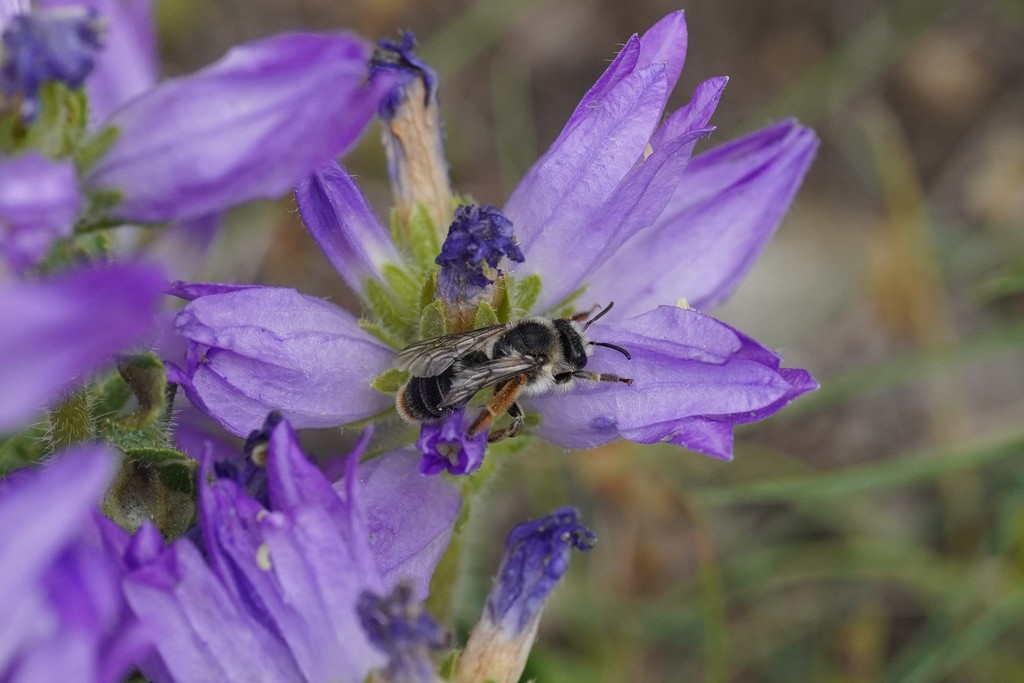
(c) Julia Moning, some rights reserved (CC BY) · licence
Family: Melittidae · Class: Insecta · Order: Hymenoptera
Conservation status: G4? S2?
Melitta californica (California Mellitid Bee) is a California animal in the Melittidae family.
Melitta californica is a solitary bee in the family Melittidae, subfamily Melittinae, tribe Melittini. This species represents one of the specialized oil-collecting bees, distinguished by their unique foraging behavior and morphological adaptations. Like other members of the genus Melitta, females possess specialized structures for collecting floral oils rather than nectar, making them important pollinators of oil-producing plants. Melitta californica is endemic to California, though specific distributional records remain poorly documented in the scientific literature. The species' range appears to be restricted to specific regions within the state, but comprehensive surveys of its occurrence are lacking. Current knowledge of its distribution is primarily based on scattered collection records and opportunistic observations. The habitat requirements of M. californica have not been thoroughly studied, though members of the genus Melitta typically inhabit areas with suitable host plants that produce floral oils. These bees generally prefer open habitats including grasslands, scrublands, and woodland edges where their specialized host plants occur. Elevation ranges and specific microhabitat preferences for this species remain undocumented. As an oil-collecting bee, M. californica exhibits specialized foraging behavior. Females use modified leg structures to collect oils from flowers, which they mix with pollen to provision their nests. The species is likely univoltine with a single generation per year, following the typical pattern of California's native bee fauna. Nesting behavior is presumed to be similar to other Melitta species, with females constructing underground burrows in suitable soil substrates. Males likely emerge before females and patrol territories near nesting sites to locate mates. Specific details about flight periods, nest architecture, and reproductive biology remain unstudied. The conservation status of M. californica reflects the challenges facing many of California's native bee species. NatureServe assigns the species a global rank of G4? (apparently secure but with uncertainty) and a state rank of S2? (imperiled in California with uncertainty), indicating significant data deficiency. The question marks in these rankings highlight the lack of comprehensive population data and distribution information. No federal or state listing protection currently exists for this species. Primary threats to M. californica likely include habitat loss from urban development, agricultural conversion, and changes in land management practices. The specialized nature of oil-collecting bees makes them particularly vulnerable to the loss of their specific host plants. Climate change may alter the phenology and distribution of both the bee and its floral resources, potentially creating temporal mismatches. Pesticide use in agricultural and urban areas poses additional risks to populations. Detailed ecological studies of M. californica are lacking, limiting our understanding of its biology, population trends, and conservation needs. The above information synthesizes available taxonomic and biogeographic data from NatureServe and other databases. Enhanced survey efforts and targeted research are needed to better assess this species' status and develop appropriate conservation strategies for California's specialized native bee fauna.
Classification
Class: Insecta · Order: Hymenoptera · Family: Melittidae
Conservation status
G4? S2?
Frequently asked questions
How is Melitta californica classified?
Melitta californica belongs to class Insecta, order Hymenoptera, family Melittidae.
What family does Melitta californica belong to?
Melitta californica is in the Melittidae family.
Is Melitta californica protected or of conservation concern?
Melitta californica carries the following status: G4? S2?.
What is Melitta californica?
Melitta californica is a solitary bee in the family Melittidae, subfamily Melittinae, tribe Melittini.
Is Melitta californica found in California?
Yes. Melitta californica is recorded in California in The California Species Project's catalogue.
Related species
Other California species in the same genus, family, or bioregion.
Data from The California Species Project — 14,000+ California species with verified data from CNPS, CDFW, USFWS, and more.