Melittia gloriosa
Glorious Squash Vine Borer
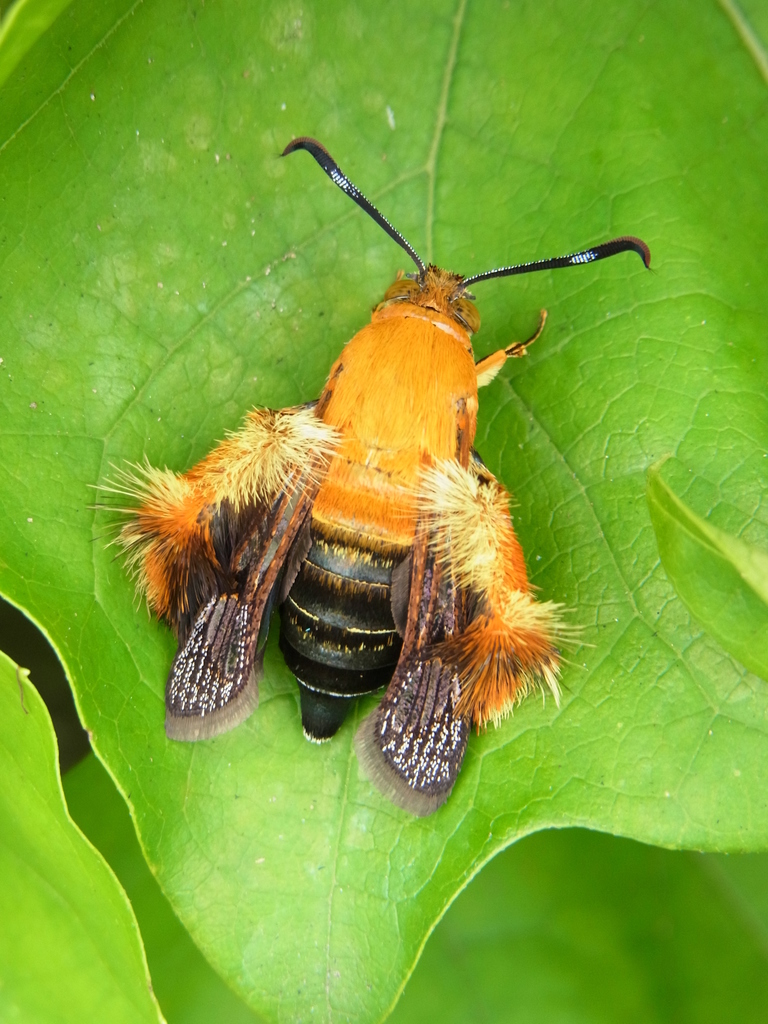
no rights reserved · CC0
Family: Sesiidae · Class: Insecta · Order: Lepidoptera
Melittia gloriosa (Glorious Squash Vine Borer) is a California animal in the Sesiidae family.
The Glorious Squash Vine Borer (Melittia gloriosa) is a moth species in the family Sesiidae, known for clear-winged moths that often mimic wasps or bees. This species exhibits the typical sesiid characteristics of narrow, largely transparent wings with dark borders and a robust, often brightly colored body. Adult moths display a distinctive metallic sheen on their wings and body, with orange-red coloration on the abdomen marked by dark bands. The wingspan typically ranges from 20 to 30 mm, making it a medium-sized member of the clearwing moth family. The Glorious Squash Vine Borer is endemic to California, with documented occurrences in the southern regions of the state. Historical records indicate the species has been found in San Diego, Riverside, and Imperial counties, though current distribution patterns remain poorly documented. The species appears to have a limited range within California's borders, suggesting possible endemic status to specific biogeographic regions of southern California. This species inhabits areas where its host plants naturally occur, typically in desert margins, chaparral transitions, and disturbed habitats where wild cucurbit species thrive. The moths are associated with native and naturalized members of the gourd family (Cucurbitaceae), including wild gourds and related vine species. Adult moths are active during daylight hours, exhibiting the diurnal behavior typical of many sesiid species. They are strong fliers and often observed visiting flowers for nectar. Larvae develop as internal borers within the stems and roots of cucurbit host plants, creating galleries that can weaken or kill the host. The life cycle is presumed to be annual, with adults emerging during warm months when host plants are actively growing. Females deposit eggs near the base of host plants, and newly hatched larvae bore into stems to complete their development. Pupation occurs within the host plant stems or in nearby soil. The conservation status of Melittia gloriosa remains largely unknown due to limited survey data and taxonomic uncertainty. The species lacks federal or state listing status, and no formal conservation assessments have been conducted. Population trends are undocumented, though habitat loss from urban development, agriculture, and invasive species may pose threats to remaining populations. The limited historical records and apparent restriction to southern California suggest the species may be naturally rare or declining. Climate change impacts on desert and semi-arid ecosystems could further affect both the species and its host plants. Without dedicated surveys and taxonomic clarification, the true conservation needs of this species remain uncertain. The lack of recent records raises questions about current population status and whether targeted monitoring efforts are needed to assess the species' persistence in California.
Classification
Class: Insecta · Order: Lepidoptera · Family: Sesiidae
Frequently asked questions
How is Melittia gloriosa classified?
Melittia gloriosa belongs to class Insecta, order Lepidoptera, family Sesiidae.
What family does Melittia gloriosa belong to?
Melittia gloriosa is in the Sesiidae family.
What is Melittia gloriosa?
The Glorious Squash Vine Borer (Melittia gloriosa) is a moth species in the family Sesiidae, known for clear-winged moths that often mimic wasps or bees.
Is Melittia gloriosa found in California?
Yes. Melittia gloriosa is recorded in California in The California Species Project's catalogue.
Related species
Other California species in the same genus, family, or bioregion.
Data from The California Species Project — 14,000+ California species with verified data from CNPS, CDFW, USFWS, and more.