Melospiza georgiana
Swamp Sparrow
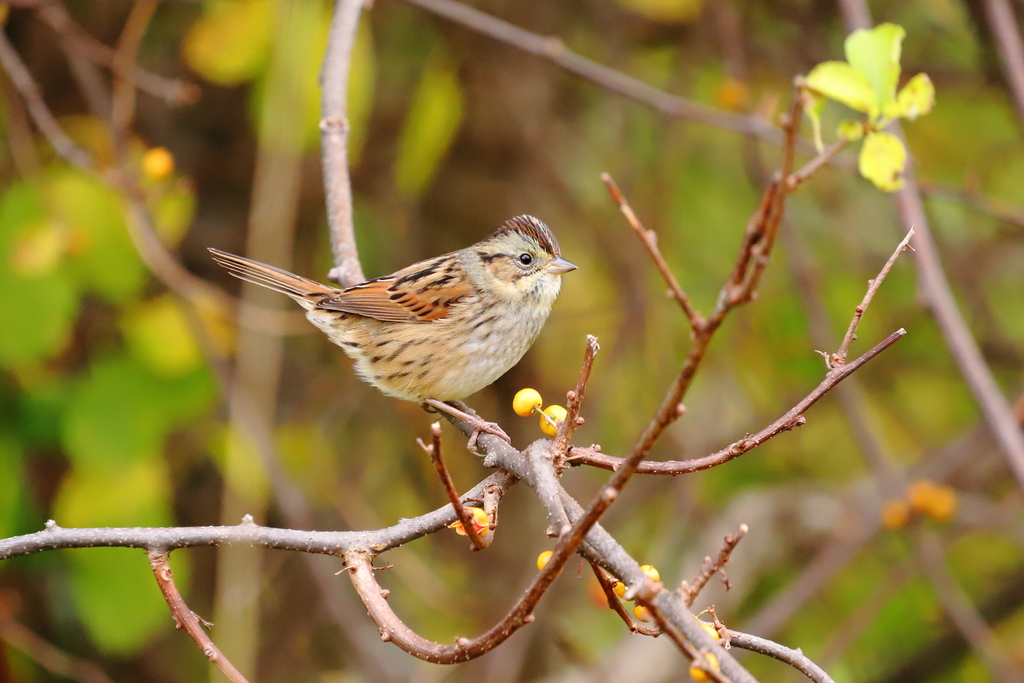
(c) Doug Brush, some rights reserved (CC BY) · licence
Family: Emberizidae · Class: Aves · Order: Passeriformes
Melospiza georgiana (Swamp Sparrow) is a California animal in the Emberizidae family.
The Swamp Sparrow is a medium-sized songbird measuring 11.5 to 14.5 cm (4.5 to 5.7 inches) in length with a wingspan of 18 to 19 cm (7.1 to 7.5 inches). Adults weigh 15 to 23 grams. The species exhibits distinct seasonal plumage variation. Breeding adults display a rusty-brown crown, gray face, and white throat. The upperparts are streaked brown and black, while the underparts are gray with buff flanks. Non-breeding adults show a darker, more subdued crown with prominent dark and light stripes. Both sexes appear similar, though males may show slightly brighter coloration during breeding season. The species is distinguished from similar sparrows by its robust bill, relatively long tail, and preference for wetland habitats. Swamp Sparrows breed across a broad range from southeastern Alaska through Canada and the northern United States, extending south to Nebraska, Illinois, and Virginia. In California, the species occurs primarily as a migrant and winter resident along the coast and in the Central Valley. Winter populations are concentrated in freshwater and brackish marshes from the San Francisco Bay Area south to San Diego County. The species is irregular in occurrence and typically found in low numbers throughout its California range. The species occupies freshwater and brackish marshes dominated by cattails, sedges, and bulrushes. Essential habitat components include dense emergent vegetation for nesting and foraging, plus areas of open water or mud for feeding. During migration and winter, Swamp Sparrows also utilize managed wetlands, rice fields, and irrigation ditches. The species shows strong fidelity to cattail marshes, which provide both nesting substrate and abundant invertebrate prey. Elevation range in California extends from sea level to approximately 500 meters. Swamp Sparrows are primarily insectivorous during the breeding season, consuming beetles, flies, caterpillars, and other invertebrates. Winter diet shifts to include seeds from marsh plants, particularly sedges and grasses. The species forages by gleaning insects from vegetation surfaces and probing in soft substrates. Breeding occurs from May through July, with females constructing cup-shaped nests 15 to 60 cm above water level in dense marsh vegetation. Clutch size ranges from 3 to 5 eggs, with an incubation period of 12 to 15 days. Young fledge after 10 to 13 days but remain dependent on parents for an additional two weeks. The species typically produces one to two broods per season. Swamp Sparrows are not federally or state listed in California. The species is considered secure globally with stable population trends across most of its range. However, wetland habitat loss poses ongoing threats, particularly in California where over 95 percent of historical wetlands have been eliminated. Climate change may affect winter distribution patterns and breeding success in northern portions of the range. Conservation efforts focus on wetland restoration and protection of existing marsh habitats through programs such as the North American Bird Conservation Initiative and Partners in Flight.
Classification
Class: Aves · Order: Passeriformes · Family: Emberizidae
Frequently asked questions
How is Melospiza georgiana classified?
Melospiza georgiana belongs to class Aves, order Passeriformes, family Emberizidae.
What family does Melospiza georgiana belong to?
Melospiza georgiana is in the Emberizidae family.
What is Melospiza georgiana?
The Swamp Sparrow is a medium-sized songbird measuring 11.5 to 14.5 cm (4.5 to 5.7 inches) in length with a wingspan of 18 to 19 cm (7.1 to 7.5 inches).
Is Melospiza georgiana found in California?
Yes. Melospiza georgiana is recorded in California in The California Species Project's catalogue.
Related species
Other California species in the same genus, family, or bioregion.
Data from The California Species Project — 14,000+ California species with verified data from CNPS, CDFW, USFWS, and more.