Melospiza lincolnii
Lincoln's Sparrow
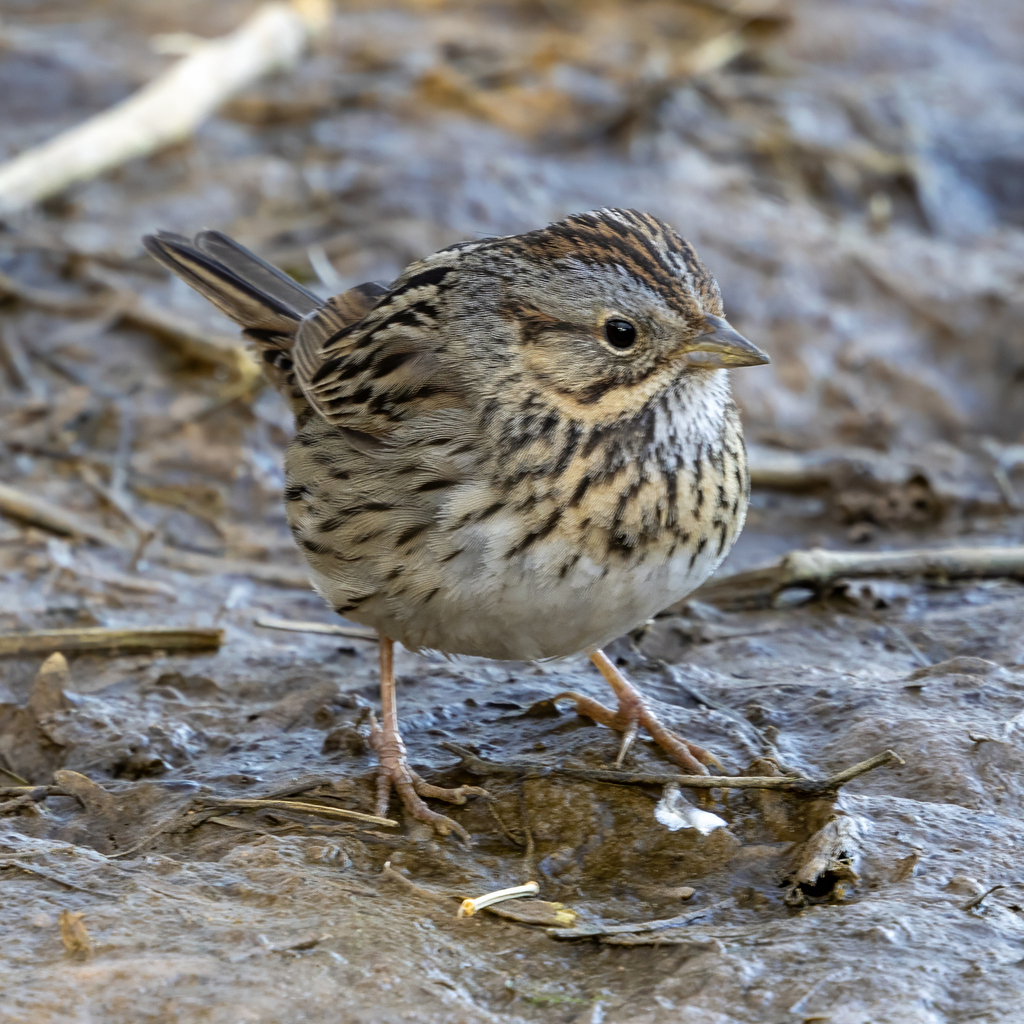
(c) Dan Vickers, some rights reserved (CC BY) · licence
Family: Emberizidae · Class: Aves · Order: Passeriformes
Melospiza lincolnii (Lincoln's Sparrow) is a California animal in the Emberizidae family.
Lincoln's Sparrow is a small, secretive songbird measuring 13 to 15 cm (5.1 to 5.9 inches) in length with a wingspan of 18 to 21 cm (7.1 to 8.3 inches). Adults weigh 15 to 20 grams. The species displays finely streaked brown and gray plumage with a distinctive buff-colored breast band crossed by dark streaks. The face shows a gray supercilium bordered by dark stripes, and the crown is brown with a gray central stripe. The tail is relatively short and notched. Males and females appear similar, though males may show slightly bolder markings during breeding season. Juveniles resemble adults but display more diffuse streaking and yellower underparts. Lincoln's Sparrow breeds across a vast range from Alaska and northern Canada south through the western United States, including California's Sierra Nevada and Cascade ranges. The species winters from the southwestern United States through Central America. In California, breeding populations occur primarily in montane regions above 1,200 meters (4,000 feet) elevation, with highest densities found between 1,500 and 3,000 meters (5,000 to 10,000 feet). During migration and winter, the species occurs throughout California at lower elevations, including coastal areas and Central Valley. The species inhabits dense, shrubby vegetation near water sources, particularly willow thickets, sedge meadows, and bog edges. Breeding habitat typically includes mountain meadows with scattered shrubs, riparian zones with dense understory, and areas recovering from disturbance such as logged or burned forests. During winter and migration, Lincoln's Sparrows utilize brushy fields, dense grasslands, marsh edges, and chaparral. The species requires thick ground cover for foraging and nesting, showing strong preference for areas with 60 to 80 percent vegetation density. Lincoln's Sparrows are primarily ground-foraging insectivores during breeding season, consuming beetles, flies, caterpillars, and other arthropods. The diet shifts to include more seeds from grasses and sedges during fall and winter. Breeding occurs from May through August, with females constructing cup-shaped nests on the ground or in low shrubs, typically well-concealed under overhanging vegetation. Clutch size ranges from 3 to 5 eggs, which are incubated for 12 to 14 days. Young fledge after 9 to 12 days but remain dependent on parents for an additional 2 to 3 weeks. The species typically raises one brood per season, though second broods may occur in favorable conditions. Lincoln's Sparrow is not federally or state listed and maintains stable populations across most of its range. According to the North American Breeding Bird Survey, continental populations have remained relatively stable since 1970, with slight increases noted in some western regions. However, the species faces habitat loss from development, altered fire regimes, and climate change impacts on montane ecosystems. Grazing pressure and water diversions that affect riparian breeding habitats present localized threats. The species benefits from forest management practices that maintain shrubby openings and protect riparian corridors.
Classification
Class: Aves · Order: Passeriformes · Family: Emberizidae
Frequently asked questions
How is Melospiza lincolnii classified?
Melospiza lincolnii belongs to class Aves, order Passeriformes, family Emberizidae.
What family does Melospiza lincolnii belong to?
Melospiza lincolnii is in the Emberizidae family.
What is Melospiza lincolnii?
Lincoln's Sparrow is a small, secretive songbird measuring 13 to 15 cm (5.1 to 5.9 inches) in length with a wingspan of 18 to 21 cm (7.1 to 8.3 inches).
Is Melospiza lincolnii found in California?
Yes. Melospiza lincolnii is recorded in California in The California Species Project's catalogue.
Related species
Other California species in the same genus, family, or bioregion.
Data from The California Species Project — 14,000+ California species with verified data from CNPS, CDFW, USFWS, and more.