Melospiza melodia
Song Sparrow
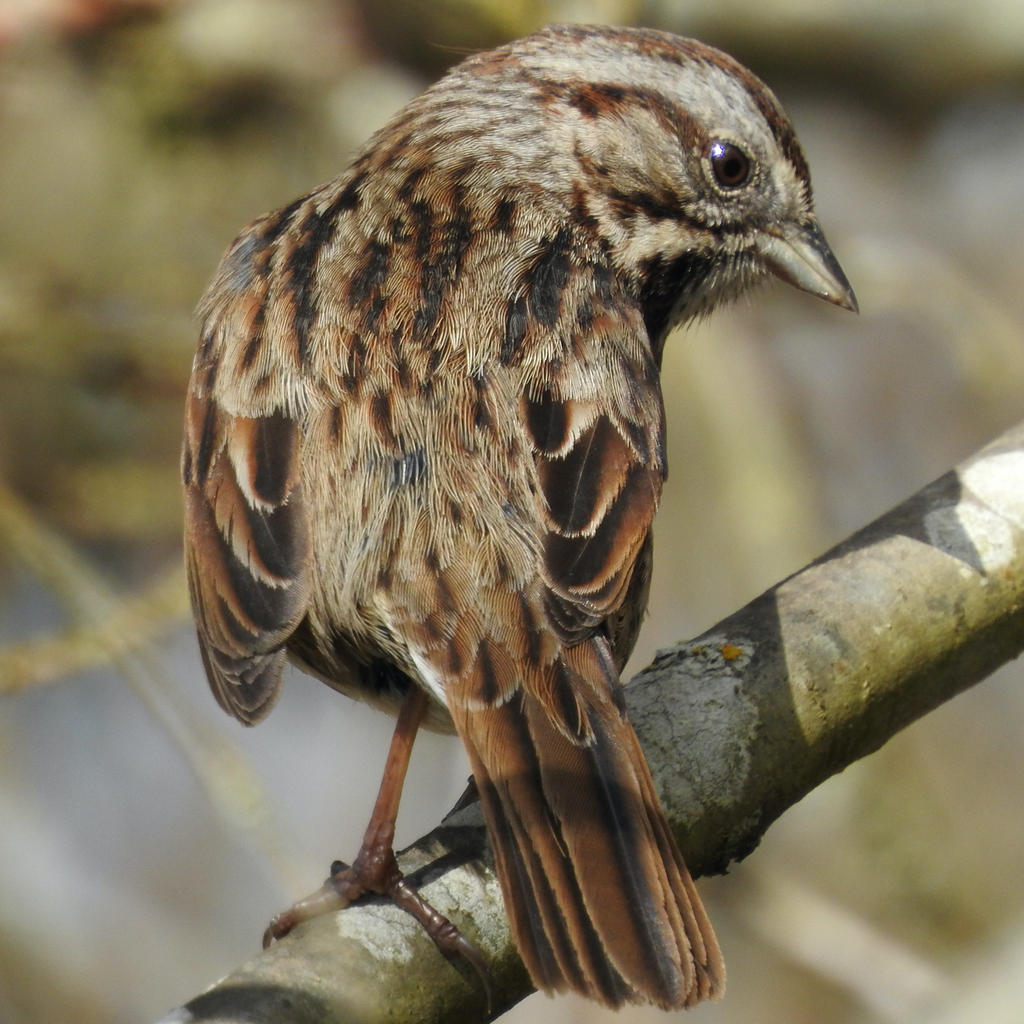
(c) Daniel Levitis, some rights reserved (CC BY) · licence
Family: Emberizidae · Class: Aves · Order: Passeriformes
Conservation status: G5 S3?
Melospiza melodia (Song Sparrow) is a California animal in the Emberizidae family.
The Song Sparrow is a medium-sized passerine bird measuring 12 to 17 centimeters (4.7 to 6.7 inches) in length with a wingspan of 18 to 25 centimeters (7.1 to 9.8 inches). Adults weigh between 12 and 53 grams. The species exhibits considerable geographic variation in size and coloration. Generally, Song Sparrows display brown upperparts with dark streaking, grayish-brown underparts with heavy dark streaking that often converges into a central breast spot, and a distinctive facial pattern featuring dark stripes through the eye and along the jaw line contrasting with lighter cheek patches and throat. Song Sparrows occur across most of North America, from southern Alaska to central Mexico. In California, the species breeds throughout much of the state except for the highest elevations of the Sierra Nevada and portions of the Mojave and Sonoran deserts. The Modesto population represents one of several recognized subspecies groups within California, occupying the Central Valley region. Different subspecies show marked variation in size, with coastal populations typically larger and darker than interior forms. The species inhabits a diverse array of habitats including riparian woodlands, marshes, brushy areas, parks, gardens, and agricultural lands with adequate cover. Song Sparrows prefer areas with dense low vegetation near water sources, including cattail marshes, willow thickets, and streamside brush. They utilize habitat from sea level to approximately 1,500 meters elevation in California, though most populations occur below 1,000 meters. Territory size varies with habitat quality, typically ranging from 0.5 to 2.5 hectares. Song Sparrows are primarily granivorous outside the breeding season, consuming seeds from grasses, forbs, and shrubs. During breeding season, insects comprise up to 50 percent of the diet, including beetles, caterpillars, flies, and ants. The species is known for its complex song repertoire, with males possessing 8 to 20 different song types used for territory defense and mate attraction. Breeding occurs from March through August in California, with peak activity from April through June. Females construct cup-shaped nests in dense vegetation, laying 3 to 5 eggs per clutch. Incubation lasts 12 to 15 days, and young fledge after 9 to 16 days. Multiple broods per season are common, with some pairs producing up to four broods annually. The Song Sparrow maintains a global conservation status of G5 (secure) but receives a California state rank of S3? (vulnerable to imperiled, with uncertainty). The Modesto population and other Central Valley subspecies face habitat loss from agricultural intensification, urban development, and water diversions that have reduced riparian and wetland habitats. According to the North American Breeding Bird Survey, California Song Sparrow populations have declined by approximately 2.8 percent annually since 1966. Climate change poses additional threats through altered precipitation patterns affecting wetland habitats and breeding success. Conservation efforts focus on riparian habitat restoration and protection of remaining wetland areas throughout the Central Valley.
Classification
Class: Aves · Order: Passeriformes · Family: Emberizidae
Conservation status
G5 S3?
Frequently asked questions
How is Melospiza melodia classified?
Melospiza melodia belongs to class Aves, order Passeriformes, family Emberizidae.
What family does Melospiza melodia belong to?
Melospiza melodia is in the Emberizidae family.
Is Melospiza melodia protected or of conservation concern?
Melospiza melodia carries the following status: G5 S3?.
What is Melospiza melodia?
The Song Sparrow is a medium-sized passerine bird measuring 12 to 17 centimeters (4.7 to 6.7 inches) in length with a wingspan of 18 to 25 centimeters (7.1 to 9.8 inches).
Is Melospiza melodia found in California?
Yes. Melospiza melodia is recorded in California in The California Species Project's catalogue.
Related species
Other California species in the same genus, family, or bioregion.
Data from The California Species Project — 14,000+ California species with verified data from CNPS, CDFW, USFWS, and more.