Melospiza melodia graminea
Santa Barbara song sparrow
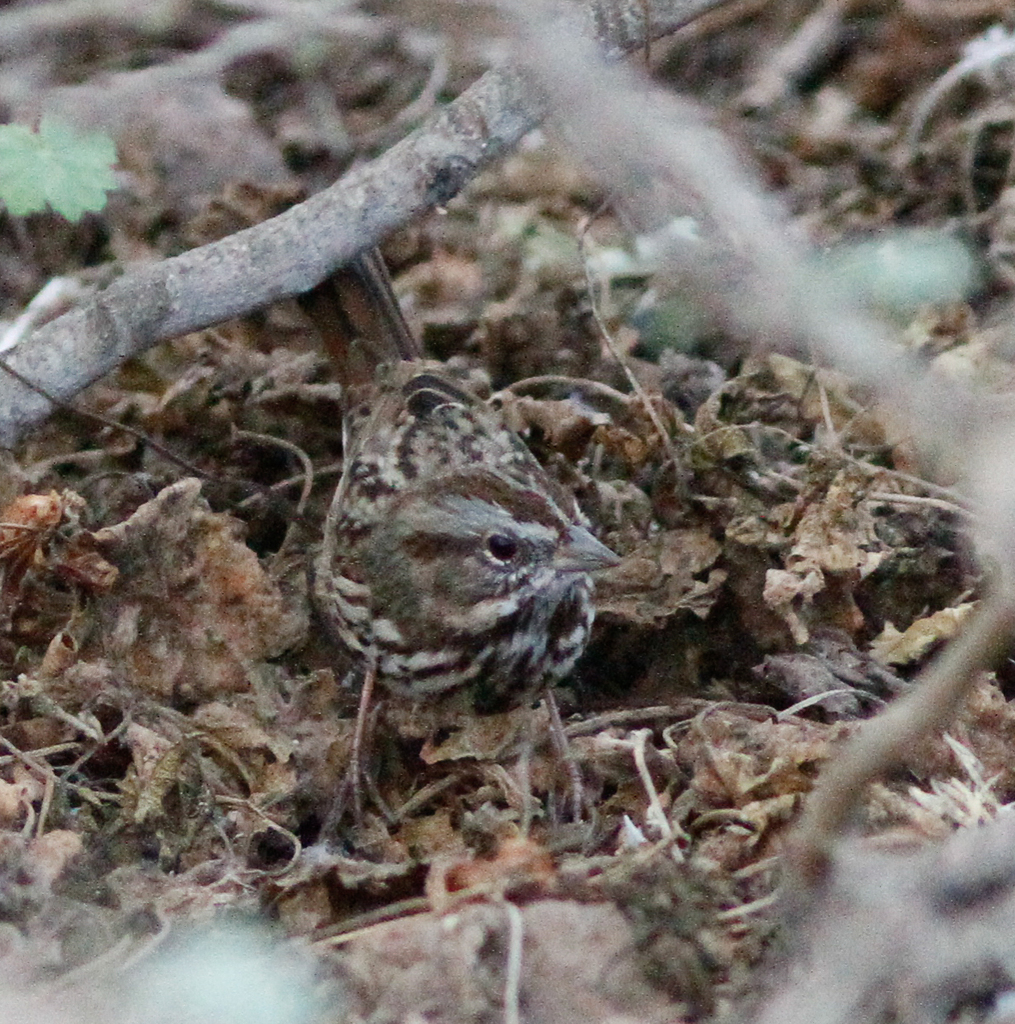
(c) Adam J. Searcy, some rights reserved (CC BY) · licence
Family: Emberizidae · Class: Aves · Order: Passeriformes
Conservation status: Delisted (Extinct) · G5T1 S1
Melospiza melodia graminea (Santa Barbara song sparrow) is a California animal in the Emberizidae family.
The Santa Barbara song sparrow (Melospiza melodia graminea) was a medium-sized songbird subspecies that inhabited the Channel Islands off the California coast. Adults measured approximately 15-17 cm (6-7 inches) in length with the characteristic song sparrow features: a rounded head, short stout bill, long rounded tail, and broad wings. The subspecies displayed the typical song sparrow coloration with brown streaking on the back and wings, grayish-brown upperparts, and distinctive dark streaking on white underparts forming a central breast spot. Historically, this subspecies was endemic to Santa Barbara Island, the smallest of the California Channel Islands, located approximately 62 kilometers (38 miles) southwest of Los Angeles. The limited range of roughly 2.6 square kilometers (1 square mile) made the population particularly vulnerable to environmental changes and human disturbance. The Santa Barbara song sparrow inhabited the island's sparse vegetation, including native shrublands, grasslands, and areas with scattered cacti and succulents. The subspecies adapted to the arid island environment, utilizing both coastal sage scrub and inland chaparral habitats. Nesting likely occurred in low shrubs and dense vegetation patches that provided protection from the harsh maritime climate and strong winds characteristic of the Channel Islands. Like other song sparrow subspecies, M. m. graminea was primarily granivorous, feeding on seeds of native plants, supplemented by insects during breeding season. The subspecies likely maintained similar breeding behaviors to mainland populations, with males establishing territories through song and females constructing cup-shaped nests in low vegetation. The island's isolation would have required year-round residency, unlike some migratory mainland populations. The Santa Barbara song sparrow was federally listed and subsequently delisted due to extinction. According to the California Department of Fish and Wildlife, the subspecies is now extinct. The exact timing and causes of extinction are not well documented, but likely factors included habitat degradation from introduced grazing animals, human disturbance, and the species' extremely limited range making it vulnerable to stochastic events. The subspecies was later reclassified taxonomically as part of the Channel Islands song sparrow, which combined this population with two additional island groups formerly classified as separate subspecies. This extinction represents one of the early documented losses of an endemic California bird subspecies, highlighting the particular vulnerability of island populations to environmental changes. The loss occurred before comprehensive conservation measures could be implemented, serving as an important case study for current Channel Islands conservation efforts. The taxonomic reclassification reflects ongoing efforts to better understand relationships among Channel Islands song sparrow populations, though it does not diminish the significance of losing the unique Santa Barbara Island population that had evolved distinct characteristics during its isolation.
Classification
Class: Aves · Order: Passeriformes · Family: Emberizidae
Conservation status
Delisted (Extinct) · G5T1 S1
Frequently asked questions
How is Melospiza melodia graminea classified?
Melospiza melodia graminea belongs to class Aves, order Passeriformes, family Emberizidae.
What family does Melospiza melodia graminea belong to?
Melospiza melodia graminea is in the Emberizidae family.
Is Melospiza melodia graminea protected or of conservation concern?
Melospiza melodia graminea carries the following status: Delisted (Extinct) · G5T1 S1.
What is Melospiza melodia graminea?
The Santa Barbara song sparrow (Melospiza melodia graminea) was a medium-sized songbird subspecies that inhabited the Channel Islands off the California coast.
Is Melospiza melodia graminea found in California?
Yes. Melospiza melodia graminea is recorded in California in The California Species Project's catalogue.
Related species
Other California species in the same genus, family, or bioregion.
Data from The California Species Project — 14,000+ California species with verified data from CNPS, CDFW, USFWS, and more.