Melospiza melodia pusillula
Alameda Song Sparrow
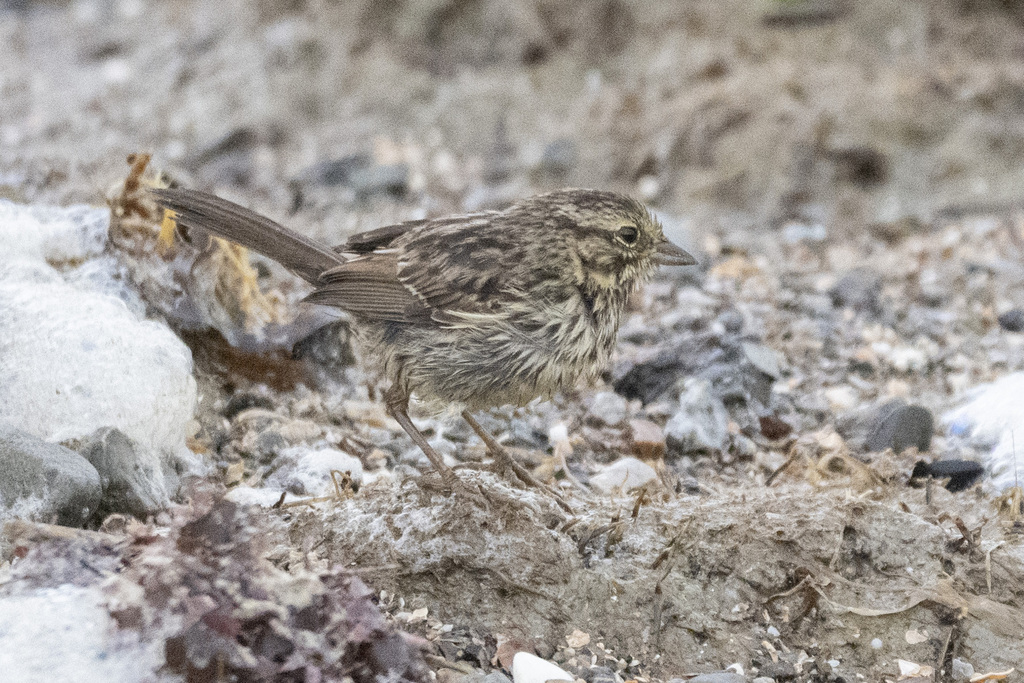
(c) cello caruso-turiello, some rights reserved (CC BY) · licence
Family: Emberizidae · Class: Aves · Order: Passeriformes
Conservation status: G5T2T3 S2
Melospiza melodia pusillula (Alameda Song Sparrow) is a California animal in the Emberizidae family.
The Alameda song sparrow is a medium-sized subspecies of song sparrow endemic to the salt marshes of south San Francisco Bay. Adults measure approximately 14-17 cm (5.5-6.7 inches) in length and display the typical song sparrow characteristics of a rounded head, short stout bill, long rounded tail, and broad wings. The plumage features brown and gray streaking on the upperparts with a distinctive dark central breast spot and streaked flanks. This subspecies is generally smaller and darker than inland song sparrow populations, adaptations to its coastal marsh environment. The Alameda song sparrow occurs exclusively in salt marshes bordering south San Francisco Bay, with its range historically extending from the San Mateo County shoreline south to the southern reaches of the bay in Santa Clara County. According to the Recovery Plan for Tidal Marsh Ecosystems, this subspecies is one of three song sparrow subspecies endemic to the San Francisco Bay Estuary, alongside the San Pablo song sparrow (M. m. samuelis) and Suisun song sparrow (M. m. maxillaris). Current populations are significantly reduced from historical levels and fragmented across remaining suitable habitat patches. This subspecies inhabits maritime tidal marshes dominated by cordgrass (Spartina foliosa), pickleweed (Salicornia pacifica), and alkali heath (Frankenia salina). The birds require dense vegetation for nesting and foraging, typically selecting areas with a mosaic of low and medium-height marsh plants that provide both cover and access to invertebrate prey. They show strong site fidelity to high-quality marsh patches with adequate nesting structure and food resources. Alameda song sparrows are primarily insectivorous during the breeding season, feeding on flies, beetles, moths, and other small arthropods gleaned from marsh vegetation and mudflats. During winter months, they supplement their diet with seeds from marsh plants. Breeding occurs from March through August, with peak activity in April and May. Females construct cup-shaped nests in dense vegetation 0.3-1.5 meters above ground or mean high tide level. Clutch size ranges from 3-4 eggs, with multiple broods possible in favorable years. The Alameda song sparrow has a Global/State Rank of G5T2T3 S2, indicating it is imperiled to vulnerable at the subspecies level. The subspecies is listed on the U.S. Fish and Wildlife Service's Birds of Conservation Concern 2021 and is designated as a California Species of Special Concern by the California Department of Fish and Wildlife. Primary threats include habitat loss and degradation from urban development, sea level rise, invasive plant species, and altered hydrology from diking and filling of marshlands. The Recovery Plan for Tidal Marsh Ecosystems establishes a target for the species to persist or be re-established in at least 75 percent of maritime tidal marshes where it once occurred. Ongoing conservation efforts focus on habitat restoration, invasive species control, and protection of remaining high-quality marsh areas from further development.
Classification
Class: Aves · Order: Passeriformes · Family: Emberizidae
Conservation status
G5T2T3 S2
Frequently asked questions
How is Melospiza melodia pusillula classified?
Melospiza melodia pusillula belongs to class Aves, order Passeriformes, family Emberizidae.
What family does Melospiza melodia pusillula belong to?
Melospiza melodia pusillula is in the Emberizidae family.
Is Melospiza melodia pusillula protected or of conservation concern?
Melospiza melodia pusillula carries the following status: G5T2T3 S2.
What is Melospiza melodia pusillula?
The Alameda song sparrow is a medium-sized subspecies of song sparrow endemic to the salt marshes of south San Francisco Bay.
Is Melospiza melodia pusillula found in California?
Yes. Melospiza melodia pusillula is recorded in California in The California Species Project's catalogue.
Related species
Other California species in the same genus, family, or bioregion.
Data from The California Species Project — 14,000+ California species with verified data from CNPS, CDFW, USFWS, and more.