Melozone crissalis
California Towhee
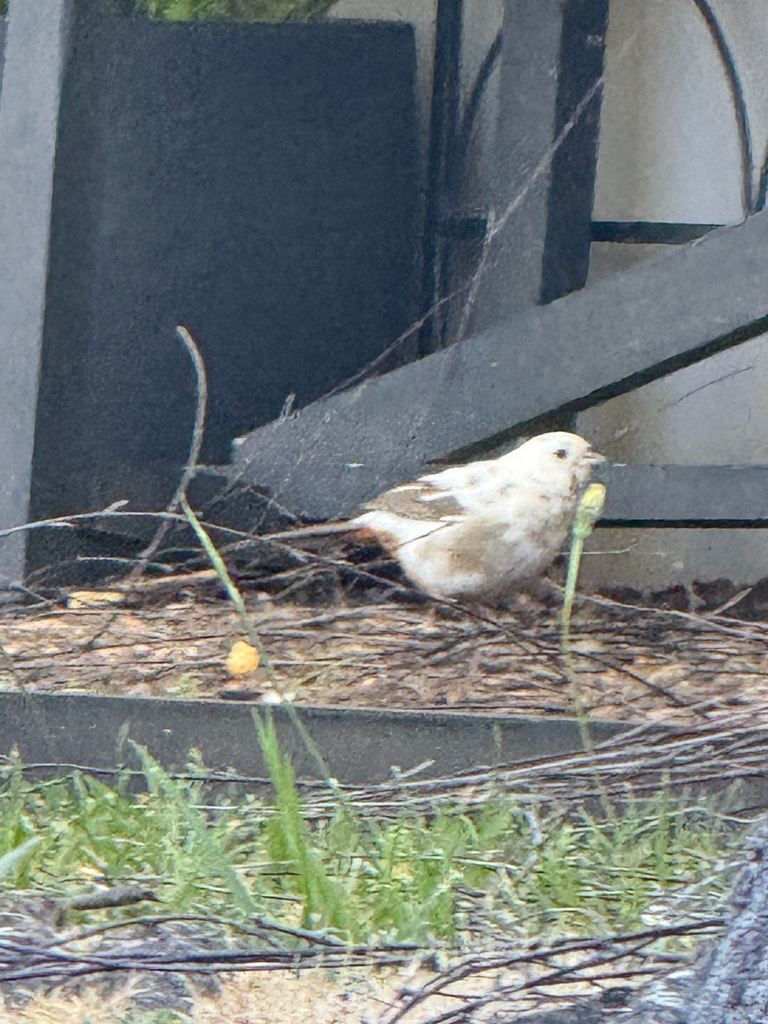
(c) Julie Wittmann, some rights reserved (CC BY-SA) · licence
Family: Emberizidae · Class: Aves · Order: Passeriformes
Melozone crissalis (California Towhee) is a California animal in the Emberizidae family.
The California Towhee is a medium-sized songbird measuring 21 to 25 centimeters (8.3 to 9.8 inches) in length with a wingspan of 29 to 30 centimeters (11.4 to 11.8 inches). Adults weigh between 40 to 67 grams (1.4 to 2.4 ounces). The species exhibits uniform brown-gray plumage across most of its body, with slightly darker upperparts and paler underparts. The throat displays a faint buff coloration with indistinct dark streaking. The undertail coverts are cinnamon-rufous, providing the most distinctive field mark. The bill is dark gray to black, and the legs are pink to brown. Males and females appear identical, though males average slightly larger. Historically, California Towhees ranged from southwestern Oregon through California to Baja California, Mexico. The species currently maintains stable populations throughout most of California west of the Sierra Nevada and Cascade ranges, extending from sea level to approximately 1,500 meters (4,900 feet) elevation. Populations occur in the Coast Ranges from Mendocino County south to the Mexican border, throughout the Central Valley, and in suitable habitat across southern California. Small populations persist in southwestern Oregon, primarily in Jackson and Josephine counties. California Towhees inhabit chaparral, oak woodlands, riparian areas, and residential landscapes with dense shrub cover. The species shows strong preference for areas with thick understory vegetation, including manzanita, ceanothus, scrub oak, and toyon. They readily adapt to suburban environments with mature landscaping, parks, and gardens that provide adequate shrub density. Elevation range extends from coastal areas to montane zones, with highest densities occurring between 300 to 900 meters (980 to 2,950 feet). The species exhibits year-round territorial behavior, with pairs maintaining territories of 0.8 to 2.4 hectares (2 to 6 acres). California Towhees are primarily ground foragers, using a distinctive double-scratch technique to uncover food items beneath leaf litter and soil. Their diet consists of seeds, fruits, insects, and green vegetation. Acorns, elderberries, and seeds of shrubs comprise significant portions of their diet during fall and winter months. Breeding occurs from March through August, with peak activity in April and May. Females construct cup-shaped nests 0.9 to 4.6 meters (3 to 15 feet) above ground in dense shrubs or small trees. Clutch size ranges from 2 to 6 eggs, typically 3 to 4, with incubation lasting 11 to 14 days. Pairs may raise 2 to 3 broods annually in favorable conditions. Fledglings remain dependent on adults for 3 to 4 weeks after leaving the nest. California Towhees are not federally or state listed and maintain stable populations throughout most of their range. The species benefits from habitat management practices that preserve native shrublands and oak woodlands. Urban development and agricultural conversion represent the primary long-term threats to populations, particularly in rapidly developing areas of California. Climate change may affect suitable habitat distribution at range margins, though core populations appear secure as of December 2025.
Classification
Class: Aves · Order: Passeriformes · Family: Emberizidae
Frequently asked questions
How is Melozone crissalis classified?
Melozone crissalis belongs to class Aves, order Passeriformes, family Emberizidae.
What family does Melozone crissalis belong to?
Melozone crissalis is in the Emberizidae family.
What is Melozone crissalis?
The California Towhee is a medium-sized songbird measuring 21 to 25 centimeters (8.3 to 9.8 inches) in length with a wingspan of 29 to 30 centimeters (11.4 to 11.8 inches).
Is Melozone crissalis found in California?
Yes. Melozone crissalis is recorded in California in The California Species Project's catalogue.
Related species
Other California species in the same genus, family, or bioregion.
Data from The California Species Project — 14,000+ California species with verified data from CNPS, CDFW, USFWS, and more.