Mephitis mephitis
Striped Skunk
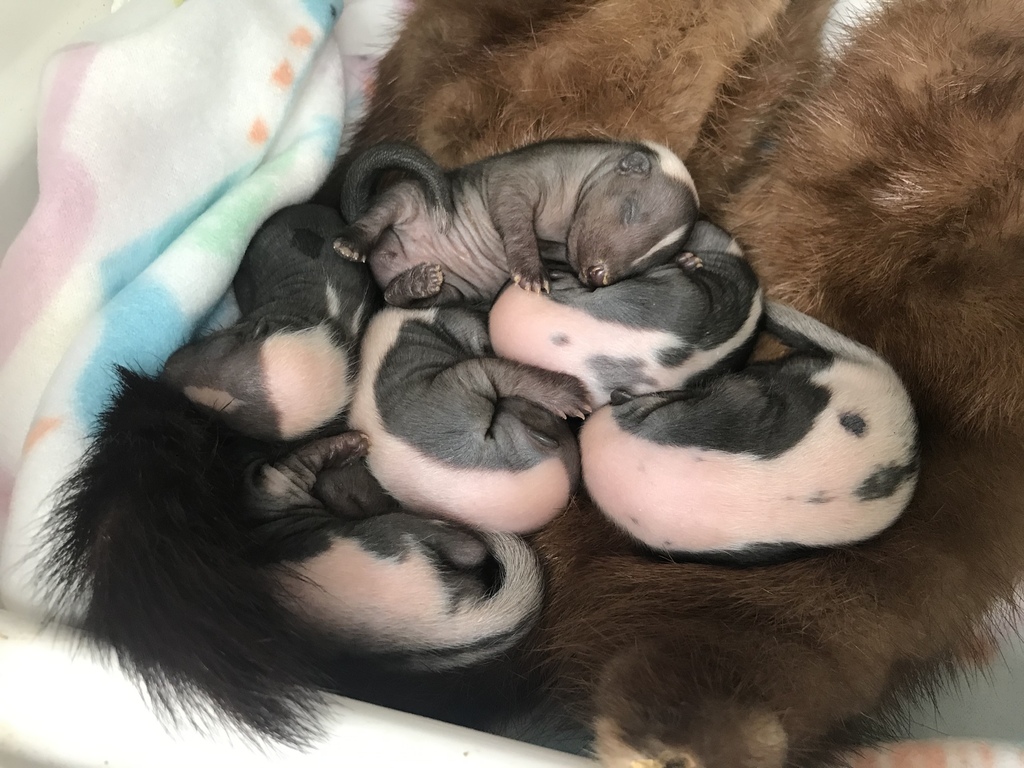
(c) juniper_likethetree, some rights reserved (CC BY) · licence
Family: Mephitidae · Class: Mammalia · Order: Carnivora
Mephitis mephitis (Striped Skunk) is a California animal in the Mephitidae family.
The striped skunk is a medium-sized carnivore measuring 52 to 77 centimeters (20 to 30 inches) in body length, with an additional 18 to 25 centimeters (7 to 10 inches) of tail. Adults typically weigh 1.8 to 4.5 kilograms (4 to 10 pounds), with males generally larger than females. The species is distinguished by its glossy black fur marked with two prominent white stripes that begin at the head and extend along the back, often joining near the tail base. The bushy tail displays a mixture of black and white hairs. The head is small and triangular with a pointed snout, small rounded ears, and short legs equipped with strong claws adapted for digging. Striped skunks have the broadest distribution of any skunk species in North America, ranging from southern Canada to northern Mexico. In California, they occur throughout most of the state except for the highest elevations of the Sierra Nevada and Cascade ranges and the most arid portions of the Mojave and Sonoran deserts. The species is found in all major habitat types at elevations from sea level to approximately 2,400 meters (8,000 feet). This adaptable species inhabits diverse environments including mixed woodlands, brushlands, open prairies, agricultural areas, and suburban neighborhoods. Striped skunks prefer areas with a combination of wooded cover and open spaces, often selecting den sites in rock crevices, hollow logs, abandoned burrows, or underneath buildings and porches. They require access to water sources and areas with loose soil suitable for foraging. Striped skunks are omnivorous and opportunistic feeders, with their diet varying seasonally. During spring and summer, they consume primarily insects, larvae, and small mammals, supplemented by bird eggs, fruits, and vegetation. Their diet shifts toward rodents and cached food sources during winter months. The species is largely nocturnal and crepuscular, becoming active at dusk to forage. Breeding occurs from February through March, following a variable gestation period of 59 to 77 days due to delayed implantation. Females produce a single annual litter of 4 to 7 kits in May or June. Young remain with the mother until autumn dispersal. When threatened, striped skunks employ a well-documented defensive strategy, first stamping their feet and raising their tail as a warning. If the threat persists, they can accurately spray a sulfur-containing musk from anal scent glands up to 4.5 meters (15 feet). This chemical defense mechanism contains thiols that cause temporary blindness and intense odor. Striped skunks are not federally or state listed in California and maintain stable populations throughout most of their range. The species has adapted well to human-modified landscapes and may benefit from certain agricultural practices that increase prey availability. Primary mortality factors include vehicle strikes, predation by great horned owls and other large predators, and disease. The species serves as a reservoir for rabies in some regions, though cases in California remain relatively uncommon.
Classification
Class: Mammalia · Order: Carnivora · Family: Mephitidae
Frequently asked questions
How is Mephitis mephitis classified?
Mephitis mephitis belongs to class Mammalia, order Carnivora, family Mephitidae.
What family does Mephitis mephitis belong to?
Mephitis mephitis is in the Mephitidae family.
What is Mephitis mephitis?
The striped skunk is a medium-sized carnivore measuring 52 to 77 centimeters (20 to 30 inches) in body length, with an additional 18 to 25 centimeters (7 to 10 inches) of tail.
Is Mephitis mephitis found in California?
Yes. Mephitis mephitis is recorded in California in The California Species Project's catalogue.
Related species
Other California species in the same genus, family, or bioregion.
Data from The California Species Project — 14,000+ California species with verified data from CNPS, CDFW, USFWS, and more.