Merhynchites bicolor
Rose Curculio
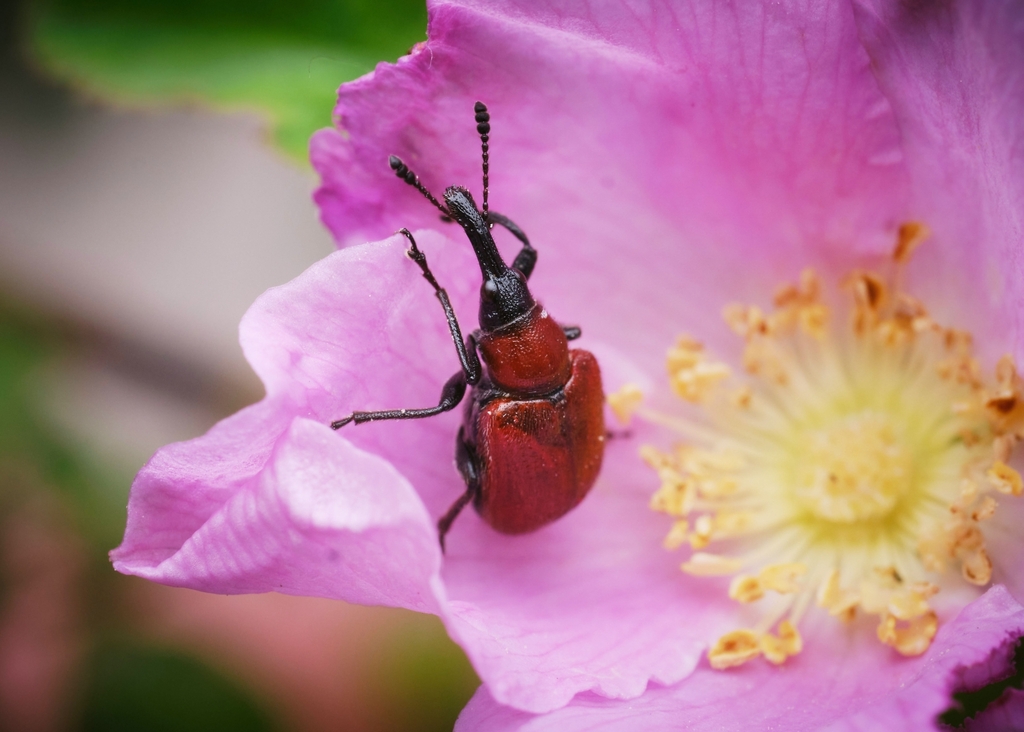
no rights reserved · CC0
Family: Attelabidae · Class: Insecta · Order: Coleoptera
Merhynchites bicolor (Rose Curculio) is a California animal in the Attelabidae family.
The Rose Curculio is a small weevil beetle belonging to the family Attelabidae, subfamily Rhynchitinae. This species exhibits the characteristic elongated snout typical of curculionoid beetles, with adults displaying variable coloration that gives rise to the specific epithet 'bicolor'. The body is typically compact and oval-shaped, measuring approximately 3-6 mm in length, with a distinctive rostrum used for feeding and egg-laying activities. Merhynchites bicolor occurs across North America, with documented populations extending from southern Canada through the United States. The species has been recorded in multiple states including Arkansas, Virginia, Florida, and Georgia, suggesting a relatively broad continental distribution (BugGuide 2025). In California, specific distribution data requires further documentation, though the species likely occurs in areas with suitable host plants and habitat conditions. The Rose Curculio inhabits areas where its host plants are present, particularly environments supporting rose species and related plants in the Rosaceae family. Adults are typically found on or near flowering plants during the growing season, where they feed on flower buds, petals, and developing fruits. The species shows preference for sunny to partially shaded locations with adequate moisture to support robust plant growth. Adults are active during the warmer months, typically from late spring through early fall. Females use their elongated rostrum to drill holes in flower buds or developing fruits, where they deposit single eggs. The larvae develop within the plant tissues, feeding on internal structures before pupating. This feeding behavior can cause damage to ornamental roses and related plants, as larvae consume developing seeds and surrounding tissues. Adults feed on flower petals, stamens, and young foliage, potentially affecting plant reproduction and aesthetic value. The Rose Curculio does not currently hold federal or state conservation status in California. However, the species has been identified as a Species of Greatest Conservation Need (SGCN) in Arkansas, Virginia, and Florida, indicating regional conservation concerns (BugGuide 2025). These designations reflect either declining populations, limited knowledge of the species' status, or habitat pressures in certain regions. The species faces potential threats from habitat modification, pesticide use in ornamental and agricultural settings, and climate change impacts on host plant distributions. Limited scientific documentation exists regarding detailed life history, population trends, and specific ecological requirements of this species. The taxonomic status includes multiple subspecies, including M. b. nigricephalus and M. b. cerdonis, suggesting geographic variation across the species' range. Further research is needed to understand population dynamics, host plant relationships, and conservation needs, particularly in western states like California where documentation remains sparse.
Classification
Class: Insecta · Order: Coleoptera · Family: Attelabidae
Frequently asked questions
How is Merhynchites bicolor classified?
Merhynchites bicolor belongs to class Insecta, order Coleoptera, family Attelabidae.
What family does Merhynchites bicolor belong to?
Merhynchites bicolor is in the Attelabidae family.
What is Merhynchites bicolor?
The Rose Curculio is a small weevil beetle belonging to the family Attelabidae, subfamily Rhynchitinae.
Is Merhynchites bicolor found in California?
Yes. Merhynchites bicolor is recorded in California in The California Species Project's catalogue.
More California species
This species has no close relatives in our California data — here are other species to explore.
Data from The California Species Project — 14,000+ California species with verified data from CNPS, CDFW, USFWS, and more.