Mesoleuca gratulata
Half-white Carpet Moth
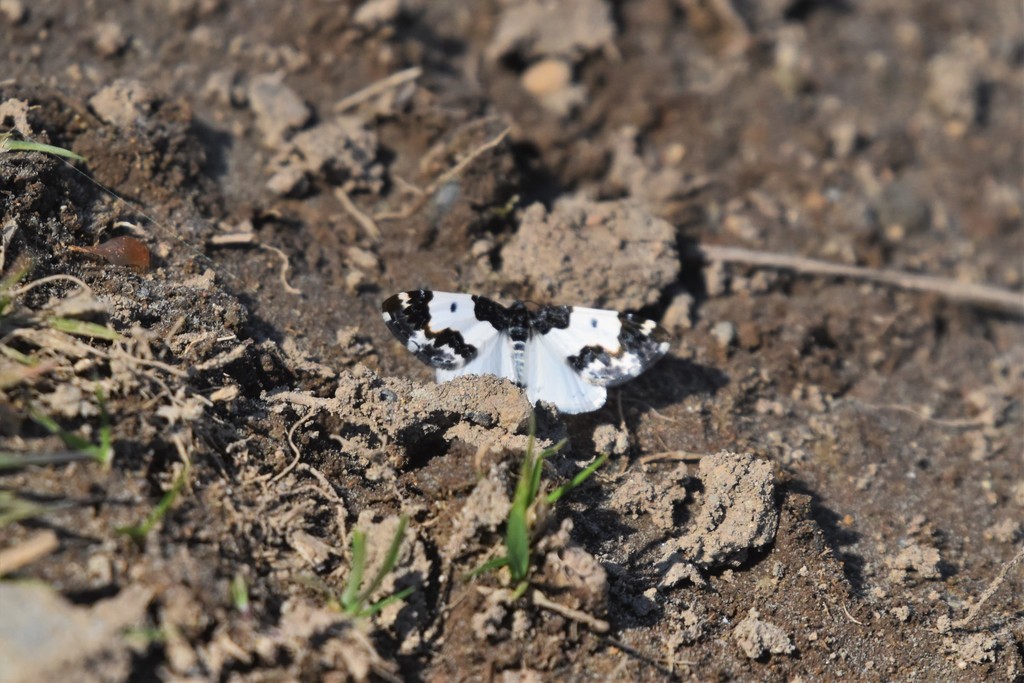
no rights reserved · CC0
Family: Geometridae · Class: Insecta · Order: Lepidoptera
Mesoleuca gratulata (Half-white Carpet Moth) is a California animal in the Geometridae family.
The Half-white Carpet Moth (Mesoleuca gratulata) is a small geometrid moth belonging to the family Geometridae, subfamily Larentiinae. Adults exhibit the characteristic wing pattern that gives the species its common name, with forewings displaying a distinctive half-white coloration pattern contrasted against darker bands and markings. The wingspan typically measures 20 to 25 mm (0.8 to 1.0 inches). Like other carpet moths, the forewings show intricate geometric patterns of lines and bands, while the hindwings are generally paler with reduced markings. The species can be distinguished from related Mesoleuca species by its specific wing pattern arrangement and the extent of white coloration on the forewings. Mesoleuca gratulata has a scattered distribution across western North America, including documented populations in California. The species occurs in regions where its host plant is present, primarily in mountainous and foothill areas. In California, the moth is associated with areas supporting native hazelnut populations, which limits its distribution to specific elevational zones and habitat types where Corylus cornuta naturally occurs. The species inhabits mixed deciduous and coniferous forest environments, particularly areas with understory shrub communities that include California hazelnut (Corylus cornuta). These habitats are typically found at elevations ranging from 300 to 2,000 meters (1,000 to 6,500 feet), in canyon bottoms, stream corridors, and north-facing slopes where moisture levels support hazelnut growth. The moth requires the presence of its specific host plant for larval development, making habitat suitability directly dependent on hazelnut distribution and health. Larvae of the Half-white Carpet Moth feed exclusively on hazelnut (Corylus cornuta), developing as leaf-feeding caterpillars during the growing season. The species likely produces one generation per year, with adults emerging during late spring to early summer when hazelnut foliage is fully developed. Eggs are deposited on host plant leaves or nearby vegetation, and larvae develop through several instars before pupating in soil or leaf litter. Adults are nocturnal and attracted to artificial lights, with peak activity occurring during evening and nighttime hours. Mating and egg-laying behaviors follow typical geometrid patterns, with females releasing pheromones to attract males. The conservation status of Mesoleuca gratulata in California is not well documented, as the species lacks formal state or federal protection status. However, the moth's dependence on a single host plant species makes it potentially vulnerable to habitat loss and fragmentation. Threats may include development pressure in foothill areas, altered fire regimes affecting hazelnut populations, and climate change impacts on suitable habitat zones. The species' conservation needs are likely tied directly to the maintenance of healthy hazelnut populations and the forest ecosystems that support them. Population trends and distribution data remain limited, indicating a need for targeted surveys to better understand the species' current status and habitat requirements throughout its California range.
Classification
Class: Insecta · Order: Lepidoptera · Family: Geometridae
Frequently asked questions
How is Mesoleuca gratulata classified?
Mesoleuca gratulata belongs to class Insecta, order Lepidoptera, family Geometridae.
What family does Mesoleuca gratulata belong to?
Mesoleuca gratulata is in the Geometridae family.
What is Mesoleuca gratulata?
The Half-white Carpet Moth (Mesoleuca gratulata) is a small geometrid moth belonging to the family Geometridae, subfamily Larentiinae.
Is Mesoleuca gratulata found in California?
Yes. Mesoleuca gratulata is recorded in California in The California Species Project's catalogue.
Related species
Other California species in the same genus, family, or bioregion.
Data from The California Species Project — 14,000+ California species with verified data from CNPS, CDFW, USFWS, and more.