Mesophleps palpigera
Soybean Webworm Moth
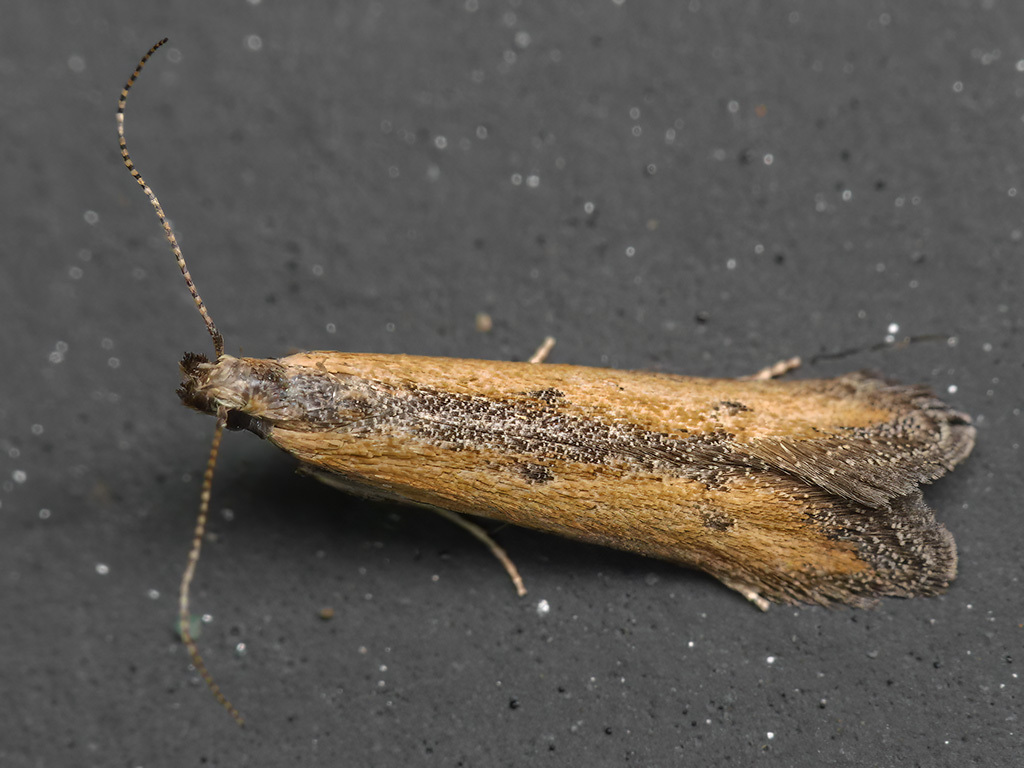
no rights reserved · CC0
Family: Gelechiidae · Class: Insecta · Order: Lepidoptera
Mesophleps palpigera (Soybean Webworm Moth) is a California animal in the Gelechiidae family.
The Soybean Webworm Moth (Brachyacma palpigera) is a small moth in the family Gelechiidae, a diverse group of microlepidoptera commonly known as twirler moths. Adults typically measure 8 to 12 mm in forewing length, with narrow, elongated forewings characteristic of the family. The forewings are generally pale brown to grayish-brown with indistinct darker markings, while the hindwings are lighter, often whitish or pale gray. The species exhibits the typical gelechiid wing posture when at rest, with wings folded roof-like over the body. Males can be distinguished from females by their more feathery antennae and smaller size. The distribution of Brachyacma palpigera in North America is not comprehensively documented, but the species is known to occur across agricultural regions where soybeans are cultivated. In California, the species' presence and distribution patterns require further taxonomic and ecological investigation. The moth's range likely corresponds with areas of intensive soybean cultivation, though it may also utilize other leguminous host plants. Habitat requirements center on agricultural landscapes and disturbed areas where host plants are abundant. The species shows a strong association with soybean fields and may also occur in areas with wild leguminous plants. Adults are typically found in lowland agricultural zones, though specific elevation preferences have not been thoroughly studied. The moth likely requires areas with sufficient vegetation cover for larval development and adult shelter. Larval behavior follows the typical gelechiid pattern of feeding within webbed shelters or folded leaves. Based on the common name, larvae create webs on soybean plants and feed on foliage, potentially causing agricultural damage when populations are high. The species is presumed to be multivoltine, producing multiple generations per year in favorable climates. Adult flight periods likely coincide with warm months when host plants are actively growing. Moths are attracted to artificial lights at night, a behavior common among nocturnal Lepidoptera. Reproductive ecology involves females depositing eggs on or near host plant foliage. Larvae undergo five instars before pupating, with development time dependent on temperature and food availability. Winter survival likely occurs in the pupal stage in temperate regions, though larval diapause may occur in warmer climates. The conservation status of Brachyacma palpigera is not formally assessed, and the species lacks federal or state protection. As an agricultural pest species, conservation concerns are minimal, though habitat modification and pesticide use may influence local population dynamics. The species' association with cultivated soybeans suggests it may benefit from agricultural expansion, though intensive pest management practices could negatively impact populations. Climate change may alter the species' distribution as agricultural zones shift and temperatures change. Additional taxonomic research is needed to clarify the species' distribution, host plant associations, and ecological requirements in California and throughout its range.
Classification
Class: Insecta · Order: Lepidoptera · Family: Gelechiidae
Frequently asked questions
How is Mesophleps palpigera classified?
Mesophleps palpigera belongs to class Insecta, order Lepidoptera, family Gelechiidae.
What family does Mesophleps palpigera belong to?
Mesophleps palpigera is in the Gelechiidae family.
What is Mesophleps palpigera?
The Soybean Webworm Moth (Brachyacma palpigera) is a small moth in the family Gelechiidae, a diverse group of microlepidoptera commonly known as twirler moths.
Is Mesophleps palpigera found in California?
Yes. Mesophleps palpigera is recorded in California in The California Species Project's catalogue.
Related species
Other California species in the same genus, family, or bioregion.
Data from The California Species Project — 14,000+ California species with verified data from CNPS, CDFW, USFWS, and more.