Mesothea incertata
Day Emerald
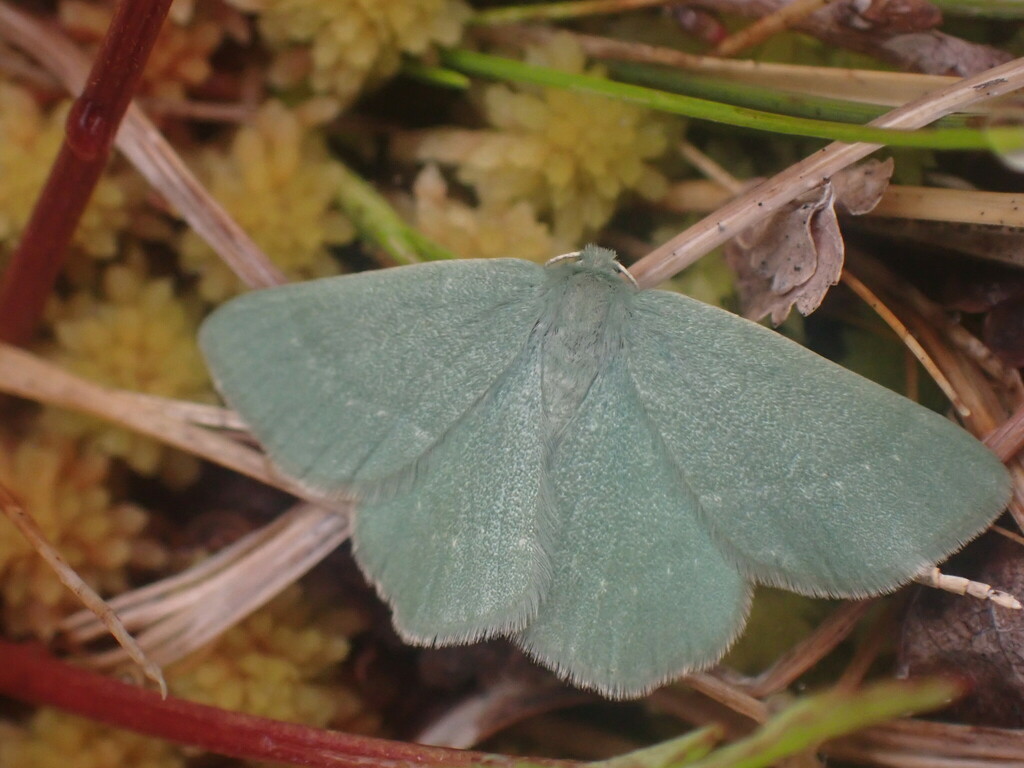
no rights reserved · CC0
Family: Geometridae · Class: Insecta · Order: Lepidoptera
Mesothea incertata (Day Emerald) is a California animal in the Geometridae family.
The Day Emerald is a geometrid moth in the family Geometridae, subfamily Geometrinae. This species belongs to the genus Mesothea, which comprises several closely related emerald moths found across North America. The Day Emerald displays the characteristic emerald green coloration typical of its subfamily, with delicate wings that may show subtle variations in green tones and wing patterns. Mesothea incertata has a documented distribution across North America, extending from Alaska south through Canada and the United States. According to lepidopterist survey records, the species has been documented in Alaska, including the Fairbanks North Star District at Hopper Creek Peatlands (News of the Lepidopterists' Society 2022). The species also occurs in Oregon, with records from Coos County at Storm Ranch, New River ACEC (News of the Lepidopterists' Society 2009). Additional records suggest the species may be found in other western states, though comprehensive distribution data remains limited. The habitat preferences of the Day Emerald appear to encompass diverse ecosystems ranging from boreal and subarctic environments in Alaska to temperate coastal regions in the Pacific Northwest. Based on available collection records, the species occupies areas including peatlands, coastal scrub, and forested environments. The broad latitudinal range suggests considerable ecological adaptability, with populations occurring from sea level coastal areas to potentially higher elevation sites. As with most geometrid moths, the Day Emerald likely undergoes complete metamorphosis with egg, larval, pupal, and adult stages. The larval stage probably feeds on various deciduous trees or shrubs, though specific host plant relationships have not been well documented for this species. Adult flight periods appear to vary geographically, with records from Alaska in June and Oregon records from April, suggesting extended or variable emergence timing across the species' range. The moths are presumably nocturnal and attracted to artificial light sources, as indicated by collection methods noted in lepidopterist surveys. The Day Emerald is not federally listed under the Endangered Species Act and appears to maintain stable populations across its documented range. However, like many moth species, it may face localized threats from habitat modification, pesticide use, and light pollution. Climate change could potentially affect northern populations, particularly those in Alaska and Canada, as warming temperatures alter boreal forest composition and timing of seasonal cycles. Taxonomic uncertainty exists within the Mesothea genus, and further research may refine the classification and distribution understanding of M. incertata. The species represents one component of North America's diverse geometrid moth fauna, contributing to ecosystem function as both herbivore in its larval stage and potential pollinator as an adult. Distribution and ecological information for this species is based primarily on lepidopterist survey records, and continued monitoring and documentation by lepidopterist networks will help expand knowledge of this species' status and distribution patterns.
Classification
Class: Insecta · Order: Lepidoptera · Family: Geometridae
Frequently asked questions
How is Mesothea incertata classified?
Mesothea incertata belongs to class Insecta, order Lepidoptera, family Geometridae.
What family does Mesothea incertata belong to?
Mesothea incertata is in the Geometridae family.
What is Mesothea incertata?
The Day Emerald is a geometrid moth in the family Geometridae, subfamily Geometrinae.
Is Mesothea incertata found in California?
Yes. Mesothea incertata is recorded in California in The California Species Project's catalogue.
Related species
Other California species in the same genus, family, or bioregion.
Data from The California Species Project — 14,000+ California species with verified data from CNPS, CDFW, USFWS, and more.