Metacarcinus anthonyi
Yellow Rock Crab
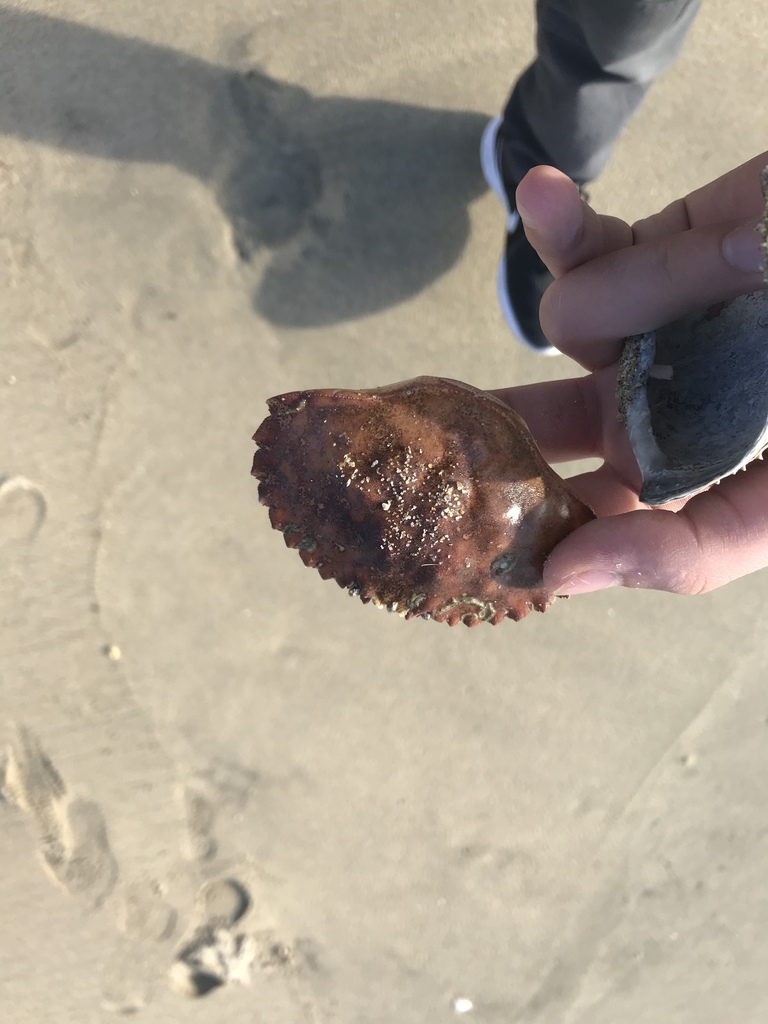
(c) Parsa Fard, some rights reserved (CC BY) · licence
Family: Cancridae · Class: Malacostraca · Order: Decapoda
Metacarcinus anthonyi (Yellow Rock Crab) is a California animal in the Cancridae family.
The yellow rock crab (Metacarcinus anthonyi) is a marine decapod crustacean in the family Cancridae. Adults typically reach carapace widths of 107.95 mm (4.25 inches) or larger, which corresponds to the commercial size limit established by California regulations (CA Marine Species Portal). The species exhibits the characteristic robust, oval carapace shape of rock crabs, with a yellowish coloration that distinguishes it from the related red rock crab (Metacarcinus magister) and brown rock crab (Romaleon antennarium). Yellow rock crabs range along the Pacific coast from Humboldt Bay in northern California south to Bahía Magdalena in Baja California, Mexico (CA Marine Species Portal). This distribution represents a more southerly range compared to red rock crabs, which extend from Alaska to San Diego. The species' range encompasses the entire California coast, making it an important component of the state's marine crustacean fauna. This species typically inhabits sandy substrates and mixed sand-rock environments in nearshore marine waters (CA Marine Species Portal). Yellow rock crabs occupy intertidal and subtidal zones, where they find shelter among rocks, in crevices, and burrow in sandy areas. Their habitat preferences for sandy substrates distinguish them from red rock crabs, which more commonly inhabit rocky areas and hard surfaces. Yellow rock crabs are opportunistic predators and scavengers, feeding on a variety of benthic invertebrates, small fish, and organic detritus. The species serves as important prey for numerous marine predators, including scorpion fish, barred sand bass, and other rockfish species. Sea otters, a threatened marine mammal, also prey on yellow rock crabs, making this crustacean an important component of marine food webs along the California coast. Like other rock crabs, reproduction involves the female carrying fertilized eggs beneath her abdomen until hatching, when larvae are released into the water column to develop through several planktonic stages before settling as juveniles. Yellow rock crabs are managed by the state of California under the California Fish and Game Commission's authority as part of a multi-species rock crab fishery that includes red and brown rock crabs (CA Marine Species Portal). Commercial regulations establish a minimum carapace width of 4.25 inches (107.95 mm), and the species is monitored through the California Recreational Fisheries Survey (CRFS) and commercial landing reports. Currently, the yellow rock crab does not hold any federal or state conservation listing status, indicating stable population levels. However, as with many marine species, yellow rock crabs may face pressures from habitat modification, ocean acidification, and climate change effects on their nearshore marine environments. The species' role as both predator and prey makes it an important indicator species for the health of California's coastal marine ecosystems.
Classification
Class: Malacostraca · Order: Decapoda · Family: Cancridae
Frequently asked questions
How is Metacarcinus anthonyi classified?
Metacarcinus anthonyi belongs to class Malacostraca, order Decapoda, family Cancridae.
What family does Metacarcinus anthonyi belong to?
Metacarcinus anthonyi is in the Cancridae family.
What is Metacarcinus anthonyi?
The yellow rock crab (Metacarcinus anthonyi) is a marine decapod crustacean in the family Cancridae.
Is Metacarcinus anthonyi found in California?
Yes. Metacarcinus anthonyi is recorded in California in The California Species Project's catalogue.
Related species
Other California species in the same genus, family, or bioregion.
Data from The California Species Project — 14,000+ California species with verified data from CNPS, CDFW, USFWS, and more.