Metacarcinus gracilis
Graceful Rock Crab
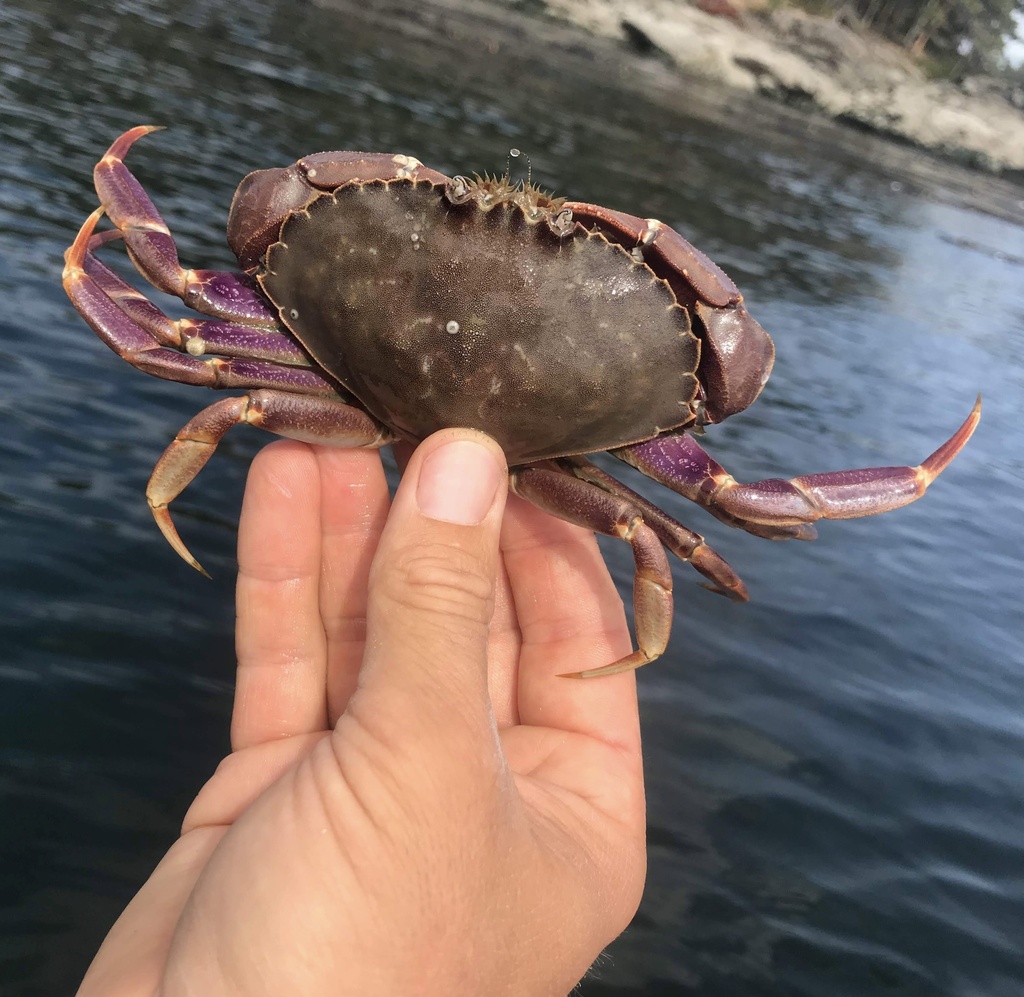
(c) Mark Pollock, some rights reserved (CC BY) · licence
Family: Cancridae · Class: Malacostraca · Order: Decapoda
Metacarcinus gracilis (Graceful Rock Crab) is a California animal in the Cancridae family.
The Graceful Rock Crab (Metacarcinus gracilis), also known as the slender crab, is a marine decapod crustacean in the family Cancridae. This crab species exhibits the characteristic features of rock crabs, with a broad, oval carapace and robust claws adapted for crushing prey. The carapace displays a mottled coloration pattern that provides effective camouflage among rocky substrates. Metacarcinus gracilis occurs along the Pacific Coast from British Columbia to Baja California, Mexico. In California waters, this species is distributed throughout the state's coastal marine environments, with documented presence from northern California to the Mexican border. The species has been recorded in various California coastal locations including the Sacramento-San Joaquin Delta region, southern California waters, and around the Channel Islands including Santa Barbara Island. The Graceful Rock Crab inhabits rocky intertidal and subtidal zones, typically found among boulders, rock crevices, and hard substrates where it seeks shelter during daylight hours. This species occurs in both shallow nearshore waters and deeper offshore areas. The crab demonstrates adaptability to various salinity conditions, with populations documented in estuarine environments where fresh and salt water mix, such as the Sacramento-San Joaquin Delta system. Depth distribution ranges from intertidal zones to subtidal areas, though specific depth limits have not been well documented in the scientific literature. As a member of the Cancridae family, M. gracilis exhibits typical rock crab feeding behavior, functioning as an opportunistic omnivore and scavenger. The species feeds on a variety of prey including small mollusks, barnacles, algae, and organic detritus. Their powerful chelae (claws) are well-adapted for crushing hard-shelled prey and manipulating food items. Reproductive behavior follows the general pattern of other rock crabs, with mating typically occurring after the female molts. Females carry fertilized eggs on their abdomens until hatching releases planktonic larvae into the water column. The Graceful Rock Crab plays an important ecological role in marine food webs, serving as both predator and prey. The species supports recreational and commercial fishing activities along the California coast, where it is harvested alongside other rock crab species. Current population status and trends have not been comprehensively assessed, and the species lacks specific conservation designations at state or federal levels. Like other marine crustaceans, M. gracilis may face potential impacts from ocean acidification, warming sea temperatures associated with climate change, and habitat modification from coastal development. The species' broad distribution and apparent habitat flexibility suggest relatively stable population status, though long-term monitoring data are limited. No specific conservation measures are currently in place for this species, as it is not considered at risk under existing regulatory frameworks.
Classification
Class: Malacostraca · Order: Decapoda · Family: Cancridae
Frequently asked questions
How is Metacarcinus gracilis classified?
Metacarcinus gracilis belongs to class Malacostraca, order Decapoda, family Cancridae.
What family does Metacarcinus gracilis belong to?
Metacarcinus gracilis is in the Cancridae family.
What is Metacarcinus gracilis?
The Graceful Rock Crab (Metacarcinus gracilis), also known as the slender crab, is a marine decapod crustacean in the family Cancridae.
Is Metacarcinus gracilis found in California?
Yes. Metacarcinus gracilis is recorded in California in The California Species Project's catalogue.
Related species
Other California species in the same genus, family, or bioregion.
Data from The California Species Project — 14,000+ California species with verified data from CNPS, CDFW, USFWS, and more.