Metapogon hurdi
Hurd's Metapogon Robberfly
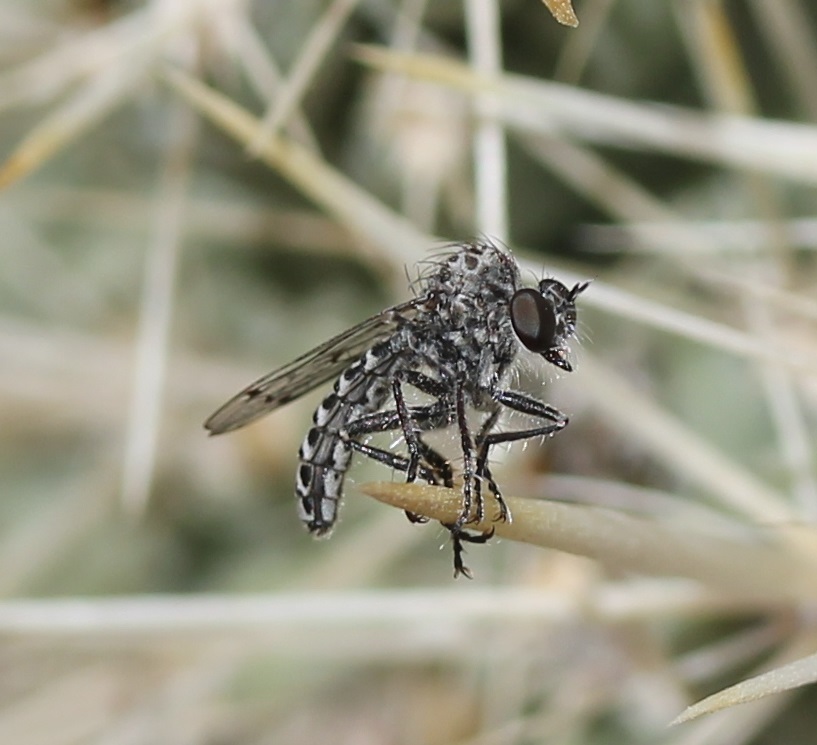
(c) Even Dankowicz, some rights reserved (CC BY) · licence
Family: Asilidae · Class: Insecta · Order: Diptera
Conservation status: G1G2 S1S2
Metapogon hurdi (Hurd's Metapogon Robberfly) is a California animal in the Asilidae family.
Hurd's metapogon robberfly (Metapogon hurdi) is a rare dipteran species in the family Asilidae, known only from a limited range in California. This robberfly belongs to the genus Metapogon, which comprises predatory flies characterized by their robust build and hunting behavior typical of the asilid family. Specific morphological details for this species have not been comprehensively documented in the available literature, reflecting the limited scientific study of this rare insect. The species occurs exclusively in California, where it has an extremely restricted distribution. Based on its conservation status rankings of G1G2 (globally critically imperiled to imperiled) and S1S2 (state critically imperiled to imperiled), Metapogon hurdi is found in very few locations with small population sizes. The U.S. Fish and Wildlife Service maintains a species profile for this taxon, indicating federal recognition of its conservation concern status (USFWS Species Profile). Habitat requirements for Hurd's metapogon robberfly remain poorly documented. Like other members of the genus Metapogon, this species likely occupies specific microhabitat conditions that support both its predatory lifestyle and reproductive needs. The species' inclusion in federal conservation assessments suggests it may be associated with threatened habitat types, though detailed ecological studies are lacking. The Draft Recovery Plan for Chaparral and Scrub species listed M. hurdi as a Species of Concern, suggesting potential association with these vegetation communities (USFWS 2003). As a member of the Asilidae family, Hurd's metapogon robberfly is presumed to be a predatory species that captures other flying insects. Adult robberflies typically employ sit-and-wait hunting strategies, using their excellent vision to detect prey before launching rapid pursuit flights. They inject digestive enzymes into captured prey and consume the liquefied contents. Reproductive behavior and seasonal activity patterns have not been specifically documented for this species, though most robberflies are active during warmer months and require suitable substrates for egg deposition. The conservation status of Metapogon hurdi reflects significant concern about its long-term persistence. With global and state rankings of G1G2 and S1S2 respectively, the species faces high risk of extinction due to its extremely limited distribution and presumed small population size. NatureServe lists the global status as G1G3, indicating uncertainty in the exact level of imperilment but confirming critical conservation concern (NatureServe Explorer). Threats to the species likely include habitat loss, fragmentation, and degradation of the specialized ecological conditions it requires. The lack of detailed biological and ecological information hampers effective conservation planning and management efforts. Scientific documentation for this species remains extremely limited despite its recognized conservation importance. The information presented here synthesizes available data from federal databases and conservation assessments. Enhanced field surveys, taxonomic research, and ecological studies are needed to develop effective conservation strategies for this rare California endemic.
Classification
Class: Insecta · Order: Diptera · Family: Asilidae
Conservation status
G1G2 S1S2
Frequently asked questions
How is Metapogon hurdi classified?
Metapogon hurdi belongs to class Insecta, order Diptera, family Asilidae.
What family does Metapogon hurdi belong to?
Metapogon hurdi is in the Asilidae family.
Is Metapogon hurdi protected or of conservation concern?
Metapogon hurdi carries the following status: G1G2 S1S2.
What is Metapogon hurdi?
Hurd's metapogon robberfly (Metapogon hurdi) is a rare dipteran species in the family Asilidae, known only from a limited range in California.
Is Metapogon hurdi found in California?
Yes. Metapogon hurdi is recorded in California in The California Species Project's catalogue.
Related species
Other California species in the same genus, family, or bioregion.
Data from The California Species Project — 14,000+ California species with verified data from CNPS, CDFW, USFWS, and more.