Meteorus pulchricornis
Basket-cocoon parasitoid
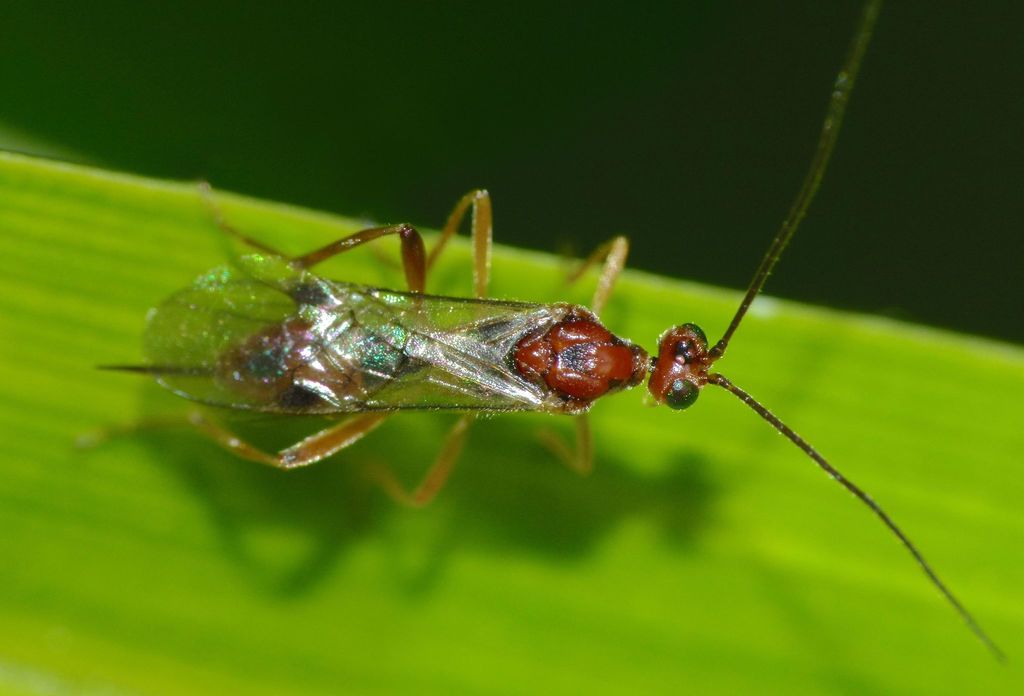
(c) Steve Kerr, some rights reserved (CC BY) · licence
Family: Braconidae · Class: Insecta · Order: Hymenoptera
Meteorus pulchricornis (Basket-cocoon parasitoid) is a California animal in the Braconidae family.
Meteorus pulchricornis is a small parasitoid wasp in the family Braconidae, a diverse group of wasps known for their role as biological control agents. This species belongs to the genus Meteorus, which contains numerous species of koinobiont endoparasitoids that attack lepidopteran larvae. Adults are typically small, measuring 3-8 mm in length, with relatively long antennae and narrow wings characteristic of braconid wasps. The species name 'pulchricornis' refers to the distinctly colored antennae, though detailed morphological descriptions in the scientific literature remain limited. The distribution of M. pulchricornis in California has not been comprehensively documented in available sources. Like many braconid wasps, this species likely has a broad but patchy distribution, occurring where suitable host species are present. The genus Meteorus is represented throughout temperate regions of North America, with various species occupying different ecological niches and host ranges. Specific county records and elevation ranges for M. pulchricornis in California require further taxonomic survey work to establish. Meteorus species typically inhabit areas where their lepidopteran hosts are abundant. This includes forest edges, woodland openings, grasslands, and agricultural areas. The habitat requirements of M. pulchricornis are directly linked to the presence of its host species, as the adult females must locate appropriate caterpillars for oviposition. Many braconid wasps are found in microhabitats that provide both nectar sources for adults and access to host insects, suggesting M. pulchricornis likely occurs in areas with diverse flowering plants and suitable lepidopteran populations. As an endoparasitoid, M. pulchricornis exhibits the characteristic life cycle of braconid wasps. Adult females locate caterpillars of specific lepidopteran species and insert a single egg into the host's body cavity. The developing wasp larva feeds internally on the host's body fluids and tissues while allowing the caterpillar to continue feeding and growing. This koinobiont strategy enables the parasitoid to develop within a larger, more nutritious host. Upon reaching maturity, the wasp larva emerges from the host caterpillar and pupates within a distinctive silken cocoon, often described as basket-like in shape due to its open-weave construction - a characteristic feature that gives this species its common name. The conservation status of M. pulchricornis has not been formally assessed. Like many hymenopteran species, population trends and conservation needs are poorly documented due to limited taxonomic expertise and survey effort for parasitoid wasps. The species faces potential threats common to beneficial insects, including habitat loss, pesticide use, and climate change impacts on host-parasitoid relationships. The ecological importance of Meteorus species as natural biological control agents suggests that maintaining healthy populations of these wasps contributes to ecosystem stability and agricultural pest management. Detailed ecological studies of this species are lacking. The above information synthesizes available taxonomic literature and general knowledge of braconid biology. We welcome contributions of verified scientific data, photographs, or field observations to enhance this species account.
Classification
Class: Insecta · Order: Hymenoptera · Family: Braconidae
Frequently asked questions
How is Meteorus pulchricornis classified?
Meteorus pulchricornis belongs to class Insecta, order Hymenoptera, family Braconidae.
What family does Meteorus pulchricornis belong to?
Meteorus pulchricornis is in the Braconidae family.
What is Meteorus pulchricornis?
Meteorus pulchricornis is a small parasitoid wasp in the family Braconidae, a diverse group of wasps known for their role as biological control agents.
Is Meteorus pulchricornis found in California?
Yes. Meteorus pulchricornis is recorded in California in The California Species Project's catalogue.
More California species
This species has no close relatives in our California data — here are other species to explore.
Data from The California Species Project — 14,000+ California species with verified data from CNPS, CDFW, USFWS, and more.