Metridium farcimen
Giant Plumose Anemone
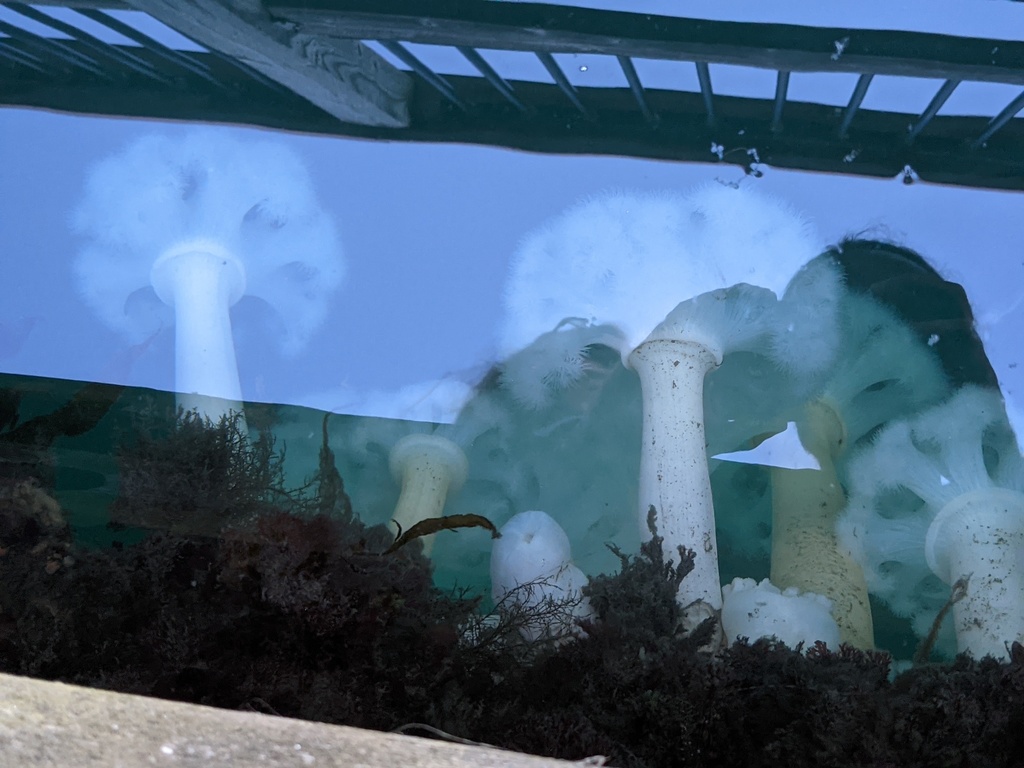
(c) Eric Knight, some rights reserved (CC BY) · licence
Family: Metridiidae · Class: Anthozoa · Order: Actiniaria
Metridium farcimen (Giant Plumose Anemone) is a California animal in the Metridiidae family.
The giant plumose anemone is a large marine cnidarian belonging to the family Metridiidae. This sea anemone exhibits a distinctive cylindrical column that can reach substantial size, topped by numerous feathery tentacles that give the species its characteristic plumose appearance. The tentacles are typically arranged in multiple rows around the oral disc and display a white to cream coloration, creating the distinctive "white-plumed" appearance noted in marine surveys. The column is smooth and can range from pale orange to deep reddish-brown, often with lighter vertical stripes. Metridium farcimen occurs along the Pacific coast of North America, with documented populations in California waters. The species has been observed in various marine protected areas along the California coast, including Point Conception State Marine Reserve, where it inhabits rocky substrates alongside rockfish populations. Observations from South Cape Mendocino and MacKerricher State Marine Conservation Area indicate the species' presence in northern California waters as well. This anemone typically inhabits subtidal rocky reefs and hard substrates in temperate marine environments. The species occurs from the low intertidal zone to depths exceeding 120 feet, as documented in California's marine protected areas. Giant plumose anemones prefer areas with moderate to strong water flow that facilitates feeding and waste removal. They attach firmly to rock surfaces, pier pilings, and other hard substrates using their muscular pedal disc. Giant plumose anemones are suspension feeders that capture plankton, small fish, and organic particles using their tentacles equipped with cnidocytes (stinging cells). The tentacles can retract rapidly when disturbed, and the entire anemone can contract its column for protection. These anemones reproduce both sexually through broadcast spawning and asexually through pedal laceration or longitudinal fission. Sexual reproduction typically involves the release of gametes into the water column during specific seasonal periods. The species serves as an important habitat component in subtidal communities, providing shelter and substrate for various marine organisms. According to the California Marine Species Portal, spot prawns are found in association with Metridium farcimen, indicating the anemone's role in supporting commercial marine species. The tentacles and body cavity provide refuge for small invertebrates and juvenile fish. Currently, Metridium farcimen does not hold federal or state conservation listing status in California. The species appears to maintain stable populations within its natural range, though like many marine invertebrates, it may face pressures from coastal development, water quality changes, and climate-related ocean acidification. The species receives protection within California's network of marine protected areas, where it contributes to the biodiversity of rocky reef ecosystems. Monitoring within these protected areas provides valuable data on population trends and habitat requirements for this ecologically important cnidarian.
Classification
Class: Anthozoa · Order: Actiniaria · Family: Metridiidae
Frequently asked questions
How is Metridium farcimen classified?
Metridium farcimen belongs to class Anthozoa, order Actiniaria, family Metridiidae.
What family does Metridium farcimen belong to?
Metridium farcimen is in the Metridiidae family.
What is Metridium farcimen?
The giant plumose anemone is a large marine cnidarian belonging to the family Metridiidae.
Is Metridium farcimen found in California?
Yes. Metridium farcimen is recorded in California in The California Species Project's catalogue.
Related species
Other California species in the same genus, family, or bioregion.
Data from The California Species Project — 14,000+ California species with verified data from CNPS, CDFW, USFWS, and more.