Mexigonus minutus
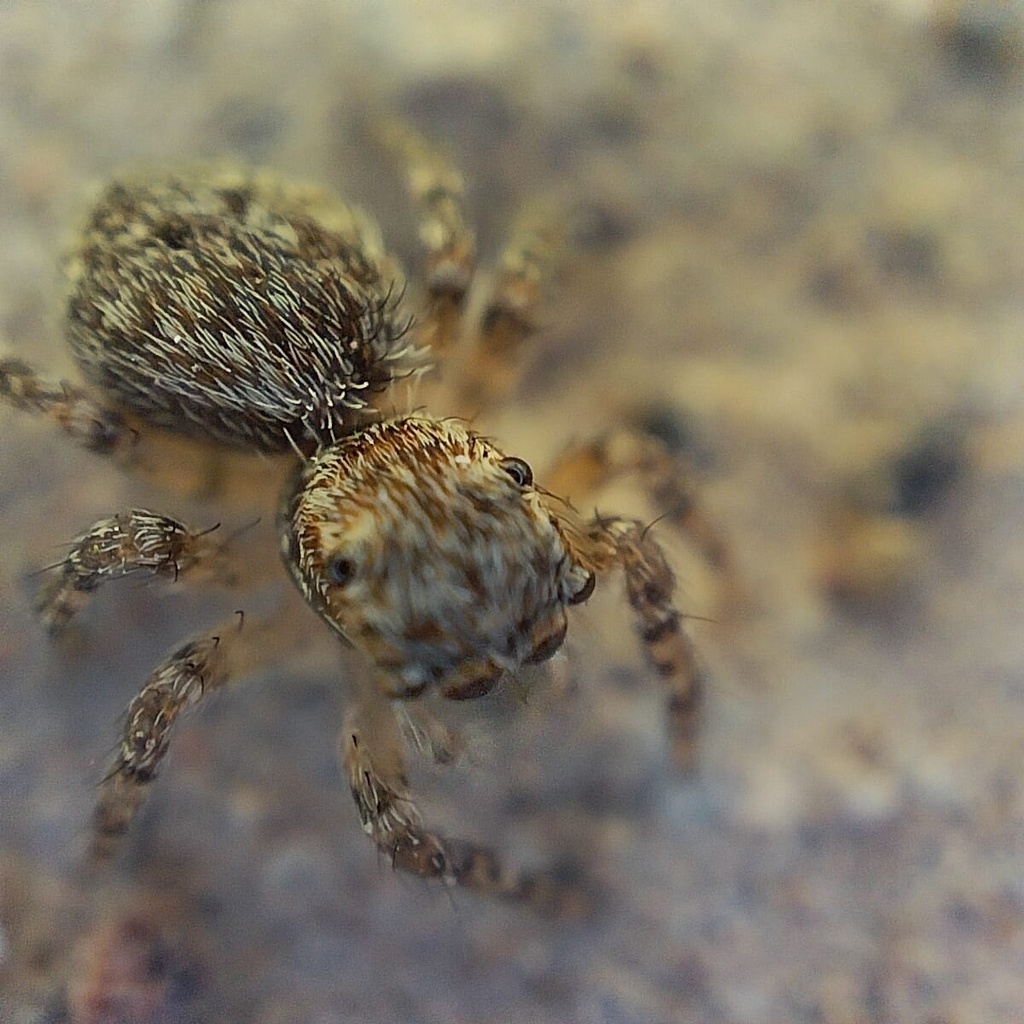
(c) Emilia Trueba, some rights reserved (CC BY) · licence
Family: Salticidae · Class: Arachnida · Order: Araneae
Mexigonus minutus is a California animal in the Salticidae family.
Mexigonus minutus is a small jumping spider in the family Salticidae, one of the most diverse spider families worldwide. As the specific epithet 'minutus' suggests, this species is characterized by its diminutive size, typical of many jumping spiders that measure only a few millimeters in body length. Like other salticids, M. minutus possesses the characteristic forward-facing eyes that provide excellent binocular vision, essential for their hunting strategy and prey detection. The geographic distribution of Mexigonus minutus has not been comprehensively documented in current literature. The genus name suggests potential distribution in Mexico or regions with Mexican biogeographic affinities, though specific range data for this species remains limited in accessible scientific databases. California's spider fauna includes numerous salticid species, but the presence and distribution of M. minutus within the state requires further documentation through systematic surveys. Habitat preferences for Mexigonus minutus have not been well characterized in published studies. Jumping spiders in the family Salticidae typically occupy diverse microhabitats including vegetation, leaf litter, rock crevices, and human-modified environments. Many salticid species demonstrate habitat flexibility, occurring across various vegetation types and elevation ranges. The specific ecological requirements of M. minutus, including preferred substrate types, vegetation associations, and microclimate preferences, remain poorly documented. Behavioral and ecological information for Mexigonus minutus is extremely limited. Jumping spiders are active visual hunters that do not construct webs for prey capture. Instead, they rely on their exceptional eyesight to locate and stalk prey, typically small arthropods including flies, aphids, and other minute invertebrates. Salticids exhibit complex courtship behaviors involving visual displays and ritualized movements. Males often possess specialized coloration or morphological features used in species-specific courtship sequences. The reproductive biology, seasonal activity patterns, and prey preferences of M. minutus have not been specifically studied. Mexigonus minutus does not appear on federal or state threatened or endangered species lists. However, the conservation status of many small arthropod species, particularly spiders, remains poorly assessed due to limited taxonomic expertise and survey effort. California supports exceptional spider diversity, with many species known from limited localities or single collection records. The actual conservation needs of M. minutus cannot be evaluated without basic information on its distribution, population status, and habitat requirements. Scientific documentation for this species remains extremely limited. The information presented here represents the current state of knowledge based on taxonomic classification and general salticid biology. Comprehensive studies of California's jumping spider fauna are needed to better understand the distribution, ecology, and conservation status of lesser-known species like M. minutus. We welcome contributions of verified scientific data, photographs, or field observations to enhance this species account.
Classification
Class: Arachnida · Order: Araneae · Family: Salticidae
Frequently asked questions
How is Mexigonus minutus classified?
Mexigonus minutus belongs to class Arachnida, order Araneae, family Salticidae.
What family does Mexigonus minutus belong to?
Mexigonus minutus is in the Salticidae family.
What is Mexigonus minutus?
Mexigonus minutus is a small jumping spider in the family Salticidae, one of the most diverse spider families worldwide.
Is Mexigonus minutus found in California?
Yes. Mexigonus minutus is recorded in California in The California Species Project's catalogue.
Related species
Other California species in the same genus, family, or bioregion.
Data from The California Species Project — 14,000+ California species with verified data from CNPS, CDFW, USFWS, and more.