Mexigonus morosus
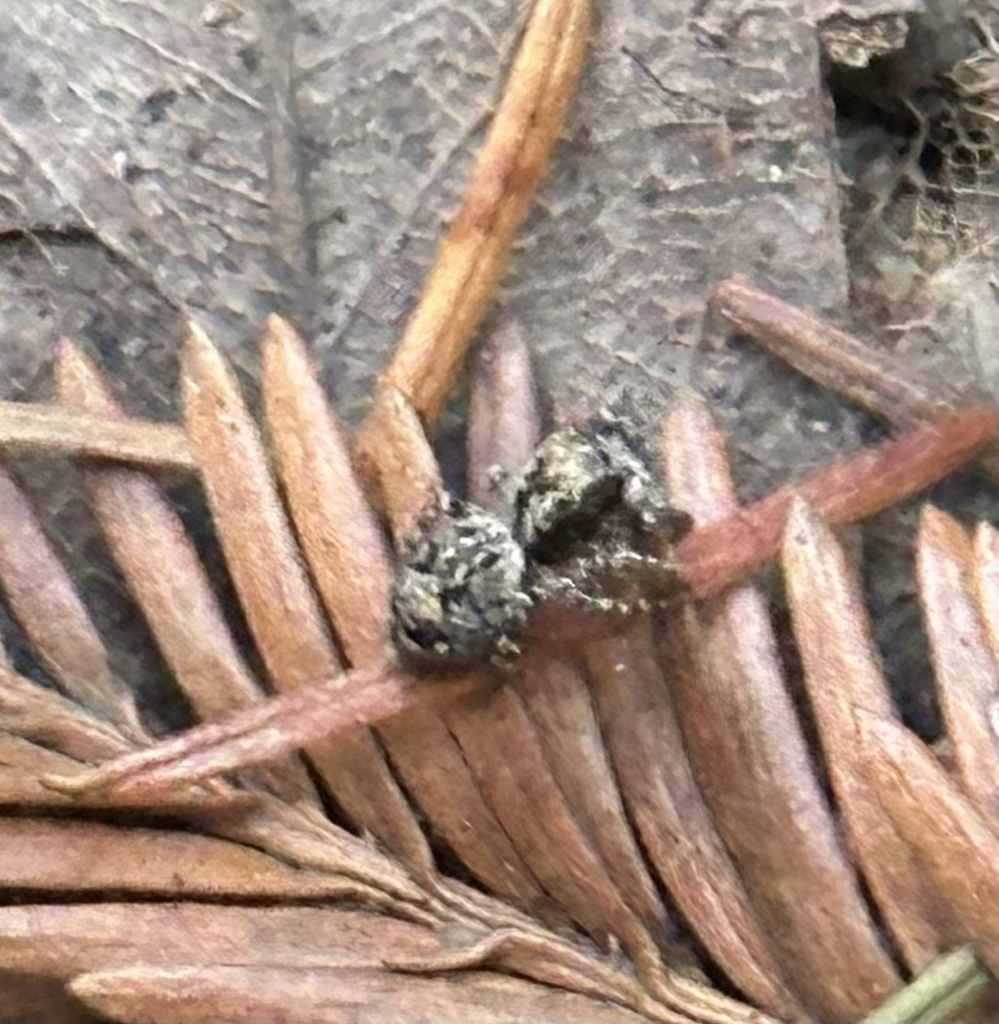
(c) Tyler Williams, some rights reserved (CC BY) · licence
Family: Salticidae · Class: Arachnida · Order: Araneae
Mexigonus morosus is a California animal in the Salticidae family.
Mexigonus morosus is a jumping spider in the family Salticidae, first described by Peckham and Peckham in 1888. This species represents one of the lesser-documented members of the diverse jumping spider fauna found in North America. As a member of the Salticidae family, M. morosus possesses the characteristic features of jumping spiders, including excellent vision provided by large anterior median eyes, compact body structure, and the ability to leap considerable distances relative to body size. Like other jumping spiders, this species likely displays sexual dimorphism in size and coloration, though specific morphological details for M. morosus have not been comprehensively documented in accessible scientific literature. The geographic distribution of Mexigonus morosus remains poorly documented in current taxonomic databases. NatureServe Explorer lists the species with a global conservation status of GNR (Global Not Ranked), indicating insufficient information to assess its conservation status or determine its range extent (NatureServe 2025). The genus Mexigonus appears to have limited representation in North American spider fauna, suggesting this may be a relatively uncommon or geographically restricted group. Habitat preferences and ecological requirements for M. morosus have not been well characterized in available scientific literature. Jumping spiders as a family occupy diverse habitats ranging from forest canopies to grasslands, rocky outcrops, and human-modified environments. Many species are habitat specialists, requiring specific microenvironmental conditions for successful reproduction and survival. Without detailed field studies, the specific habitat associations of M. morosus remain unknown. Like other jumping spiders, M. morosus likely exhibits active hunting behavior rather than web-building prey capture. Jumping spiders are visual predators that stalk and pounce on small arthropod prey, including flies, moths, and other spiders. Reproductive behavior in the family typically involves complex courtship displays by males, featuring intricate visual signals using body movements, leg waving, and specialized coloration patterns. Females often construct silk retreats for egg-laying and may provide maternal care during early developmental stages. The conservation status of Mexigonus morosus is currently unassessed due to insufficient data on population size, distribution, and threats. The species' GNR ranking by NatureServe reflects the general lack of comprehensive survey data for many arthropod species, particularly those with limited geographic ranges or specialized habitat requirements. This data deficiency is common among invertebrates, where taxonomic knowledge often lags behind conservation needs. Detailed ecological studies of this species are lacking. The information presented here synthesizes available taxonomic records and general knowledge of jumping spider biology. Given the limited scientific documentation, field surveys and taxonomic research are needed to better understand the distribution, habitat requirements, and conservation status of M. morosus. We welcome contributions of verified scientific data, photographs, or field observations to enhance this species account.
Classification
Class: Arachnida · Order: Araneae · Family: Salticidae
Frequently asked questions
How is Mexigonus morosus classified?
Mexigonus morosus belongs to class Arachnida, order Araneae, family Salticidae.
What family does Mexigonus morosus belong to?
Mexigonus morosus is in the Salticidae family.
What is Mexigonus morosus?
Mexigonus morosus is a jumping spider in the family Salticidae, first described by Peckham and Peckham in 1888.
Is Mexigonus morosus found in California?
Yes. Mexigonus morosus is recorded in California in The California Species Project's catalogue.
Related species
Other California species in the same genus, family, or bioregion.
Data from The California Species Project — 14,000+ California species with verified data from CNPS, CDFW, USFWS, and more.