Micracanthia fennica
Harney hot spring shore bug
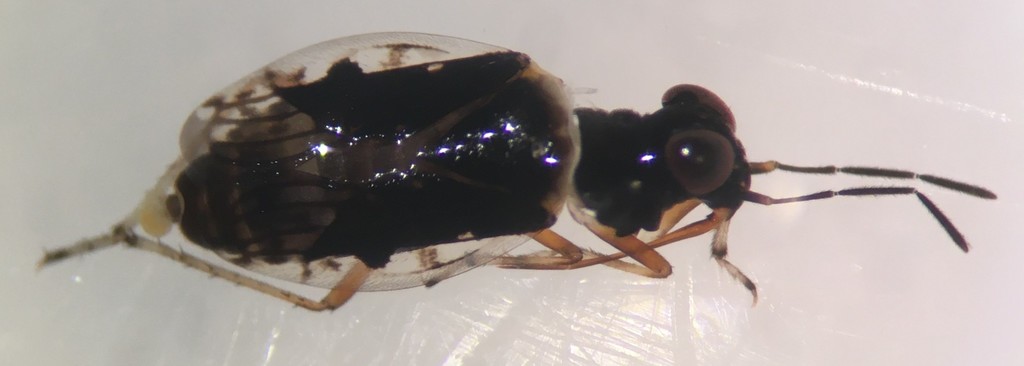
(c) Matthew Pintar, some rights reserved (CC BY) · licence
Family: Saldidae · Class: Insecta · Order: Hemiptera
Micracanthia fennica (Harney hot spring shore bug) is a California animal in the Saldidae family.
The Harney hot spring shore bug (Micracanthia fennica) is a small, predatory insect in the family Saldidae. Adults measure less than 3.5 mm in length with an oval body shape and general dark coloration. The species lacks an apparent forked vein on the corium (elongated middle portion of the forewing), and the inner corium is typically without color or shows at most one pale apical spot (Merritt & Cummins 1986). This combination of morphological features distinguishes M. fennica from other shore bug species in the region. Micracanthia fennica is a Holarctic species with a wide but patchy distribution across northern regions. In western North America, the species occurs in California and Oregon, though documented populations are extremely limited. The species is known from thermal spring complexes, with historical records from Oregon's Harney County hot springs region. Current population status and distribution extent remain poorly documented, with surveys needed to confirm persistence at known historical locations. The species inhabits riparian areas surrounding thermal springs, occurring in ground-level microhabitats among low vegetation rather than directly in hot springs themselves (Lattin 1995). Suitable habitat is characterized by sparse vegetation cover, presence of small arthropod prey species, and absence of significant habitat disturbance. The species appears to require clean water sources and specific temperature regimes associated with geothermal activity, making it dependent on undisturbed spring ecosystems. As an adult, M. fennica functions as a predator of small arthropods in riparian zones around springs while serving as prey for other riparian arthropods (Lattin 1995). Like other Saldidae species, overwintering habits vary among populations, with some overwintering as adults, others as eggs, and some remaining active during warm winter periods (Henry & Froeschner 1988). Specific reproductive timing and life cycle details for western North American populations have not been well documented. The species receives no federal protection but carries Heritage ranks of G5 (globally secure) and S1? (critically imperiled/possibly extirpated) in Oregon. The question mark indicates uncertainty about current population status. Primary conservation concerns include habitat disturbance at thermal spring complexes and potential impacts from geothermal development or recreational activities. The Xerces Society recommends avoiding disturbance of potential habitat in riparian areas surrounding thermal springs, implementing measures to maintain or enhance habitat quality, and conducting surveys within suitable habitats before management actions that might impact these sensitive ecosystems. Targeted surveys at historically known Oregon locations and surrounding hot spring complexes are needed to determine current species persistence and distribution. The species' apparent rarity and specialized habitat requirements make it particularly vulnerable to habitat modification and warrant continued monitoring efforts.
Classification
Class: Insecta · Order: Hemiptera · Family: Saldidae
Frequently asked questions
How is Micracanthia fennica classified?
Micracanthia fennica belongs to class Insecta, order Hemiptera, family Saldidae.
What family does Micracanthia fennica belong to?
Micracanthia fennica is in the Saldidae family.
What is Micracanthia fennica?
The Harney hot spring shore bug (Micracanthia fennica) is a small, predatory insect in the family Saldidae.
Is Micracanthia fennica found in California?
Yes. Micracanthia fennica is recorded in California in The California Species Project's catalogue.
Related species
Other California species in the same genus, family, or bioregion.
Data from The California Species Project — 14,000+ California species with verified data from CNPS, CDFW, USFWS, and more.