Micrarionta feralis
San Nicolas Islandsnail
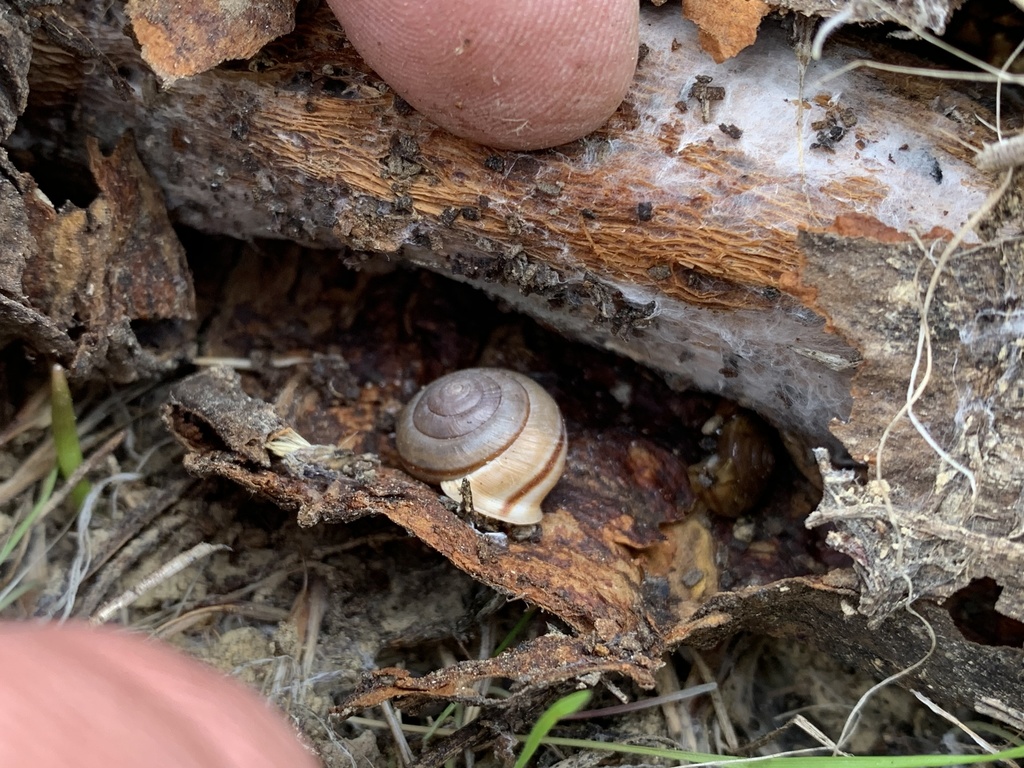
(c) william_hoyer, some rights reserved (CC BY) · licence
Family: Xanthonychidae · Class: Gastropoda · Order: Stylommatophora
Conservation status: G1 S1
Micrarionta feralis (San Nicolas Islandsnail) is a California animal in the Xanthonychidae family.
The San Nicolas islandsnail (Micrarionta feralis) is a terrestrial gastropod mollusk in the family Xanthonychidae, endemic to San Nicolas Island off the coast of California. This species represents one of the most geographically restricted land snails in North America, occurring only on this single island approximately 61 miles southwest of Los Angeles. The San Nicolas islandsnail is distinguished from other Micrarionta species by its shell morphology and geographic isolation. Like other members of the genus, it possesses a heliciform shell typical of terrestrial gastropods. Specific morphological descriptions of shell dimensions, coloration patterns, and distinguishing features have not been well documented in available scientific literature. The species' range is entirely confined to San Nicolas Island, the most remote of California's Channel Islands. This 22-square-mile island lies within the Channel Islands archipelago and is managed by the U.S. Navy as Naval Base Ventura County San Nicolas Island. The island's isolation, approximately 65 miles from the nearest mainland point, has contributed to the evolution of numerous endemic species including this snail. San Nicolas Island features a Mediterranean climate with mild, wet winters and dry summers. The island's topography includes coastal terraces, central plateaus, and steep coastal bluffs rising to approximately 900 feet elevation. Vegetation consists primarily of grassland communities, coastal sage scrub, and maritime desert scrub. The specific microhabitat preferences of M. feralis within these plant communities have not been thoroughly studied, though terrestrial snails typically require areas with adequate moisture retention and calcium sources for shell development. Detailed information regarding the San Nicolas islandsnail's behavior, diet, and reproductive ecology remains limited in published scientific literature. Most terrestrial gastropods are hermaphroditic and require specific moisture conditions for reproduction and egg-laying. The species likely feeds on decaying organic matter, fungi, and possibly living plant material, following typical patterns observed in related island endemic snails. Seasonal activity patterns and population dynamics have not been comprehensively documented. The San Nicolas islandsnail holds a conservation status of G1 S1, indicating it is critically imperiled both globally and within California due to extreme rarity and vulnerability to extinction. This ranking reflects the species' highly restricted range and small population size. The U.S. Fish and Wildlife Service recognizes M. feralis as a Species of Concern, making it eligible for traditional conservation grants (USFWS 2025). The species appears on lists of species at risk on Department of Defense installations, given that its entire range occurs within Navy-managed lands (NatureServe 2004). Primary threats to this endemic snail likely include habitat modification from military activities, invasive plant species that alter native vegetation communities, and potential impacts from introduced species. The species' extreme geographic restriction makes it particularly vulnerable to stochastic events such as drought, wildfire, or disease outbreaks. Climate change may pose additional risks through altered precipitation patterns and temperature regimes on the island. Conservation efforts would benefit from detailed population surveys, habitat assessment, and long-term monitoring to better understand the species' ecological requirements and population trends.
Classification
Class: Gastropoda · Order: Stylommatophora · Family: Xanthonychidae
Conservation status
G1 S1
Frequently asked questions
How is Micrarionta feralis classified?
Micrarionta feralis belongs to class Gastropoda, order Stylommatophora, family Xanthonychidae.
What family does Micrarionta feralis belong to?
Micrarionta feralis is in the Xanthonychidae family.
Is Micrarionta feralis protected or of conservation concern?
Micrarionta feralis carries the following status: G1 S1.
What is Micrarionta feralis?
The San Nicolas islandsnail (Micrarionta feralis) is a terrestrial gastropod mollusk in the family Xanthonychidae, endemic to San Nicolas Island off the coast of California.
Is Micrarionta feralis found in California?
Yes. Micrarionta feralis is recorded in California in The California Species Project's catalogue.
Related species
Other California species in the same genus, family, or bioregion.
Data from The California Species Project — 14,000+ California species with verified data from CNPS, CDFW, USFWS, and more.