Micrarionta gabbii
San Clemente Islandsnail
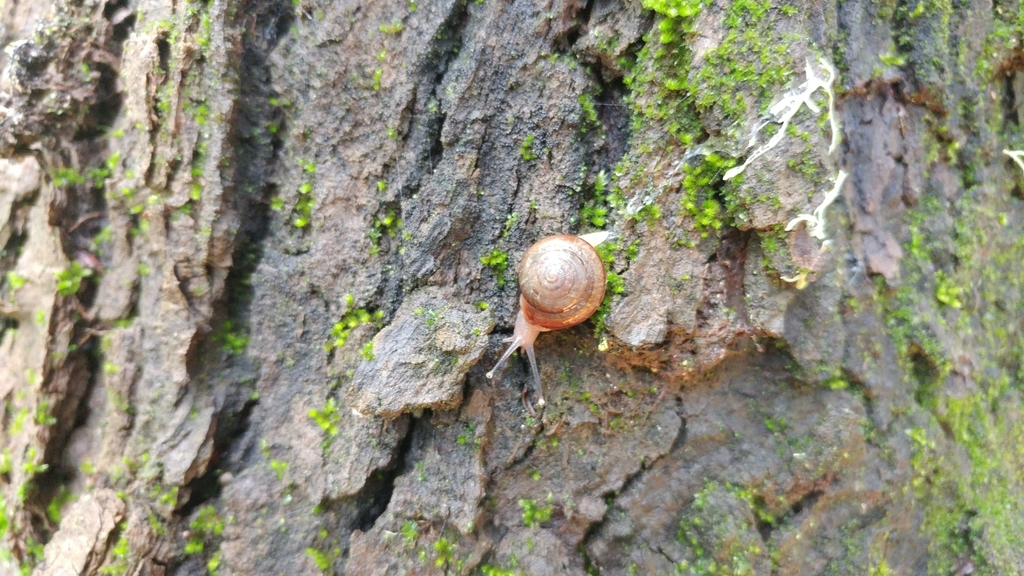
(c) Casey H. Richart, some rights reserved (CC BY) · licence
Family: Xanthonychidae · Class: Gastropoda · Order: Stylommatophora
Conservation status: G1 S1
Micrarionta gabbii (San Clemente Islandsnail) is a California animal in the Xanthonychidae family.
The San Clemente Islandsnail is a terrestrial gastropod mollusk endemic to San Clemente Island, California. This species belongs to the family Xanthonychidae within the genus Micrarionta, which contains six recognized species, four of which are of conservation concern to the U.S. Fish and Wildlife Service. Physical characteristics of this species have not been well documented in available scientific literature, though it shares morphological features typical of the Micrarionta genus. The species occurs exclusively on San Clemente Island, located approximately 68 miles west of San Diego in the Pacific Ocean. Historical reports of this species from Santa Barbara Island were based on misidentified museum specimens, with its range confirmed to be restricted solely to San Clemente Island (NatureServe 2025). The island spans approximately 21 miles in length and 4.5 miles at its widest point, providing the entire habitat range for this endemic snail. San Clemente Islandsnail inhabits the xeric terrestrial environments characteristic of San Clemente Island. The island features maritime desert scrub communities, coastal sage scrub, and woodland habitats dominated by drought-adapted vegetation. These habitats experience a Mediterranean climate with mild, wet winters and warm, dry summers. The species likely occupies microhabitats that provide adequate moisture and shelter, such as areas beneath vegetation, rock crevices, or leaf litter, though specific habitat preferences have not been thoroughly studied. Ecological details regarding the San Clemente Islandsnail's behavior, diet, and reproductive cycle remain poorly documented. Like other terrestrial gastropods, it likely feeds on decomposing organic matter, fungi, and plant material. Reproduction probably involves the laying of eggs in suitable substrate, with development influenced by seasonal moisture patterns. Activity levels are presumably highest during cooler, more humid periods, with the species likely entering dormancy during the driest months. The San Clemente Islandsnail holds a conservation ranking of G1 S1, indicating it is critically imperiled both globally and within California due to extreme rarity. The species is designated as a Species of Concern by the U.S. Fish and Wildlife Service and is eligible for traditional conservation grants (USFWS 2025). Its restriction to a single island makes it particularly vulnerable to habitat modifications, invasive species, climate change, and catastrophic events. San Clemente Island serves as a U.S. Navy training facility, where military activities and associated infrastructure development pose potential threats to native species habitats. Conservation efforts for San Clemente Island's endemic fauna have achieved notable successes, with several plant species and the San Clemente Bell's sparrow declared fully recovered in recent years (USFWS 2020s). However, the San Clemente Islandsnail requires focused research to better understand its population status, habitat requirements, and specific conservation needs. The species' survival depends on continued habitat protection and management of threats on San Clemente Island. Scientific documentation for this species remains limited. The information presented here synthesizes available data from NatureServe, USFWS databases, and Department of Defense species assessments. Additional field studies are needed to develop comprehensive knowledge of this endemic snail's biology and ecology.
Classification
Class: Gastropoda · Order: Stylommatophora · Family: Xanthonychidae
Conservation status
G1 S1
Frequently asked questions
How is Micrarionta gabbii classified?
Micrarionta gabbii belongs to class Gastropoda, order Stylommatophora, family Xanthonychidae.
What family does Micrarionta gabbii belong to?
Micrarionta gabbii is in the Xanthonychidae family.
Is Micrarionta gabbii protected or of conservation concern?
Micrarionta gabbii carries the following status: G1 S1.
What is Micrarionta gabbii?
The San Clemente Islandsnail is a terrestrial gastropod mollusk endemic to San Clemente Island, California.
Is Micrarionta gabbii found in California?
Yes. Micrarionta gabbii is recorded in California in The California Species Project's catalogue.
Related species
Other California species in the same genus, family, or bioregion.
Data from The California Species Project — 14,000+ California species with verified data from CNPS, CDFW, USFWS, and more.